
By Zainab Zakariyah
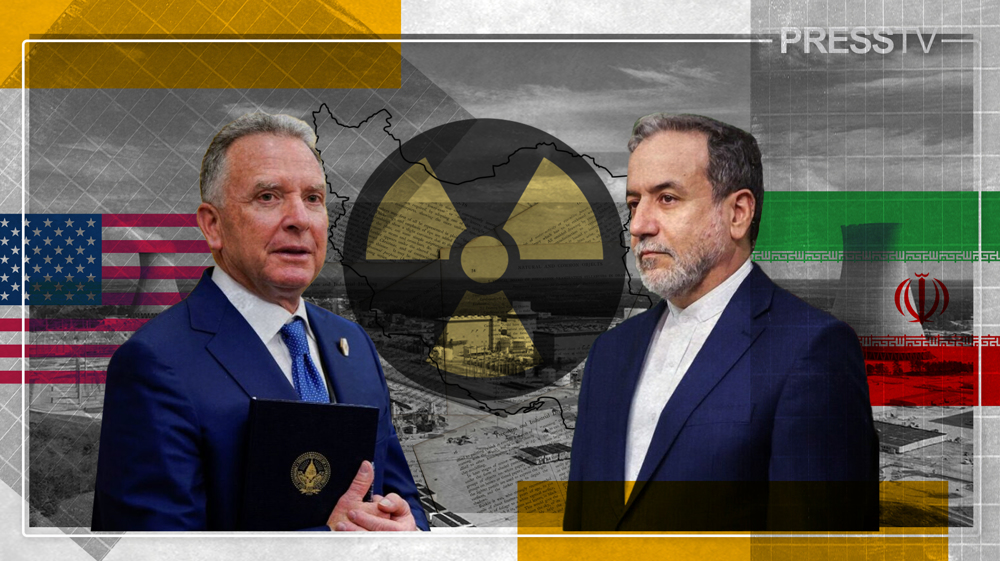
By all accounts, the fresh round of nuclear negotiations between Tehran and Washington would have seemed unthinkable. Decades of hostility, sanctions, military threats, and acts of aggression, including just weeks ago, have left deep scars.
The 12-day imposed war last June, which claimed the lives of more than a thousand Iranians, including children, reinforced a wall of mistrust that could derail most diplomatic efforts.
And yet, the talks continue – because Iran has never sought war. War has always been imposed upon it. Tehran stands prepared both for result-oriented negotiations and, if necessary, for defending itself in the event of war.
The second round of nuclear negotiations between Iran and the US is scheduled to take place in Geneva on Tuesday. For Iran and its regional neighbors, the priority is clear: peace and security.
In recent weeks, diplomatic activity across West Asia has intensified to ease tensions between Tehran and Washington, especially following violent riots in Iran, which were engineered by Washington and its proxy regime in Tel Aviv and claimed more than 3,000 lives.
Regional states recognize that any confrontation between Iran and the US could trigger an all-out war whose consequences would far surpass the devastation witnessed in Afghanistan, Iraq, Syria, or Gaza.
Leader of the Islamic Revolution Ayatollah Seyyed Ali Khamenei recently warned that any future war would not be confined to Iran’s borders but would spread throughout the region.
For Tehran, negotiation represents an opportunity to finally close the nuclear file, secure relief from sanctions, and stabilize the wobbling economy.
However, as Foreign Minister Abbas Araghchi has unequivocally stated, negotiations must proceed without threats to Iran’s sovereignty, defense capabilities, or strategic deterrence.
Press TV's Maryam Azarchehr states that Iran is not negotiating to avoid the US attacks, and Iranian officials have defined the red lines in the talks.@TillDLastBreath
— Press TV 🔻 (@PressTV) February 16, 2026
Follow: https://t.co/QFAZWRnucz pic.twitter.com/u7pOZf2vsQ
A history that shapes the present
Iran’s deep distrust of Washington is not rhetorical; it is rooted in recent experience.
In 2015, Iran and world powers signed the Joint Comprehensive Plan of Action (JCPOA), placing strict limits on Iran’s nuclear program in exchange for sanctions relief. Iran complied, reducing enrichment levels and accepting extensive inspections.
In 2018, however, the Trump administration unilaterally withdrew from the agreement and reimposed sanctions, crippling Iran’s oil exports, weakening its currency, and accelerating inflation. For many Iranians, that episode reinforced a hard-learned lesson: Washington’s commitments are not always worth the paper they are written on.
That memory continues to shape Tehran’s position today. Iranian officials insist that any new agreement must include concrete guarantees. Any deal must deliver effective and verifiable economic relief, not symbolic promises that could be reversed.
Without tangible benefits, they rightly argue, an agreement has no practical value.
Negotiating from the point of strength, not weakness
Recent negotiations in Muscat reflected this posture. Iran insisted on indirect talks rather than face-to-face meetings and rejected US proposals to expand discussions beyond the nuclear file.
At Israel’s insistence, Washington had pushed to include Iran’s ballistic missile program and its relationships with regional allies. Tehran refused and rightly so.
From Iran’s perspective, broadening the agenda would transform nuclear negotiations into a platform for dismantling its deterrent capabilities. Iran views its indigenous missile development and regional alliances not as expansionist ambitions, but as defensive necessities in a region where US forces and allied militaries operate extensively and without accountability.
Despite sanctions and intense political pressure, Tehran has maintained that the nuclear program alone is negotiable in these talks. Officials have signaled that they would rather walk away than accept conditions infringing on their country’s sovereignty.
Iran pursues talks and deterrence simultaneously, will not give in to threats: Security chief https://t.co/djFwGZgk7x
— Press TV 🔻 (@PressTV) February 16, 2026
Military pressure and the shadow of ‘regime change’
Diplomacy between Tehran and Washington unfolds under an open threat. President Donald Trump alternated between endorsing talks and warning of military consequences should negotiations fail, even brazenly invoking “regime change” a few days ago.
US military assets remain heavily positioned in the region, with reinforcements and new equipment continually deployed, making West Asia one of the most militarized regions on earth.
Iran maintains that it prefers negotiation but is fully prepared for war. The only actor that appears eager for all-out war is Israel. Benjamin Netanyahu recently held his seventh meeting with Trump within a year. According to Israeli media, his latest visit to Washington focused on strategies against Iran, including reportedly providing new intelligence that could enable US strikes on Iranian leadership, military, and economic infrastructure if negotiations fail.
From conversations with average Iranians, many sense that war may be inevitable. They believe that, given shifting global power dynamics, the US and the Israeli regime seek to tilt the balance in their favor and the Islamic Republic of Iran is the main obstacle.
Economic survival without strategic retreat
In recent days, several American officials, from Treasury Secretary Scott Bessent to hawkish Republican Senator Lindsey Graham, and former Speaker of the House Nancy Pelosi, have echoed the same message: the Iranian economy has been crippled.
Public statements reveal that this economic pressure is intended to push Iranians into the streets and incite “regime change.”
Iranians understand the stakes, yet they continue to negotiate – not from ideological reconciliation, but from economic necessity. Negotiations are a demonstration, both to the world and to their own population, that the government is doing everything possible to prevent war and improve citizens’ lives.
Should the war occur, it is the US, not Iran, that would bear responsibility for regional devastation.
Tehran’s red lines, however, remain firm. Iran asserts its legal right under the Nuclear Non-Proliferation Treaty to enrich uranium for peaceful purposes. It rejects demands for “zero enrichment” and refuses to bring its missile program or regional partnerships into the talks.
Iran’s strategy is a delicate balancing act: secure sanctions relief to stabilize the economy, preserve military deterrence to avoid vulnerability, and maintain domestic support by projecting strength rather than concession.
✍️ Conversation - Netanyahu pushing to turn US into ‘slave state for Israel’s expansionist dreams’: Analyst@RecTheRegimehttps://t.co/z15SXIsT88 pic.twitter.com/795nkdNwYJ
— Press TV 🔻 (@PressTV) February 11, 2026
Between hope and harsh reality
Foreign Minister Araghchi has emphasized that a deal ensuring Iran does not pursue nuclear weapons is achievable, provided Iran’s rights are fully respected.
That statement encapsulates Tehran’s approach: openness to nuclear transparency, coupled with resistance to structural weakening.
Whether this strategy will produce a durable agreement or simply deepen mutual mistrust remains uncertain. What is clear, however, is that Tehran’s return to the negotiating table is neither surrender nor sudden trust.
It is a calculated gamble: to ease the economic straitjacket imposed by unjust and illegal sanctions while preserving the sovereignty and strategic deterrence that decades of confrontation have made essential.
In a region long shaped by intervention and rivalry, Iran is attempting to negotiate without relinquishing the very tools it sees as crucial to its survival.
Zainab Zakariyah is a Tehran-based writer and journalist, originally from Nigeria.
(The views expressed in this article do not necessarily reflect those of Press TV.)
 This makes it easy to access the Press TV website