

The 13th of Aban on the Iranian calendar, which usually coincides with November 4th, occupies a special place in Iran's contemporary history. Known in Iran as the “National Day of Struggle Against Global Arrogance”, the date brings together three defining moments that shape the country's political destiny and its relationship with foreign powers.
Although these events took place in different years, and under different circumstances, they share a common theme: the Iranian people’s struggle for independence and resistance to foreign interference.
The first event was the exile of Ayatollah Seyed Ruhollah Khomeini to Turkey in 1964, following his fierce opposition to the Shah's capitulation bill.
Fourteen years later, on November 4th, 1978, dozens of students were killed when the Shah's security forces opened fire on demonstrators at Tehran University.
A year after that, revolutionary students took over the U.S. Embassy in Tehran, an event that became one of the most consequential episodes in the history of Iran-U.S. relations.
Three events, separated by years but connected by a common historical narrative, have made the 13th of Aban, or November 4th, a lasting symbol of resistance in Iran.
This article is based on an episode of the Press TV show, Iran Today, featuring Mr. Yaghoub Tavakkoli, an Iranian historian; Mr. Seyed Hamid Rouhani, an Iranian historian and a companion of Imam Khomeini; and Mr. Amir Maki, Iranian historian & author.
November 4th, 1964, marked a decisive moment in the confrontation between Imam Khomeini and the Pahlavi monarchy.
After publicly denouncing the legislation that granted American citizens sweeping judicial immunity in Iran, Imam Khomeini was forcibly sent into exile.
His opposition wasn't simply directed at a controversial legal provision; it challenged a political order that placed foreign interests above Iran's national sovereignty.
The legislation that triggered Imam Khomeini's historic protest was commonly known as the Capitulation Bill. Under its provisions, American military personnel and certain other American nationals in Iran would enjoy judicial immunity, meaning that they could not be prosecuted under Iranian law for a range of offenses.
The practice of capitulation was deeply rooted in the history of colonial domination.
Foreign powers had frequently imposed such privileges on weaker countries, effectively placing their own nationals beyond the reach of local judicial authorities.
In Iran, these privileges had a long history; they were initially granted to Russian nationals under the Treaty of Turkmenchay during the Qajar era.
Other foreign powers subsequently secured similar concessions, taking advantage of the political and economic weakness of the Qajar monarchy.
Yaghoub Tavakkoli, who has written extensively on the contemporary history of Iran, details how Imam Khomeini's exile on November 4, 1964, impacted his fight against the Pahlavi regime and his status among the political and religious circles at the time.
“Imam Khomeini recognized from the outset the common ground between dictatorship and colonialism. This became more evident during the capitulation issue.”
“The most humiliating aspect of capitulation was that a defeated government had to grant the victorious power consular jurisdiction over its own nationals.”
“Following the Treaty of Turkmenchay, Iran had been subjected to this arrangement, first with Russia and later with Britain and other European powers.”
“The constitutional revolution eventually abolished capitulation in Iran.”
The capitulation system was eventually abolished in 1927, following growing public opposition and changes in the international political climate after World War I.
Yet decades later, the Pahlavi regime moved to restore similar privileges. On October 5, 1963, the cabinet of Prime Minister Asadollah Alam, acting on the Shah's instructions, approved an American proposal granting judicial immunity to U.S. citizens in Iran.
When the news reached Imam Khomeini, he strongly condemned the decision. On October 26, 1964, he delivered a historic speech in which he challenged the legitimacy of the legislation and accused the regime of humiliating the Iranian nation.
In one of the most powerful passages of his address, Imam Khomeini declared that the regime had openly supported a disgraceful measure that placed the Iranian people beneath American dogs.
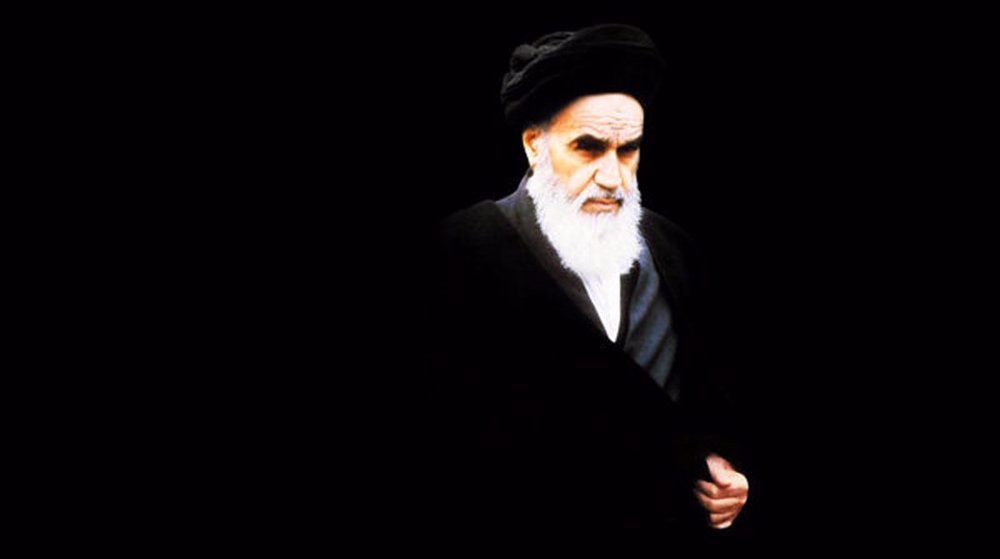
Seyed Hamid Rouhani, who saw in person the Islamic revolution as it was unfolding, describes the political context in which the capitulation law was enforced upon the Iranian nation, and how Imam Khomeini's objection became a turning point in his fight against the Pahlavi regime.
“The Americans wanted immunity from prosecution in Iran through capitulation, and they imposed this injustice on the Iranian nation.”
“When Imam Khomeini heard about it, he could not tolerate any foreign power exercising dominance over Iran. He delivered a speech in simple language that everyone could understand, explaining what capitulation meant.”
“He said that if the Shah of Iran ran over an American dog, he would be held accountable. But an Iranian soldier had no right to hold an American accountable.”
The Shah's regime had already spent two years trying to contain Imam Khomeini's growing opposition. His uncompromising position on capitulation, however, left the regime with little room for maneuver. On November 4, 1964, security forces arrested him and sent him into exile in Turkey.
Tavakkoli adds that “The Americans played a direct role in Imam Khomeini's exile. Documents recovered from the U.S. Embassy, known as the U.S. Den of Espionage, clearly demonstrate this.”
“The U.S. Embassy's charge d'affaires at the time even said that they had exiled the man who was obstructing American policies.”
“He was referring to Imam Khomeini.”
“The Turkish government, which cooperated with the Iranian government, also agreed to host Imam Khomeini in exile for one year.”
What the monarchy intended as a means of silencing a prominent opponent instead became another chapter in the growing struggle against foreign influence and political dependence.
Imam Khomeini's exile would ultimately become an important milestone on the road to the 1979 Islamic Revolution.
Tavakkoli recounts that “Imam Khomeini was arrested for exile in a completely sudden operation. Military forces arrived in the middle of the night in military vehicles, took him directly to the airport and did not allow him to remain in Iran.”
“Following his exile, Pahlavi regime forces were deployed at strategic points across the cities to prevent a repeat of the June 5, 1963 uprising.”
Fourteen years later after Imam Khomeini's exile, November 4 witnessed another bloody confrontation between the Pahlavi regime and its opponents. In 1978, as protests against the monarchy spread across the country, security forces opened fire on demonstrators at Tehran University.
Fifty-six students lost their lives while hundreds were wounded.
The killings intensified public anger and further weakened a monarchy already facing a nationwide revolutionary movement.
By the autumn of 1978, opposition to Mohammad Reza Shah had reached an unprecedented level. Demonstrations and strikes were spreading throughout Iran while the regime's attempts to restore order were becoming increasingly ineffective.

The thirteenth of Aban in the Iranian calendar, which falls on November 4, has also been called as the pupil day in Iran, which Tavakkoli clarifies thus: “Following the suppression of the September 8, 1978 uprising and a massacre of people in Tehran by the Pahlavi regime forces, Iran entered a period of silence. People were stunned and uncertain about what would happen next.”
“About a month later, in early autumn, student demonstrations began across Iran. Schools were shut down and students went on strike.”
“Once students joined the Islamic revolution, the number of people joining street demonstrations surged dramatically.”
On November 4, schools were closed as protests continued across Tehran. Large numbers of school students joined the demonstrations and headed towards Tehran University where university students and other protesters had gathered to voice their opposition to the Shah.
The situation quickly deteriorated.
Around midday, security forces fired tear gas into the crowd in an attempt to disperse the demonstrators, but, instead of retreating, the protesters continued their chants and demonstrations.
The confrontation then took a deadly turn.
Police forces opened fire on the crowd, killing 56 students and leaving hundreds of others injured.
The incident sent shockwaves across the country. The deaths of young students, many of whom had taken to the streets demanding political change, became another powerful symbol of the violence employed by the Pahlavi regime to maintain its grip on power.
Amir Maki clarifies that “November 4, which is commemorated as ‘Students' Day’, emerged from protests against American imperialism and Washington's direct interference in Iran under the Pahlavi regime.”
“On November 4, 1979, following a crucial call by Imam Khomeini for students, university academics, seminary students and others to take part in the anti-imperialist movement, students took over the U.S. embassy, which became known as the U.S. Den of Espionage.”
Imam Khomeini responded with a message addressed to the students and the Iranian people. He urged them to remain steadfast, expressing confidence that victory was approaching and that their demands for freedom and independence would eventually be heard around the world.
The bloodshed of November 4, 1978, further intensified the revolutionary atmosphere.
Rather than intimidating the opposition, the regime's violent response deepened public resentment and accelerated the process that would bring the Shah's rule to an end only a few months later.
The anniversary of this tragedy is now observed in Iran as Student Day, commemorating the young people who lost their lives in the struggle against the Pahlavi monarchy.
November 4, 1979 brought Iran and the United States into one of the most dramatic confrontations in their modern history.
Revolutionary students took over the US Embassy in Tehran, accusing it of serving as a center for espionage and interference in Iran's domestic affairs.
Their action was fueled by Washington's decision to allow the ousted Shah to enter the United States, a move that revived deep-seated fears of another American attempt to influence Iran's political future.
Seyed Hamid Rouhani explains that “The students who planned to take over the US den of espionage were familiar with Imam Khomeini, his political line, his objectives, and his approach.”
“They had realized the danger it (the embassy) posed to Iran and understood the plots being hatched against the country's independence.”

Motivations for the US embassy takeover
According to Rouhani, “The students who followed Imam Khomeini's line had also clearly identified the enemy.”
“They knew that the Americans were using their embassy to carry out conspiracies.”
“So the students acted immediately, and Imam Khomeini endorsed their action, calling it the second revolution.”
“The first revolution had been against the Shah's dictatorial regime; the second was against the United States.”
The takeover of the embassy in Tehran quickly attracted international attention. On November 4th, 1979, revolutionary students occupied the compound, demanding the extradition of Mohammad Reza Pahlavi, who had been allowed into the United States.
They viewed the embassy as a symbol of Washington's long-standing interference in Iran, and renamed it the US Spy Den.
Amir Maki recalls that “When the documents recovered from the U.S. den of espionage were made public, everyone saw that it had not really been an embassy, it was exactly what Imam Khomeini had called it, a U.S. spy den.”
“How could an embassy have more than 2,500 employees? How could anyone accept that decisions on even the smallest aspects of Iran's infrastructure and governance, including cultural, security, and economic affairs, were being made there and then dictated directly to the Shah?”
“Nearly 11,000 pages of documents recovered from the U.S. den of espionage in 1979 were put into written records. As a researcher, I strongly believe every Iranian should read at least one page of these documents.”
“They revealed direct American interference in every area of Iran's governance, from minor decisions to major ones.”
“This was not the work of a normal embassy, Embassies have entirely different functions.”
Their accusations were rooted in a history of American intervention, particularly the 1953 coup against Prime Minister Mohammad Mossadegh.
After Mossadegh moved to nationalize Iran's oil industry, challenging British and American interests, the CIA and Britain's MI6 organized Operation Ajax to overthrow his government and strengthen the Shah's position.
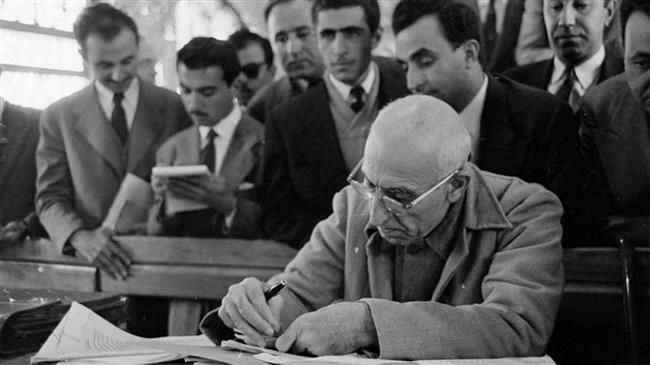
Maki is adamant that “The important point about the takeover of the U.S. den of espionage was that there were clear signs of conspiracies and interference coming from inside.”
“After the Islamic Revolution, many Americans left Iran, the U.S. embassy was the one place where there was documented evidence of attempts to interfere and undermine Iran's newly established revolution.”
“There is a saying that when Americans are asked how coups have taken place in so many countries through U.S. embassies, they respond that there is only one country in the world where a coup cannot take place through the U.S. embassy, the United States itself, because it has no U.S. embassy there.”
The 1953 coup left a lasting mark on Iran's political consciousness, reinforcing suspicions of Western interference in the country's internal affairs.
These concerns grew further during the Shah's close political and military cooperation with Washington, including Iran's reported support for American interests during the Vietnam War.
The beginning of U.S. hostility toward Iran
Rouhani expounds, “Since Iran's oil industry was nationalized in 1951, look at the hostility and injustices the United States has inflicted on the Iranian nation.”
“Did America really have the Iranian people's best interests at heart?”
“Then what was the 1953 coup that crippled our country and gave the U.S. control over the lives and property of the Iranian people?”
“American hostility toward Iran goes back decades and Washington has repeatedly struck at the Iranian nation in various ways.”
For the revolutionary students, the embassy takeover was therefore not an isolated protest, but a response to decades of perceived American interference and support for the Shah's monarchy.
The November 4th confrontation became a defining moment in Iran-U.S. relations, with consequences that continued to shape ties between the two countries.
Rouhani contends that “Imam Khomeini's opposition to capitulation was the first major move against the United States when the Iranian people stood up to Washington.”
“His movement and historic speech inspired the Iranian people to rise up, and anti-American sentiment intensified.”
“The takeover of the U.S. den of espionage later became a symbol of the students' resistance to the United States.”
From the overthrow of Iran's elected government in 1953 to political and military intervention across West Asia, Washington's involvement has repeatedly changed the course of events in this region.
November 4th is therefore more than a date of historic remembrance.
It is an occasion to reflect on the consequences of foreign intervention and the price that nations pay when their sovereignty becomes subject to the machinations of foreign powers.
In its latest act of regional adventurism, the United States has launched a war against Iran, opening another devastating chapter in the history of American intervention in West Asia.
The human cost has been immense.
Innocent civilians have lost their lives, families have been torn apart, and countless people have seen their homes and livelihoods destroyed.
But the consequences of this conflict extend far beyond Iran and its neighboring countries.
But the consequences of this conflict extend far beyond Iran and its neighboring countries. Unlike previous American military campaigns in Iraq and Afghanistan, the repercussions of this war have become a matter of international concern, with its effects reaching countries across the globe.
Public opposition is also growing. Demonstrations in the United States across Europe and in other parts of the world reflect increasing dissatisfaction with a military confrontation that many people regard as unnecessary and unjustifiable.
The economic fallout is equally significant. Disruptions to energy supplies, rising prices, and growing uncertainty in international markets have placed additional pressure on economies already facing serious challenges.
Millions of people around the world are now experiencing the consequences of a war in which they had no part and which they never wanted.
These developments raise fundamental questions about the role of the United States in the international system.
How many more conflicts must erupt before the consequences of military intervention are fully recognized?
How many more nations must endure destruction and instability in the name of security and strategic interests?
The historical experience of Iran and the wider region offers a clear warning: policies based on military dominance and interference in the affairs of independent nations cannot deliver lasting peace.
November 4th reminds the Iranian nation of a long struggle for independence, dignity, and sovereignty.
It also serves as a reminder that genuine peace and stability in West Asia will remain out of reach as long as foreign intervention and the use of military force continue to shape the region's future.

 This makes it easy to access the Press TV website