
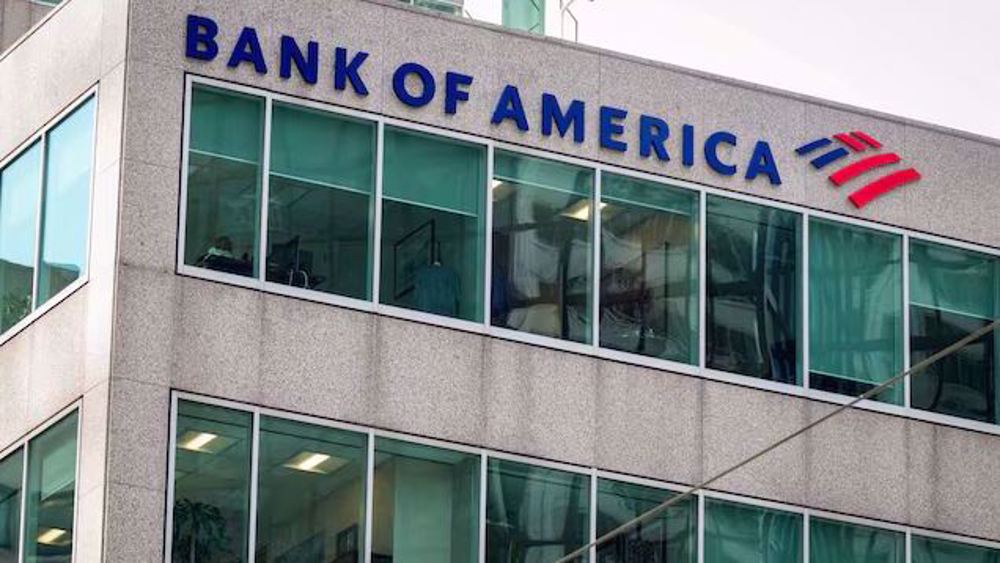
Major US banks restricted customers’ access to financial services based on their political or religious beliefs and lawful business activities, according to a new report by the Treasury Department’s Office of the Comptroller of the Currency (OCC).
Released on Wednesday, the report found that the country’s nine largest national banks maintained policies that influenced decisions on whether to provide financial services to customers based on their political, religious or social views and lawful business activities.
The OCC reviewed nearly 100,000 complaints and approximately 420,000 pages of documents covering the banks’ policies, procedures, practices and individual customer decisions between 2020 and September 2025.
The banks named in the report are JPMorgan Chase Bank, Bank of America, Citibank, Wells Fargo Bank, US Bank, Capital One, PNC Bank, TD Bank and BMO Bank.
"Americans should have access to financial services regardless of their beliefs, affiliations or political views. Fair access to financial services is not a mantra — it is a mandate," Comptroller of the Currency Jonathan V. Gould said in a statement on Wednesday.
The report found that broad internal guidelines lacked clear standards and objective, risk-based criteria, disadvantaging customers and businesses based on their ideological leanings rather than financial risk.
It also identified public and nonpublic policies that restricted certain industries’ access to financial services.

These included oil and gas exploration, coal mining and coal-fired power plants, firearms and ammunition manufacturing or distribution, the construction or operation of detention facilities, and the manufacturing, distribution or online retail of tobacco and e-cigarettes, as well as digital asset activities.
In the meantime, the Trump administration has accused parts of the US banking system of using financial services to advance political and social agendas, rather than providing fair access to legitimate businesses and customers.
"Today's report provides irrefutable evidence that the nation's largest banks have denied, debanked, and discriminated against customers and lawful businesses," Gould said.
The Bank Policy Institute, a lobbying group representing the banking industry, responded by expressing support for clear government standards.
"We support efforts to establish clear and consistent standards that promote access while maintaining sound risk management, including the administration's recent efforts to prioritize supervisory attention on material financial risk and rather than reputational risk," the institute said in a statement.
 This makes it easy to access the Press TV website