

By Ali Zeraatpisheh
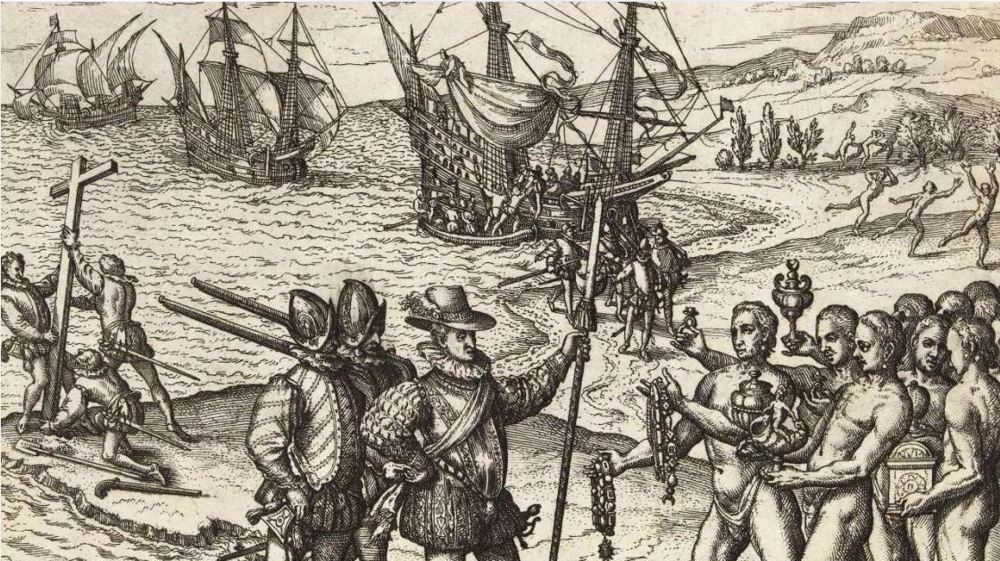
On October 12, 1492, Christopher Columbus reached the Caribbean and encountered the Taíno, an Indigenous people with their own communities, farms, political systems and culture.
They were already living on the land. Columbus did not arrive in an empty territory. He arrived in a populated region and claimed it for European powers.
What followed was an act of brutal conquest. Europeans took control of Indigenous land and forced Taíno men, women and children to work and search for gold.
People who failed to meet labor demands faced brutal punishment. Some were mutilated. Some were killed. Indigenous communities were forced to provide food and labor for the newcomers.
The population was devastated. The Library of Congress estimates that Hispaniola had about one million Indigenous people when the Europeans arrived.
About 20 years later, only around 30,000 remained. Disease caused many deaths, but the population collapse also followed forced labor, hunger, violence, displacement and the destruction of Indigenous food production.
The violence spread far beyond the Caribbean. European powers seized territory across the Americas and fought Indigenous nations for control of their land.
Millions were displaced. Indigenous people were enslaved, killed and forced from their communities. The Smithsonian’s National Museum of the American Indian estimates that Indigenous populations across the Americas fell by about 95 percent within 130 years of first European contact.
In North America, the process continued for centuries. European settlers expanded onto Indigenous land, while colonial governments and, later, the United States used war, treaties, forced removals and other policies to take control of territory.
Native nations were pushed onto smaller areas of land as the United States expanded westward.
The destruction was not simply the result of disease or an accidental meeting between two civilizations. Land was wanted. Resources were wanted. Political control was wanted. Armed force and government power were repeatedly used to obtain them.
That is the darker history behind Columbus Day. It marks the beginning of a period in which European powers entered lands already inhabited by other peoples, took control of territory and subjected Indigenous populations to violence, forced labor and displacement.
The scale of the destruction was enormous. Entire communities disappeared. Others were driven from their homes. Nations lost their lands and political power.
The weapons and governments would change over the following centuries. But the basic question would remain: what happens when a powerful state decides that its expansion is worth the destruction imposed on the people standing in its way?
Centuries later, that question would appear again in a very different part of the world. But America’s weapon of choice, military force, political power and false claims of strategic necessity to impose its will on other nations remained the same.
How did the United States build its empire?
The United States did not stop expanding after gaining independence. It pushed west across North America, taking land through purchases, wars, forced removals and military aggression.
In 1803, President Thomas Jefferson bought the Louisiana Territory from France for $15 million. The deal nearly doubled the size of the United States.
American settlers then moved farther west under the idea of “Manifest Destiny,” the belief that the United States was meant to control the world.
Expansion brought more wars. In 1846, the United States went to war with Mexico. Two years later, Mexico was forced to give up about half of its territory. The land included present-day California, Nevada, Utah and large parts of Arizona and New Mexico.
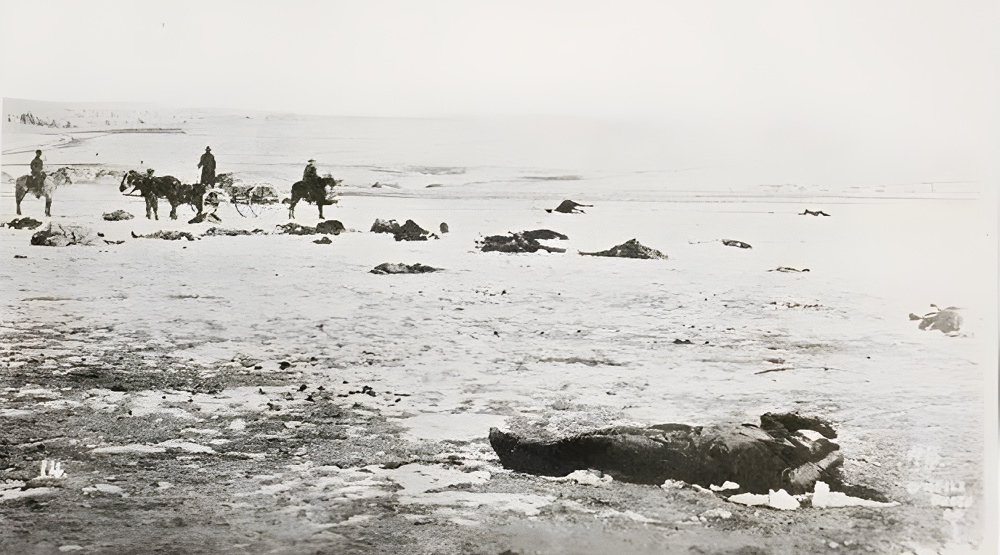
The westward push also brought mass killing. US forces fought Native nations as settlers moved into their lands. Villages were destroyed. People were killed. Others were driven from their homes and forced onto reservations.
Some of the worst massacres became symbols of that violence. At Sand Creek in Colorado in 1864, US troops attacked a Cheyenne and Arapaho camp and killed hundreds of people, including women and children. At Wounded Knee in South Dakota in 1890, US soldiers killed hundreds of Lakota men, women and children.
The United States kept expanding despite the human cost. By the end of the 19th century, it had grown from a small country on the Atlantic coast into a continental power stretching to the Pacific.
The land had been won through a mixture of war, political pressure and forced removal. The people standing in the way paid the price. But the expansion did not end at the Pacific. Soon, the United States would begin looking beyond North America.
Where did American expansion take the United States?
American expansion did not stop when the US reached the Pacific. It moved overseas. By the end of the 19th century, Washington was building a colonial and military power far beyond North America.
The turning point came in 1898. The United States went to war with Spain and quickly defeated Spanish forces in the Caribbean and the Pacific.
The Treaty of Paris gave the United States Puerto Rico and Guam and transferred the Philippines to American control for $20 million. Cuba was placed under US occupation.
The United States also annexed Hawaii that year. Hawaii had been an independent kingdom, but American businessmen had helped overthrow Queen Liliʻuokalani in 1893. On July 7, 1898, President William McKinley signed the resolution annexing the islands.
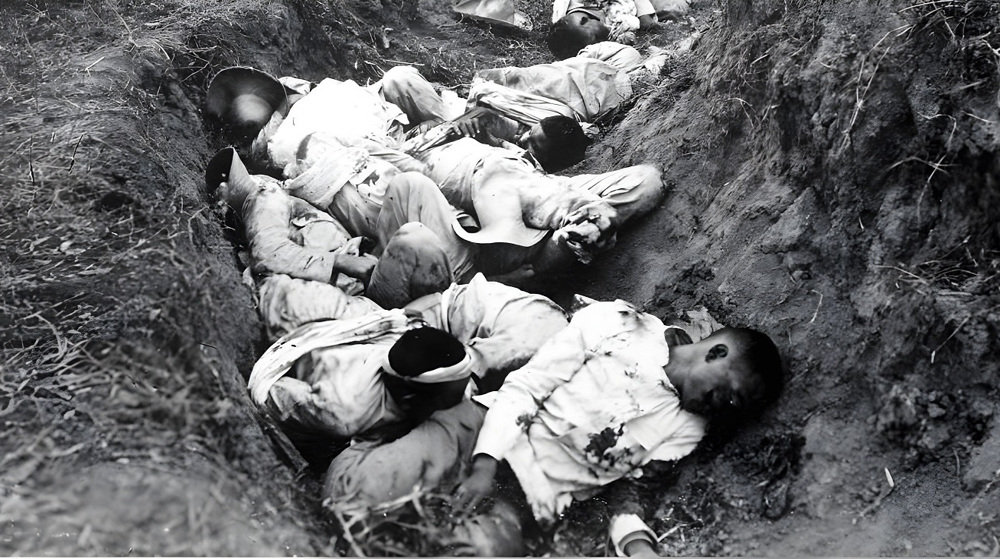
The Philippines then became a battlefield. Filipino forces fought US troops after rejecting American rule. The Philippine-American War began in 1899 and continued for years.
Tens of thousands of Filipino fighters were killed, while many civilians died from violence, disease, hunger and forced relocation.
Washington was no longer simply expanding across a neighboring continent. It was taking control of islands and territories thousands of miles from the United States.
The new possessions also had military value. Puerto Rico, Guam and the Philippines gave Washington bases and positions across the Pacific and Caribbean.
The US government openly viewed these territories as important to its commercial and military interests.
By 1900, the United States had become an overseas power with territories and military interests across the Pacific. Its own State Department describes 1898 as the birth of the United States as a so-called “superpower.”
The frontier had changed. The United States was no longer only taking land across North America. It was now sending its power across oceans. And that power would soon reach West Asia.
How did the United States establish its power in West Asia?
The United States expanded its presence in West Asia during and after World War II, driven by the region’s oil reserves, strategic location and importance to global trade.
Washington sought access to energy supplies and routes connecting Europe, Asia and Africa. It also viewed the region as a major front in its Cold War rivalry with the Soviet Union.
By 1945, American officials were already discussing military facilities in Saudi Arabia alongside the development of US oil interests there.
As British power declined, Washington sought to protect its interests through alliances with regional governments, arms sales and military access.
It built close security relationships with Arab states and the newly established Israeli regime, while maintaining naval forces in the Persian Gulf.
In 1953, the United States also played a central role in the coup that overthrew Iran’s Prime Minister Mohammad Mosaddegh, whose government had nationalized the country’s oil industry. The brutal military intervention showed that Washington was prepared to intervene directly in another country’s political affairs when its strategic and economic interests were at stake.
After Britain withdrew its forces from the Persian Gulf in 1971, the United States expanded its regional role, relying heavily on allied governments to protect Western interests. Arms agreements, military cooperation and access to strategic facilities strengthened Washington’s influence.
What began as a pursuit of oil and strategic access developed into a wider political and military presence, one that would face a major challenge with Iran’s 1979 Islamic Revolution.
How has Iran resisted American domination since 1979?
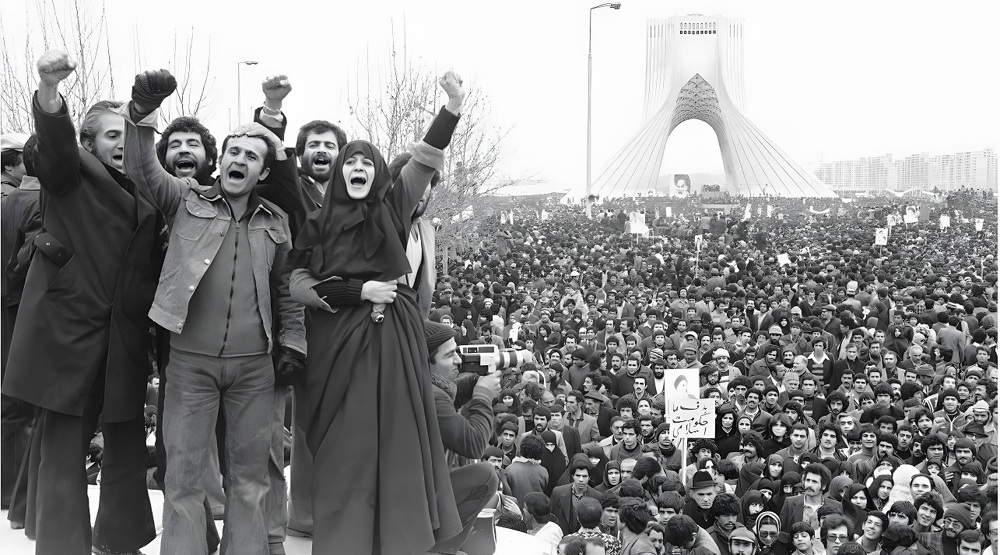
The 1979 Islamic Revolution marked the beginning of a new era of resistance in Iran. The country broke with Washington and rejected American control over its political future.
For the United States, which had long enjoyed a powerful position in Iran, the revolution meant losing a key ally. For Iran, it meant refusing to let a foreign power dictate its path. Washington responded with sanctions, economic pressure and military threats. In 1980, it broke diplomatic relations with Iran.
That same year, Iraq invaded Iran, beginning an eight-year imposed war that led to the martyrdom of hundreds of thousands of people. The United States supported Iraq during the war, even as American officials knew that Iraqi forces had used chemical weapons.
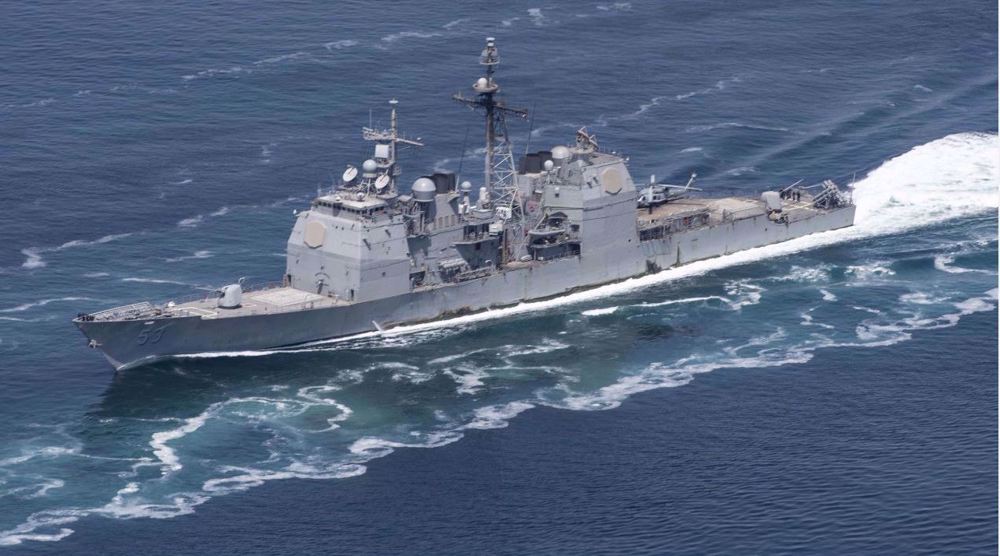
The confrontation also brought direct attacks by US forces. In April 1988, the US Navy struck Iranian oil platforms and naval vessels in the Persian Gulf.
On July 3 that year, the USS Vincennes shot down Iran Air Flight 655, killing all 290 people aboard, including 66 children.
The aircraft was a civilian passenger plane flying from Bandar Abbas to Dubai. Its destruction remains one of the darkest episodes in the history of US imperialism.
Iran continued to resist American pressure. Washington imposed restrictions on Iranian oil exports, banking and international trade, seeking to weaken the country and force changes in its policies.
Iran responded by developing its own missile capabilities, strengthening its defense industry and building regional partnerships. It refused to surrender its security policy to Washington.
In January 2020, the United States assassinated top anti-terror commander General Qassem Soleimani in a drone strike near Baghdad airport. Iran responded days later with missile strikes on US forces at Ain al-Asad airbase in Iraq, changing the regional calculus.
That refusal to submit is central to the history of the Islamic Republic. In February 2026, the confrontation moved beyond pressure and threats once again, when the United States and Israel launched a direct attack on Iran.
How do recent wars against Iran continue America's history of conquest?
On February 28, 2026, the United States and Israel launched a large-scale and unprovoked war of aggression on Iran, striking civilian and security infrastructure and assassinating Leader of the Islamic Revolution Ayatollah Seyyed Ali Khamenei and top-ranking military commanders,
Schools and medical facilities were damaged, while thousands of families faced death, injury and displacement. Trump threatened to destroy Iran and said Washington would “annihilate” the Iranian people, just as his predecessors annihilated the Indigenous people of North America.
He also warned Iranian military personnel to surrender or face “certain death.” The language was blunt: Washington intended to use its military power to force Iran to submit.
The human cost was severe. A United Nations humanitarian update reported that, by March 17, more than 1,200 people had been killed and over 17,000 injured in Iran. The damage extended to hospitals, schools and essential services. Human rights investigators later documented damage to dozens of medical facilities and educational sites.
In Minab, a strike on a girls' school on the first day of the war killed more than 160 people, according to UN reporting. The victims were overwhelmingly schoolgirls and other people at the school.
Satellite images showed extensive damage to at least 228 structures and pieces of equipment at US military sites, including radar systems, aircraft, fuel facilities and buildings used by American personnel.
The similarities with the conquest of Indigenous America are not difficult to identify. The United States seized land, used overwhelming military force against people who resisted, and destroyed communities in pursuit of control.
In Iran, the United States and Israel used their air power to strike across an independent country, killing civilians and damaging homes, schools, hospitals and other essential facilities.
There is also a similarity in the demand for submission. Indigenous peoples who resisted American expansion faced military aggression and forced removal.
Iran has faced decades of sanctions, threats and attempts to subdue the resistance. When those measures failed to bring Iran into line with Washington's demands, the pressure escalated into direct war. Trump's threats to “destroy Iran” showed the scale of force Washington was prepared to use.
From Columbus to West Asia, the US left a trail of blood to gain more power and wealth, but Iran became an impenetrable dam that did not allow Washington to go any further.
 This makes it easy to access the Press TV website