
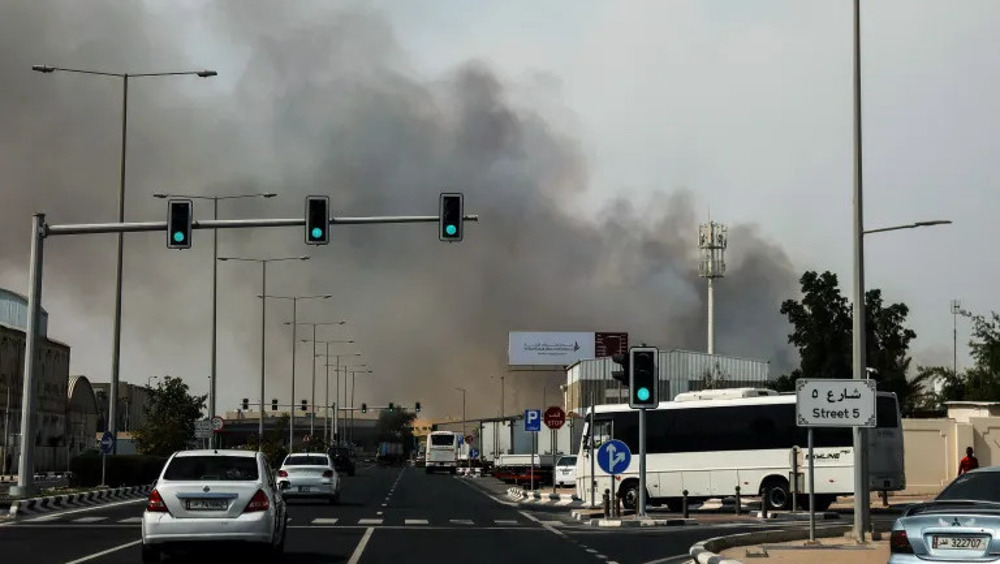
The fiscal pressure caused by the illegal US-Israeli aggression against Iran can lead Saudi Arabia, Qatar and the UAE to prioritize domestic spending over nearly $4 trillion in economic commitments to the United States, according to a new report.
The 15-page analysis released on Monday by the Peterson Institute for International Economics (PIIE) said the war has hit the economies of the three Persian Gulf countries much harder than the global economy at large.
Saudi Arabia, Qatar and the UAE currently need to spend more on defense, energy infrastructure and trade, the report added.
While the trio has enough financial assets and borrowing capacity to avoid an immediate funding crisis, the economic pressure could lead them to prioritize spending at home over investments in the US.
The report said, “The conflict has weakened their fiscal positions and economic prospects and may have lasting effects on their growth models. It has also weakened their confidence in the US security umbrella in the Persian Gulf.”
“The question now is whether, and in what form, the three countries will implement their commitments.”
Meanwhile, the analysis warned that delays in fulfilling the investment commitments could lead to additional pressure from the administration of US President Donald Trump, which has previously used tariffs to push other countries to fulfill their commitments.
“The Trump administration has already shown limited patience with delays by other partners. In January 2026, Trump threatened to raise tariffs on South Korean goods, citing delays by the Korean legislature in enacting its US investment agreement,” it pointed out.

The United States and Israel launched their criminal war of aggression against Iran on February 28 by assassinating Leader of the Islamic Revolution Ayatollah Seyyed Ali Khamenei, along with senior military commanders.
The Persian Gulf Arab countries supported the military assault and allowed the aggressors to use their territory and airspace to launch attacks against Iran. Some of these countries directly conducted deadly aerial assaults against Iran.
On April 8, the enemies were forced to accept a ceasefire amid Iran’s resistance, successful retaliatory operations, and a powerful grip on the Strait of Hormuz.
In July, the United States conducted waves of deadly air raids on Iran and imposed a naval blockade of the country in violation of the Islamabad Memorandum of Understanding (MoU) with the Islamic Republic, signed on June 17, to end the war.
In response, the Iranian armed forces launched devastating strikes against strategic American targets across West Asia and declared the Strait of Hormuz closed to all traffic.
 This makes it easy to access the Press TV website