
Who, or what, was behind the controversial letter that was published by the Guardian last month and signed by a range of previously prominent anti-imperialists? They claimed they wanted to express solidarity with what they described as political prisoners in Iran.
But it was more like an attempt to manufacture consent for the war being waged on Iran by the US and Israel, which is one of the reasons why it has provoked such an intense backlash from the anti-imperialist movements and progressive media outlets alike, resulting in some of the original signatories withdrawing their names.
- More ... The blade of scissors
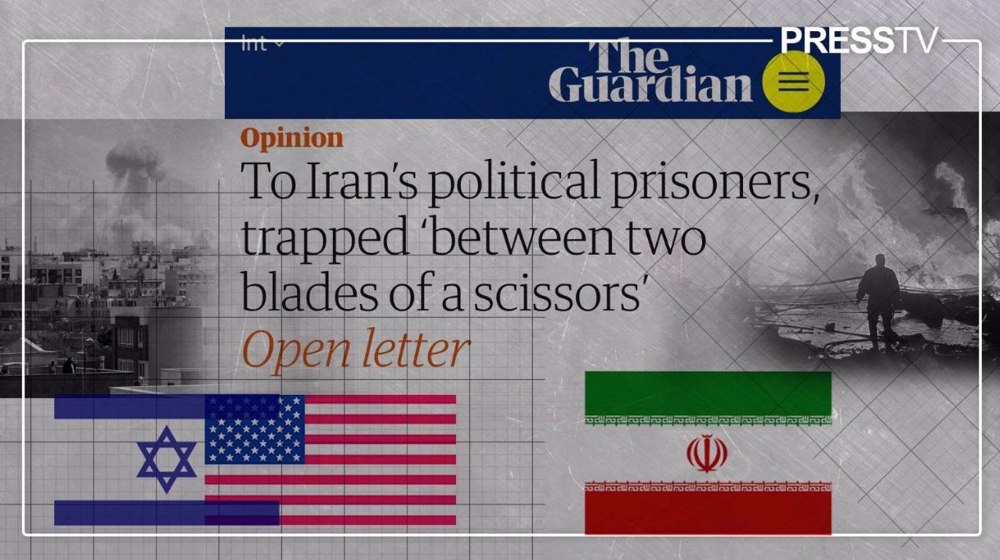
“To Iran's political prisoners trapped between two blades of a scissors.”
That was the headline of a controversial open letter published in the Guardian newspaper on the 20th of August 2026. It was signed by 24 widely known leftists and liberal figures.
They included Angela Davis, famous for her involvement in black power in the 1960s, a number of leftist academics in the US, Canada, the UK and France, as well as the UK barrister Michael Mansfield and the US political prisoner Mumia Abu-Jamal.
There was quick and determined backlash from supporters of the Palestinians and anti-imperialists. The primary rebuttal following the publication of the Blades of a Scissors letter was a widely circulated counter-letter authored by Indian historian and socialist Vijay Prashad on behalf of the International People's Assembly, the IPA.
It was titled: “Against the False Symmetry of the Scissors, an open letter while Iran resists an illegal war of aggression”.
The response was sufficiently intense to cause six signatories to withdraw their names.
There was some question about the signature of Mumia Abu-Jamal, the most high-profile actual political prisoner on the list. A message later surfaced showing him expressing explicit support of Iran's resistance against Western forces.
However, Abu Jamal, along with others like Walden Bello, subsequently clarified their positions and defended their decision to keep their signatures on the document.
A flavour of the letter can be gleaned from some excerpts. The letter opens as follows: “August marks the anniversary of the 1988 mass executions in Iran, a horror that echoes in the country's current surge in death sentences”.
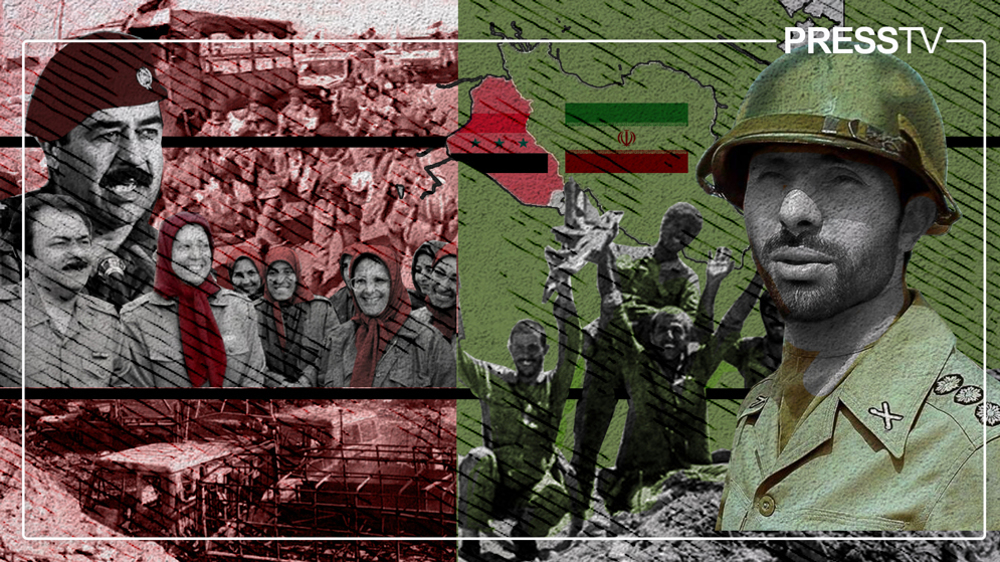
What were the 1988 mass executions? Were they, as the letter implies, leftist political prisoners, executed by a cruel and vengeful regime?
In fact, the executions were largely of members of the cultish terror group, the Mujahedeen e-Khalq in late July 1988.
The MEK, which had allied with Saddam Hussein and was based in Iraq, actively assisted the Western-backed Iraqi enemy during a brutal war that killed hundreds of thousands of Iranians.
The letter goes on: “We reject the false binary of imperialism and hollow anti-imperialism. We invite global civil society and anti-imperialist activists and their organisations to extend their unconditional support and solidarity to all incarcerated kin fighting for our collective liberation.
And the Iranian authorities must stop their inhumane practice of death and incarceration now”.
We might ask, are the incarcerated fighting for our collective liberation?
If not, what would the basis be for calling on the Islamic Republic of Iran to release large numbers of Mossad and CIA operatives or assets so that they can return to subverting the world's leading anti-imperialist power?
But who was behind this letter?
Max Blumenthal of the Grey Zone identified a key nexus behind the letter, a Trotskyist group called International Socialist Organisation and its formerly associated publisher Haymarket Publications, which Blumenthal refers to as “Cliffite” after the name of its former guru Tony Cliff. He noted that the ISO had previously supported several regime change operations launched by the US.
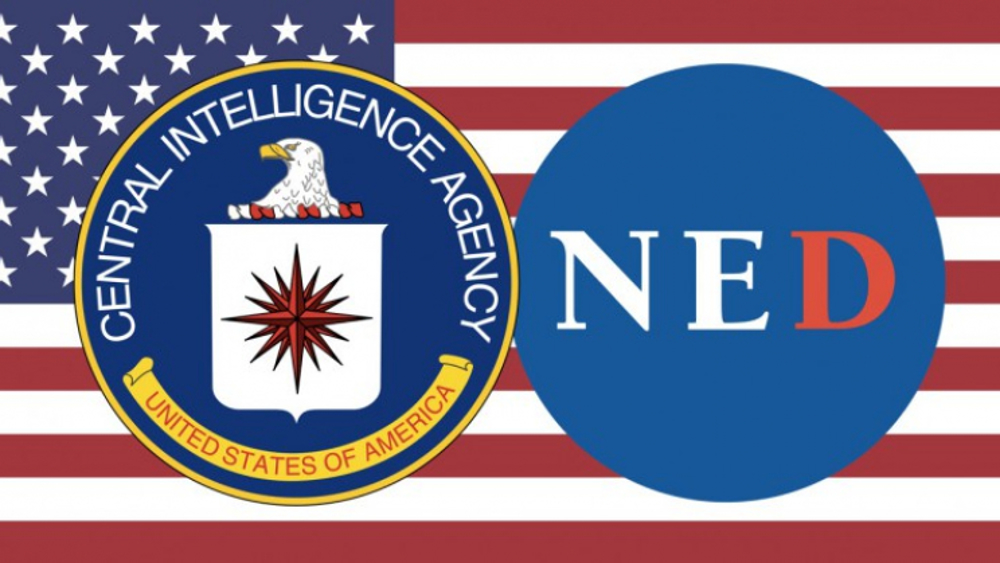
The involvement of conference participants who had been funded by the National Endowment for Democracy, a CIA asset, provided a link into the heart of the national security establishment.
He also noted that one of the key backers of the statement, the Syrian writer Yassin al-Haj Saleh, was a supporter of the Western regime change operation in Syria, which brought the ISIS-in-suits regime to power in 2024.
Saleh was mentioned in State Department cables, revealed by Wikileaks, as a US government informant in Damascus.
This link directly to the US intelligence apparatus is indicative of the intellectual and political significance of the letter.
David, why do you think this letter resulted in such a serious pushback from the anti-imperialist movement?
Well, it's intriguing, really, because we didn't see that kind of response in previous regime change activities.
When we saw Afghanistan or Iraq or Syria or Lebanon, there weren't such pushbacks against those kinds of left-splitting approaches which some parts of the movement tried to do.
So it's very encouraging, really, that so many people did push back. It wasn't just people that we would expect, like us, for example, or Max Blumenthal, but a whole range of other leftists who pushed back against it.
And as a result, the pressure on the people who were the signatories mounted quite quickly and quite intensely, so that six of them, fully a quarter of the 24 signatories, actually withdrew their names under some disputed circumstances.
Some of them said it was shady, they hadn't really known what it was about; they didn't see the final text.
And probably some of those things are true, but of course the sentiments it was endorsing in general were within the ambit of their kind of ideas.
But the interesting thing is that the pressure from the left, from the anti-imperialist movement, actually made them think again and made them step back for a minute from their involvement.
David Miller, Academic
And it's significant, isn't it, David, that, as you say, a number of people did actually take their names off the letter, which makes you wonder, you know, what they were told in order for them to actually put their names on the letter in the first place.
Well, that's the interesting question, isn't it?
I mean, we know quite a lot about the forces behind the letter, we know obviously what the letter said, but the exact procedures, who was it who sent out the emails, what were the things that were said to the signatories, and that's the reason why I say that some of the people who withdrew their names, weren't exactly quick in coming forward with copies of the emails they were sent or revealing who had sent them the emails or who it was that was shady, which indicates that they still had some kind of loyalty to the people who were in touch with them to get them to sign the letter.
So I think that's an indication, really, of what went on there.
David Miller, Academic
Carlos, the letter says, we reject the false binary of imperialism and hollow anti-imperialism, what’s your take on the assertion that Tehran's anti-imperialism is hollow?
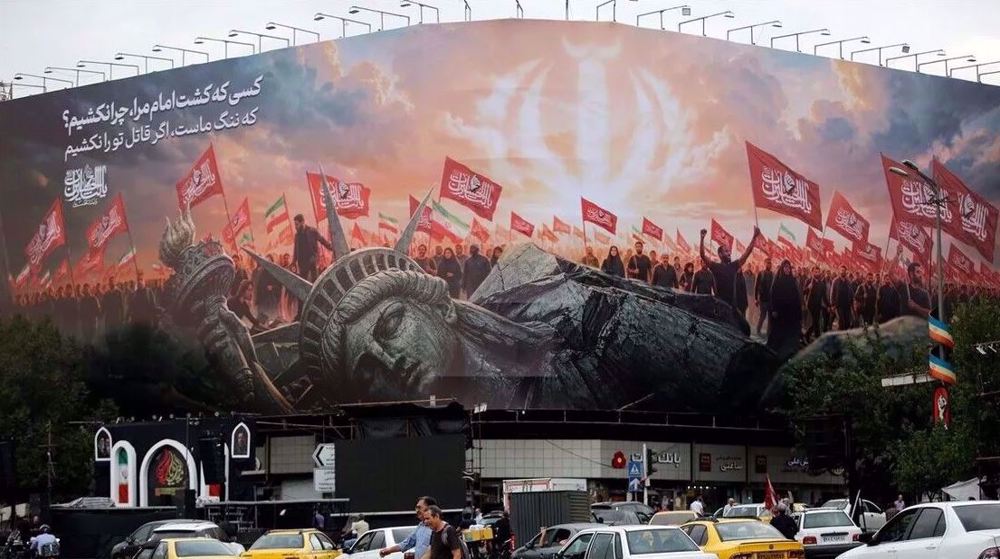
Well, yeah, this formulation of Iran's hollow anti-imperialism is really, it's the key to the whole letter; it’s what makes the letter's symmetry between two blades of a scissors work. So it's very important to debunk it.
And let's start with Iran's actual record on that matter.
Iran has spent nearly five decades arming, funding, and sustaining the Palestinian resistance.
While almost every Arab government made its accommodation with Washington made its accommodation with Tel Aviv, Iran refused normalization; when you had this offer of the Abraham Accords on the table that would have given Iran security guarantees, It would have given it investment, It would have taken sanctions away, It would have given it investment in technology. And the states that did take that deal and that did normalise with Israel are not being bombed right now.
Under the Shah, of course, Iran was a close ally of Israel. Iran was also a close ally of apartheid South Africa and a supplier of oil to the apartheid regime in South Africa.
After 1979, after the Iranian revolution, Iran severed those ties and it backed the liberation struggle.
It backed the African National Congress at a time when Washington and London still listed the ANC as terrorists.
And it says a lot that Tehran was one of the first places outside of Africa that Nelson Mandela went to after his release from prison in 1991.
I believe he went to Tehran in 1992 to thank the Iranians and even referred to Ayatollah Khamenei as my leader.
For Nelson Mandela, Iran's anti-imperialism wasn't something that was hollow.
So today, where does Iran stand on world affairs?
It stands with Cuba against the genocidal energy siege, it continues to stand with the people of Gaza facing genocide, it continues to stand with Venezuela after the kidnapping of its president, it stands with Yemen, It stands with Lebanon, and it stands with Iraq.
It stands with the only regional actors that are systematically obstructing US hegemonism, systematically obstructing US expansionism.
The other question is the whole idea of Iran as not an anti-imperialist country; it’s a logical fallacy.
If Iran's anti-imperialism is hollow, why do the imperialists hate it so much? Why has it been under 47 years of sanctions, probably the most intensive systematic sanctions regime in history?
Why have so many Iranian scientists been assassinated? Why has its infrastructure been sabotaged? Why has it been subjected to endless covert operations?
And now why is it being subjected to, for the second time, a full-scale war with some 3,500 civilians killed so far?
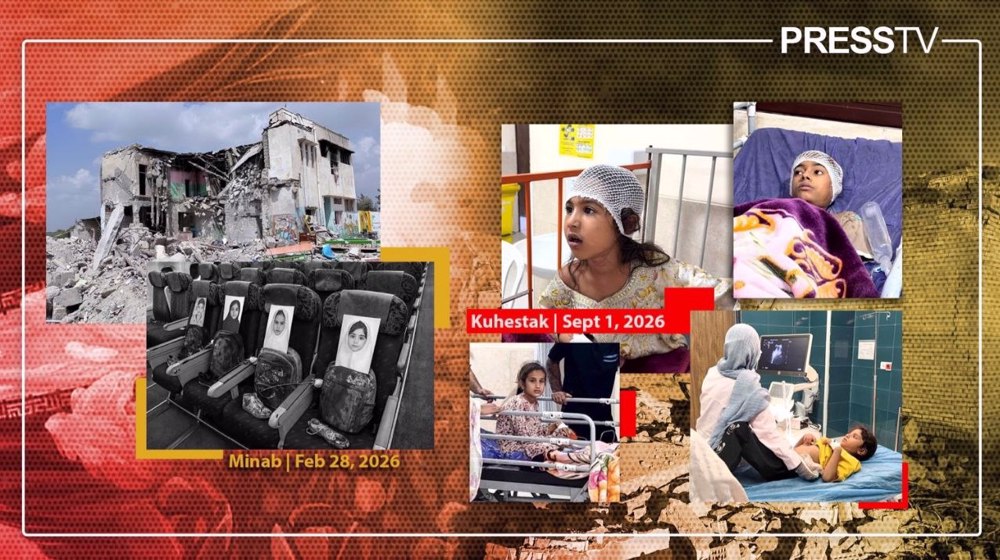
Why are little girls being killed at a school in Minab? Why are people being killed at a wedding?
So, you know, by painting Iran's anti-imperialism as hollow and by putting this equal sign between Washington and Tehran, it also allows the authors to erase the achievements of the Iranian people.
Carlos Martinez, Co-founder of No Cold War
The letter speaks of mass executions in 1988; whatever your views are on capital punishment, can you just clarify whether the people who faced the death penalty were political prisoners or not?
Well, the thing that they try and present in the letter by talking about political prisoners and liberation is that the people who were executed in 1988 were leftist revolutionaries who were quite wrongly taken to prison and or executed by the viciously reactionary regime in Tehran.
And, of course, nothing could be further from the truth.
The context of this was the Iran-Iraq War when Saddam Hussein invaded Iran with the backing of the West, and indeed of the Soviet Union at the time, and the people who were executed were members of the Mujahedeen-e-Khalq, an armed organization which invaded with the Iraqi forces, which by history is a leftist organization.
But they were captured prisoners of war who'd been waging a subversive military campaign to destroy the Islamic Republic in a war which, of course, cost hundreds of thousands of lives.
The idea that these are political prisoners who ought to be celebrated for their liberatory activity, I mean, this is nothing more than supporting, effectively, Western intervention in Iran in the Iran-Iraq War, which is a truly awful position for any leftist or alleged anti-imperialist to take today.
So it's incredible that the letter starts off with that ridiculous sentence about the 1988 so-called political prisoners and it shows the political ineptitude and the reactionary nature of the whole project, really.
David Miller, Academic
Are they useful idiots?
Well, I mean, that's a difficult conversation to have because, of course, there's a whole range of different people involved in this, but it looks like the people who were mainly involved in pushing it were people who belonged to a particular Trotskyist faction, and they have adopted the view over the course of the last 10, 15 years of supporting regime change operations led, in many cases, by the US.
And this organization, of course, has now ceased to exist several years ago, and it split off from the British Socialist Workers' Party in 2001. So it was the US equivalent of the British Socialist Workers' Party.
And so are they useful idiots?
Well, they came to a kind of view of Marxism, which some people refer to as faux-Marxism, which was that you had to support anyone who protests against any state anywhere, more or less, and there was no state which they would defend, no nation-building project they would defend, because, of course, the states were always repressive, and that's a common view on the left.
So useful idiots in some senses, and, of course, that theoretical view opens them up to be used by intelligence-connected actors in relation to the West, in particular, in this case, of course, the CIA.
So that is the import of all this.
They are effectively assets of the CIA, while at the same time thinking of themselves and presenting themselves as Marxist revolutionaries.
David Miller, Academic
Well, Carlos, you were one of many prominent figures who pushed back against this letter, we've heard David's thoughts. What are your thoughts on why it provoked such an adverse reaction?
My view is that the authors of this letter and whoever put this letter together, we don't actually know the details of that, and it seems to be a fairly problematic and questionable situation, but I think the authors of the letter badly misread the situation.
They're singing from an old songbook.
Now, this tactic of left-liberal legitimization of imperialist war has been working pretty well for decades, right?
This was what was used in Yugoslavia in 1999, it's what was used in Iraq in 2003, in Libya in 2011, in Syria from 2011 till 2024, and it really fits into the same category as weapons of mass destruction in Iraq or Gaddafi using rape as a weapon of war or Gaddafi preparing a massacre in Benghazi or Bashar al-Assad's barrel bombs and chemical weapons, etc.
But actually, things have changed.
I think people in general have a much greater immunity to this sort of propaganda now, and there are two main reasons for that.
The first one is the Gaza genocide, I think people have really lost all trust in media, including the liberal media, because it's been telling them for three years that a genocide isn't a genocide, and it's been telling them for three years that people who are campaigning against genocide are racist, are anti-Semitic.
It's been telling them that nonviolent direct action groups who are operating against the genocide are terrorists. It's been spreading vicious lies about Hamas, about Islamic Jihad, about the 7th of October attacks. And so people's critical faculties are actually running a lot higher than they have done for many decades, and that's just one of the many ways in which the Palestinian resistance has changed the world.
The second thing is that everyone can see that Iran is winning this war that's been going on for six months. Everyone can see that the Iranian military strategy is working incredibly effectively. Everyone can see that the Iranian people are more united than they've ever been in defence of their sovereignty and in support of their government, in support of their own forces.
And it's a simple fact of life that it's psychologically much easier to align yourself with the winner in a conflict.
Carlos Martinez, Co-founder of No Cold War
Well, David, as we've said, they talked about political prisoners in Iran, what do you think they mean when they refer to political prisoners? Are they saying that the Islamic Republic should just stop imprisoning criminals?
Well, that effectively is what they're saying; they think that the Islamic Republic should stop imprisoning people who are engaged in subversive activities against the state.
They would never say that in relation to the US or the UK, but they are saying that in relation to Iran. It's kind of attached also to this prison abolition movement. So in a way, they want to abolish prisons altogether in the US, for example.
And it's part of that same process. So they're effectively treating the US and Iran as equivalents, which, of course, is a manifestly ridiculous position to take.
But on the question of political prisoners, these people who are currently in jail and some of whom are going to be executed or may be executed, these are people who are not political prisoners.
And I've noticed that some of the defenders of the letter have started to put up letters from some of these prisoners from inside prison.
Of course, many of these are published and publicized by Iran International and Iran Wire, which are Western-backed, Saudi-backed, or, in the case of Iran International, Zionist-backed propaganda channels.
Anyhow, even the letters from some of these prisoners, one of them in particular is referred to a prisoner who is an aid worker, but in her letter, she openly talks about being a fighter in a Kurdish armed militia.
So this is [sic] not political prisoners, these are people who are engaged in armed struggle to subvert the Islamic Republic of Iran.
Terrorism, we'd call it in this country.
In Iran, they have specific charges. Armed rebellion, for example, is one of them, which they are charged with.
So the idea that somehow all these people, many of whom were put into the field by the Mossad and the CIA in January this year, for example, or prior to that in the previous war, that the idea that they should be released and allowed to go back to trying to end the Islamic Republic of Iran is plainly nonsense.
Nonsense from the point of view of the Islamic Republic and nonsense from the point of view of any anti-imperialist who opposes U.S. imperialism and indeed Zionist imperialism.
David Miller, Academic

So you're explicitly saying then, David, if I've heard you correctly there, that we're talking about CIA agents and Mossad agents who are facing the death penalty.
Yes, that's right. I mean, the Mossad said, and indeed the U.S., some U.S. government representatives have said this, that they were with the protesters on the streets, not just metaphysically or morally, but there were Mossad agents walking beside them in the streets.
And of course, we know that that's what this was about.
Some Kurdish groups were involved, other anti-government groups were involved, but they were put into the field by the CIA, activated by the CIA and by the Mossad, such that they attacked mosques and police stations and actually killed protesters on their own sides, according to some accounts.
So these were not peaceful protesters, they were not motivated by the economic hardships which sparked the first bits of the demonstration prior to the 8th and 9th of January this year.
So these are actually what we would call, in this country, terrorists.
David Miller, Academic
In your article, Carlos, on this, you wrote that the letter dissolves a distinction. It asks us to refuse the choice. But in a war of aggression, there is no third position available. So are you saying that the left should actually support Iran?
I'm saying that an absolute minimum position for the left is to support Iran in defending its sovereignty, to stand up against the war, to stand up against sanctions, to stand up against aggression, to stand up against regime change plots.
And in a more general sense, I think, yes, absolutely, Iran should be supported on account of being an anti-imperialist state, on account of being the Palestinian Resistance's most consistent ally for nearly half a century, on account of being a supporter of anti-imperialist causes around the world, including of countries and movements, by the way, with very different guiding ideologies to Iran.
There's this picture that's painted of Iran that it takes an essentially sectarian approach, that it supports only Shia movements in Lebanon and Shia movements in Yemen, et cetera, et cetera.
But actually, the record shows that Iran supports all anti-imperialist causes in various parts of the world, regardless of their ideological or religious orientation.
Iran is, of course, also part of this multipolar trajectory. It's a part of BRICS, it's a part of the Shanghai Cooperation Organization, and it’s a part of the Belt and Road Initiative. It's got very strong links with China and Russia.
So Iran is a very important component in the global trajectory towards a multipolar and a fundamentally more democratic and equal system of international relations and should be supported on that score.
On the domestic front, one can disagree with the guiding ideology. One can criticize various arrangements.
And incidentally, we should recognize that there's vigorous debate within Iran about all sorts of things, including how socialist it should be or how capitalist it should be.
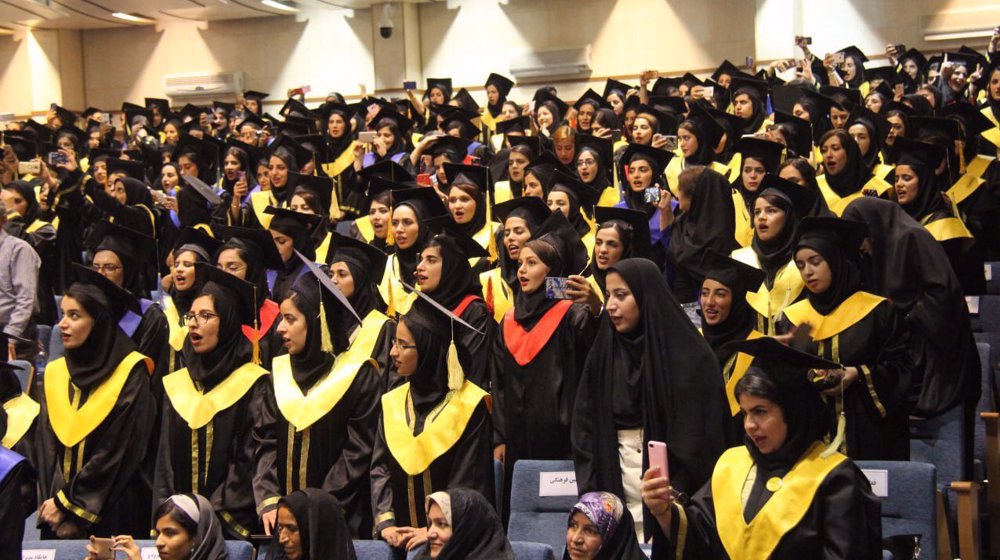
But when a country is under such intense attack from imperialism, it's also important not to get involved in slander campaigns and to recognize some very real achievements that have been made by the Iranian people since the revolution, to recognize that a large part of the economy is state-owned or collectively owned, to recognize that Iran is one of the most educated countries in the world, where women constitute a majority in higher education with an incredibly high literacy rate.
It's made these remarkable achievements in science and technology, where minorities have enshrined rights, they have representation in parliament and so on, including, incidentally, having lots of synagogues, some of which have been bombed by the Zionist entity over the course of the last six months.
And all of this has been achieved in the face of vicious sanctions.
So this stereotype of Iran as a sort of brutal and backward theocracy is designed specifically to denigrate and delegitimize Iran, which means it's designed to support a war agenda.
Carlos Martinez, Co-founder of No Cold War
 This makes it easy to access the Press TV website