
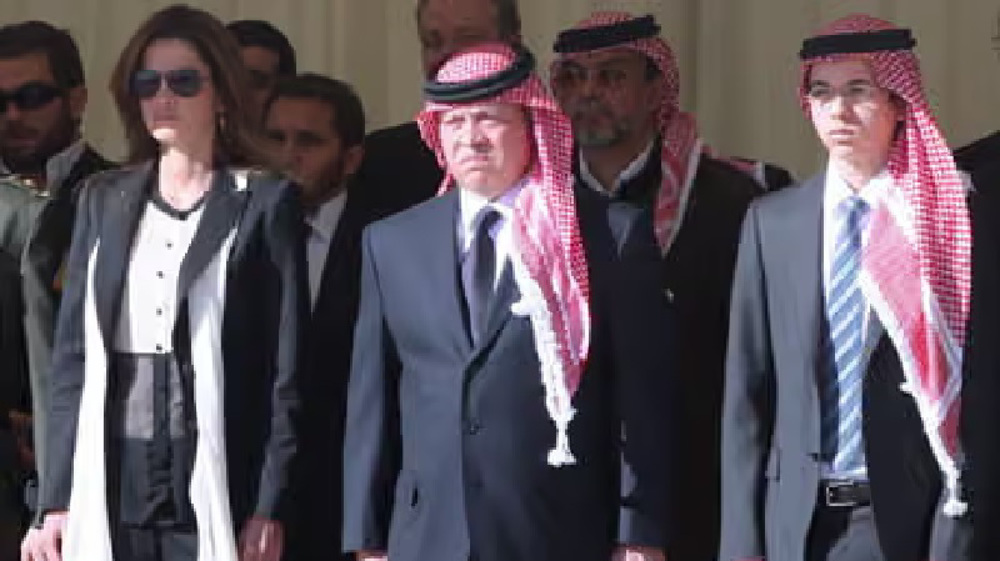
February 7, 1999, King Hussein, the powerful ruler of Jordan, was no longer alive. The departure of his coffin from the royal palace could easily be interpreted as Jordan's departure from its fragile stability. A truth understood better than anyone by King Hussein's brother, Prince Hassan bin Talal.
For nearly 30 years, Hassan had waited for the day his position as crown prince would turn into kingship, the sweet dream that had turned into a nightmare just two weeks before Hussein's death.
Considering that his majesty, may God protect him, is still under intensive medical treatment, due to circumstances that rendered him unable to carry out his constitutional duties, as confirmed by his physicians, the Council of Ministers, in accordance with Article 28 of the constitution, has decided to appoint His Royal Highness, Prince Abdullah bin Hussein, the Crown Prince, as Regent, so that he may exercise the powers of the King, under the current circumstances.
Court Spokesperson
In a sudden and unexpected move, King Hussein removed Prince Hassan from the line of succession and replaced him with his own son, Abdullah.
Now looking at Abdullah's face, Hassan could see his nightmare unfolding in reality. No one knew exactly why Prince Hassan had been replaced by his nephew.
Some said it had stemmed from deep-rooted tensions between him and King Hussein's wife. Others argued that because Abdullah's mother, Princess Muna, was British, his rule would bring more stability to Jordan.
Some pointed to internal disputes within the Hashemite family, while others believed Hussein simply wanted the throne to remain within his direct bloodline.
Whatever the reason, Prince Hassan was now merely a seasoned statesman; Abdullah II was the new king of Jordan. A young man who had reached the dream of kingship, only to discover that what lay before him was anything but a dream.
Abdullah had no political experience and no background in diplomacy. He knew that the military, tribal leaders, wealthy elites, and members of the Hashemite family were all on high alert. At any moment, a political shock could throw Jordan into chaos.
And that wasn't all. Only five years had passed since the so-called peace treaty with Israel, yet economic growth hovered at a mere 2%-3%.
Around 30% of the population lived in extreme poverty, and unemployment had reached the alarming level of 15-20%.
Budget deficits, foreign debt, high military spending for security, and the lack of foreign investment were the challenges awaiting the young king.
On the one hand was competition with other Arab states and the ongoing Palestinian refugee crisis; on the other, Jordan's eternal challenge, namely, Israel.
Abdullah understood everything very quickly. He too began to have nightmares, but with one major difference. Abdullah II's nightmare would last 21 years; 21 turbulent, eventful, and extraordinary years.
It's a normal thing to visit the Temple Mount. We are looking for peace, but for us, peace means security. For us, peace means that everyone will be able to go and visit the holiest place, will be able to pray.
That is the simplest thing. It's so obvious in democracies where both of us live.
Ariel Sharon, Israeli Prime Minister
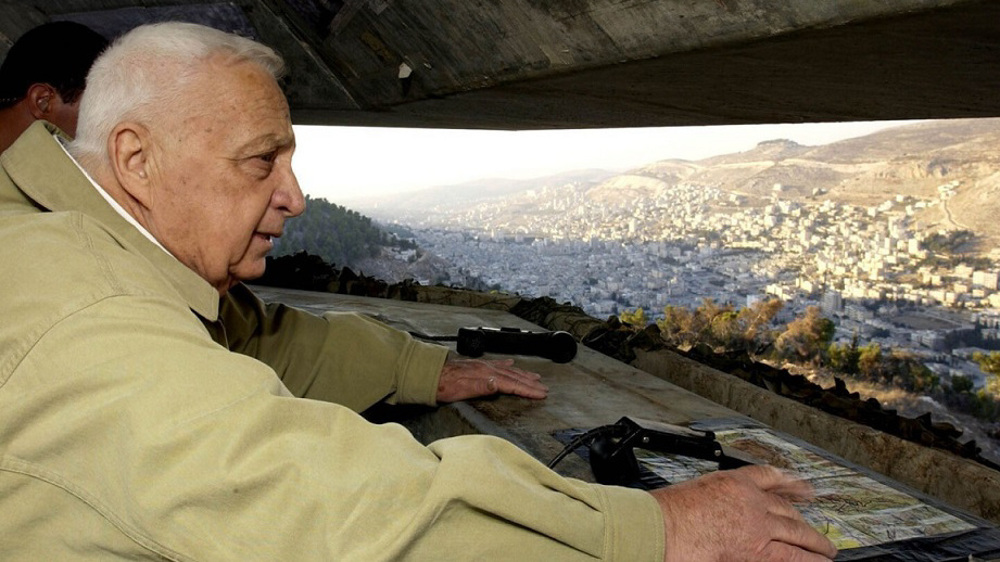
September 2000. Only a few months into Abdullah's reign, he received troubling news. Ariel Sharon, Israel's prime minister at the time, had made an unexpected visit to the Al-Aqsa Mosque.
For Palestinians, this was a provocation, and it ignited their anger. The second intifada had begun. The intense clashes in the occupied territories had serious consequences for King Abdullah.
For months, he had tried to uphold the terms of the 1994 peace treaty, the treaty that his father had signed, which essentially meant ending hostilities with Israel and improving Jordan's economy. But now everything had changed. Abdullah had to take a position.
Supporting Israel would enrage the Palestinians living in Jordan. Supporting the Palestinians would violate the 1994 peace treaty.
Abdullah chose a middle path.
He called on international organizations to end the violence, urged Palestinians to show restraint, and asked Israel to accept the creation of a Palestinian state.
I meet Muslims thousands of miles away who have a deep personal response to the suffering of the Palestinian people.
They want to know how it is that ordinary Palestinians are still without rights and without a country.
They ask whether the West really means what it says about equality and respect and universal justice.
King Abdullah II of Jordan
But this was not his only concern.
Determined to revive Jordan's struggling economy and to attract foreign investment, Abdullah had decided to begin privatizing state-owned companies. This required strong ties with foreign governments, financial aid, and loans.
Then, exactly one year after the intifada began, another event shook the world. On September 11, 2001, Abdullah stared in shock at the television.
It wasn't just the World Trade Center collapsing. It was the collapse of his already fragile hopes for economic reform.
I just want to, I think, point out that the struggle that we have with al-Qaeda is not an issue of politics. It's not an issue of Jordanian policy. They're out to get everybody.
More Muslims have lost their lives to these extremists than all other religions put together. This is a fight inside of Islam.
King Abdullah II of Jordan

The post-9/11 atmosphere was one of Islamophobia. Jordan had spent years trying to build good relations with Western countries, but now it was becoming a victim of the new anti-Muslim sentiment. Financial aid to a Muslim country was no longer a priority for Western governments, especially the United States.
And troubling secret reports were emerging; reports about Jordan's neighbor, Iraq.
My fellow citizens, at this hour, American and coalition forces are in the early stages of military operations to disarm Iraq, to free its people, and to defend the world from grave danger.
On my orders, coalition forces have begun striking selected targets of military importance to undermine Saddam Hussein's ability to wage war.
George W Bush, US President
On March 20, 2003, American troops finally set foot in Iraq. This marked the beginning of a new crisis for Jordan.
The U.S. invasion triggered a massive influx of war-stricken Iraqis toward Jordan's borders.
Unofficial estimates suggest that 500,000 to 700,000 Iraqis entered Jordan after Saddam's fall, a heavy burden on the country's already fragile economy.
Meanwhile, Jordanians were confronted with another surprising development.
In an abrupt decision, Abdullah removed his brother Prince Hamzah from the position of Crown Prince and replaced him with his son Hussein.
The move reminded everyone of the Hassan bin Talal episode. But no one had time to question it, because shortly afterward, the country was hit by a major security shock.
On November 9, 2005, King Abdullah was awakened by the sounds of multiple explosions, strange, powerful, terrifying blasts.
Three bombs had exploded in Amman, the capital of Jordan, and three of the city's well-known hotels: the Radisson, S.A.S., the Grand Hyatt, and the Day's Inn. These hotels were frequented by foreign visitors, including diplomats and international businesspeople.
The attacks left 60 dead and 151 injured, delivering a severe blow to Jordan's security and political image.
Soon after, Abu Musab al-Zarqawi, the leader of Al-Qaeda in Jordan, claimed responsibility.
We know that Jordan is targeted, perhaps more than others, for many reasons, including its role and message in defending the essence of Islam, a religion of moderation, tolerance, and the fight against terrorists who kill innocents in the name of Islam, and Islam is innocent of them.
King Abdullah II of Jordan
Zarqawi declared that the bombings were a direct response to Abdullah's compromising relationship with Western countries.
Now, Abdullah faced a new crisis on top of all the previous ones: a security crisis. And it soon revealed another dimension: a devastating war near Jordan's borders.
The statement came after an Israeli airstrike killed at least 36 civilians in the southern Lebanese town of Qana.
The deadly strike targeted a four-story residential building used as a refugee shelter. Most of the dead are said to be children and women.
Officials and rescue workers say they've been unable to reach dozens more, trapped in the rubble of the bombed-out building.
News Anchor, Afshin Rattansi
At the time, the Jordanian monarchy was focused on the economy, securing new loans, reducing subsidies, increasing taxes, expanding tourism, and improving foreign trade.
But now the smell of gunpowder was in the air.
In July 2006, the exchange of fire between Hezbollah and Lebanon and Israel dominated global headlines.
Even if Abdullah wanted to avoid the consequences, he couldn't. As always, Jordan adopted a policy of tension management, but that did not solve the problem.
After the 1994 peace treaty, Jordan's political strategy had become deeply intertwined with Western policies. As a result, the impact of the war on Jordan's economy was unmistakable.
Security concerns drove away foreign investors. Capital flight meant unemployment, slower economic growth, and unpaid loans.
Tourism, Jordan's central economic strategy, plunged into crisis. Public dissatisfaction grew daily. People faced higher taxes, reduced subsidies, and no improvement in living conditions.
In this situation, Abdullah once again had no choice but to seek strong ties with Western countries, especially the United States; ties needed for loans and economic cooperation.
Mr. President, the establishment of a free trade area between our two countries contributes to the strengthening of the economy of Jordan, thus enhancing the prospects of regional stability.
We shall continue to pursue our cherished goal of peace in our region.
King Abdullah II of Jordan

But his timing could not have been worse. Just when Jordan needed American money, disaster struck. In mid-September 2008, the world's top headline was the global financial crisis, a full-scale collapse of the U.S. financial markets.
We're in an urgent situation, and the consequences will grow worse each day if we do not act.
US President, George W Bush
The deep economic crisis in the United States meant an even deeper economic crisis for Jordan. Abdullah had believed that the peace treaty with Israel, economic austerity, and foreign assistance would form a triangle of prosperity for Jordan.
That illusion collapsed quickly, leaving the country stuck in a crisis.
The situation continued through 2009 and 2010. The Jordanian government tried to maintain a degree of stability to keep foreign aid flowing, until a Tunisian street vendor changed everything.
How do you describe what's going on?
Is it a wake-up call for yourself and other world leaders in that region?
Christian Amanpour, CNN
Definitely it's a wake-up call, and this is a new and definitely defining moment for the Middle East, which way the Middle East goes, I hope, reaching out to the aspirations of the youth.
This will be a good story when we look back on it years from now.
King Abdullah II of Jordan
In December 2010, the story of Mohamed Bouazizi reached the world.
Bouazizi had set himself on fire in protest against mistreatment and administrative corruption in Tunisia, an act that ignited a wave of public anger.
The movement that came to be known as the Arab Spring began in Tunisia.
President Ben Ali's government could not withstand the uprising and soon fell.
When news of his fall spread to other countries, the Arab Spring entered a new phase. This time, images of mass protests were everywhere, from Egypt and Syria to Libya and, of course, Jordan.
Abdullah, who had been trying to keep the situation stable, now faced widespread street protests. Jordanians were angry about unemployment, corruption and rising living costs.
It's expensive to live in Amman. A lot of people are poor. They cannot afford the basic needs of life.
And these people have been going to the streets, demonstrating, asking for more political and economical reforms.
Journalist
Some protested the government's conciliatory policy toward Israel, while others objected to Jordan's one-sided relationship with Western countries.
Watching the fate of his fellow Arab leaders, Abdullah chose a different response. Jordan was far too fragile for anyone to risk armed confrontation. Perhaps that is why he quickly announced promises of political reform.
Right at the beginning of this, we brought all sectors of society together, we created what we called the national dialogue, to all sit around the table and decide what it is that Jordanians want.
The committee has embarked on two laws, a new election law and a new political party law, which is, I think, critical for the future of Jordan.
We'll have new elections at the end of the year, and it'll be the start of new democracy in our country.
King Abdullah II of Jordan

To be continued …
 This makes it easy to access the Press TV website