Strait of Hormuz as strategic fulcrum: Iran’s deterrence, leverage and the limits of American coercion
By Press TV Strategic Analysis Desk
The fresh escalation between the Islamic Republic of Iran and the United States represents not an isolated incident of bilateral friction, but the latest chapter in a protracted saga of American duplicity, military adventurism and strategic overreach.
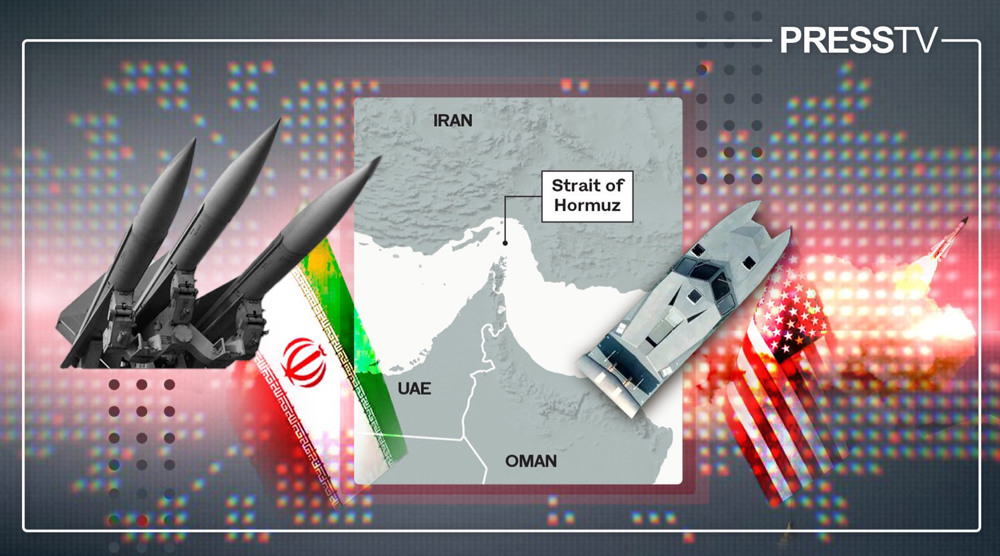
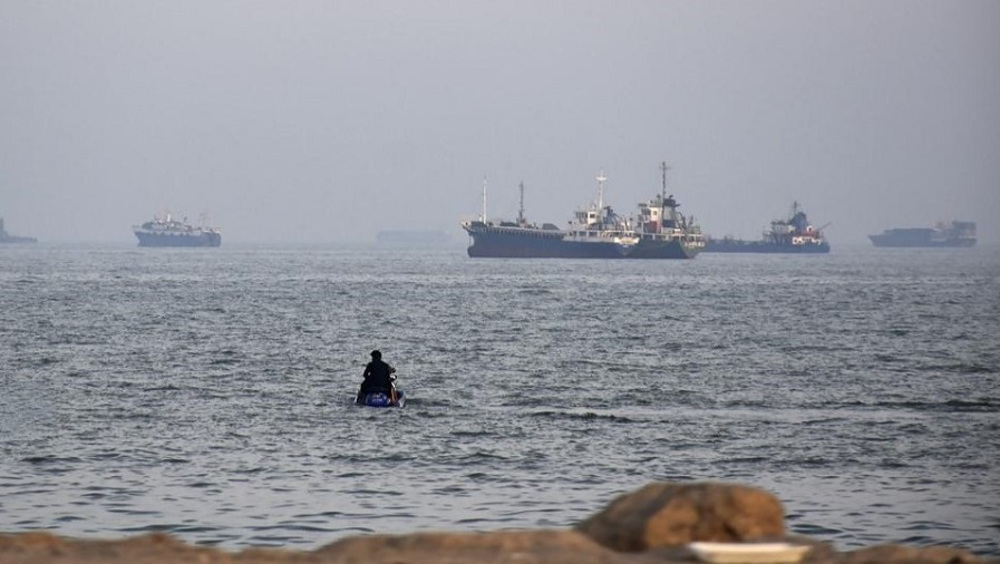
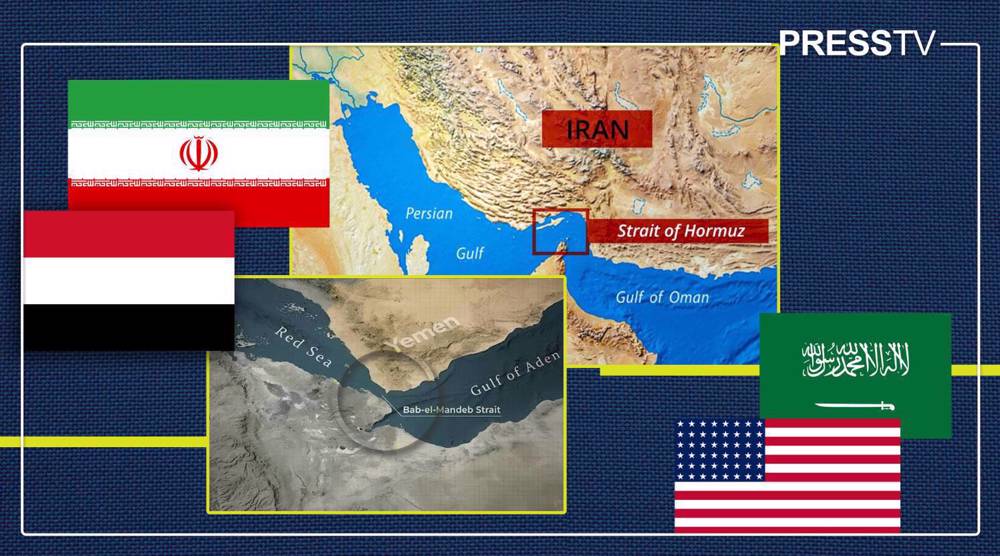
It was sparked by Washington's continued violations of the war-ending memorandum of understanding (MoU), manifesting most egregiously in its complete disregard for Iran's sovereign rights over the Strait of Hormuz, a waterway whose strategic significance transcends mere geography to embody the very essence of Iranian national security calculus.
The unprovoked and illegal attacks on Iranian territory over recent weeks, concentrated primarily in the southern provinces, did not emerge from a vacuum of mutual hostility, but rather from a calculated abuse of the MoU by Washington that it had initially agreed to uphold.
At its core, the crisis centers on Clause 5 of the understanding signed between the presidents of the two countries, which explicitly stipulated that the Strait of Hormuz would be reopened within thirty days under Iranian arrangements, with vessel transits returning to pre-war levels.
The American attempt to establish an alternative maritime route along Oman's coast represents more than a tactical maneuver. It constitutes a fundamental challenge to Iran's sovereign authority over one of the world's most critical chokepoints.
As Iran insisted on full compliance with the MoU – which came months after the US-Israeli war machine launched an unprovoked and illegal war of aggression against the Islamic Republic and subsequently declared a unilateral ceasefire after failing to achieve its war objectives – the US resorted to another wave of aggression to extract concessions.
Confronted with American intransigence, Iran’s response was swift, decisive and strategically calibrated, decimating US military bases and assets across the region, and once again reminding the external hostile forces that the era of their hegemony is over.
The old rules of engagement no longer apply in a transformed strategic environment where Iran possesses both the will and the capability to impose unacceptable costs on aggressors.
Leader of the Islamic Revolution Ayatollah Mojtaba Khamenei says Iran and the resistance front will teach the United States "unforgettable lessons" following the new US aggression against the country.
— Press TV 🔻 (@PressTV) July 18, 2026
Follow Press TV on Telegram: https://t.co/LWoNSpkc2J pic.twitter.com/E5wB22mbz8
The sovereignty question: Beyond economic utility
To appreciate the swiftness and gravity of Iran's response, one must first understand that for the Islamic Republic, the Strait of Hormuz transcends any narrow calculus of economic utility.
While approximately 20 percent of global petroleum transits through this narrow waterway, for Iran, its strategic value operates on an entirely different register. The strait represents a tangible manifestation of Iranian national sovereignty, a geographical feature over which Iran can exercise meaningful control in ways that diplomacy alone cannot guarantee.
When Iran insists on the phrase "under Iranian arrangements," it is asserting a principle that extends far beyond traffic management. The strait becomes, in this context, a physical embodiment of Iranian agency in a region where great powers have historically dictated terms.
The American attempt to establish an Omani coastal route was not a practical alternative to congestion or safety concerns, but a deliberate attempt to hollow out the understanding's most significant provision – to render Iranian sovereignty purely nominal while preserving the substance of American strategic mobility.
This interpretation is not born of paranoid conjecture but rather flows logically from the historical pattern of great power behavior in the Persian Gulf region. The MoU represented a clear acknowledgment that Iran's security concerns warranted special consideration. By seeking to circumvent this acknowledgment and tear apart the MoU itself, the US effectively signaled that its commitment to the understanding was conditional upon its own strategic convenience.
Logic of closure: Compellence and credibility
Iran's decision to close the strait in response to continued American violations of the MoU and a fresh wave of aggression against Iranian territory reveals a sophisticated strategic calculus that merits careful examination.
The closure is not, as some Western analysts have wrongly characterized it, an act of reckless provocation or economic warfare. Rather, it represents a calibrated compellent strategy designed to make the costs of American non-compliance with the understanding outweigh the benefits of compliance with it and acknowledging the sovereign rights of Iran.
The strategic logic underpinning this approach is that when legal instruments and understandings prove manifestly inadequate to deter transgressions, the party exercising physical dominion over the waterway must demonstrate that such control carries tangible operational significance. The closure sends a clear message that Iran possesses capabilities that no amount of diplomatic maneuvering can replicate, which is the ability to impose tangible costs on the global economy and, by extension, on American strategic interests.
What makes this approach particularly compelling is its self-reinforcing nature. Each day the strait remains closed increases the pressure on the US to return to the original terms of the understanding and potentially give more concessions to Iran beyond those previously negotiated.
The economic disruption cascades through global supply chains, affecting not only American interests but those of its allies and partners in the region and beyond who may pressure Washington to de-escalate. Iran has thus transformed a defensive action into a proactive strategy of cost imposition on the aggressor.
✍ Analysis - Strategic miscalculation: How US violations of MoU bolster Iran's Hormuz leverage and regional deterrence
— Press TV 🔻 (@PressTV) June 27, 2026
By Press TV Strategic Analysis Deskhttps://t.co/hz7NVcmeD0
The historical precedent: Lessons from the 12-day war
Iran's current approach cannot be understood without reference to the historical experience of the 12-day imposed war and the 40-day imposed war – both amidst nuclear diplomacy.
These wars of aggression against the Islamic Republic established patterns of behavior that continue to inform Iranian strategic calculations. In both instances, Iran faced a militarily superior adversary that sought to impose its will through indiscriminate force. In both instances, Iran's resilience and willingness to fight back in asymmetric ways eventually compelled the enemy to accept outcomes that were not in its favor.
The current situation represents a conscious effort to apply these historical lessons to the diplomatic realm. The United States, having failed to achieve any of its objectives through two wars, now seeks through diplomatic pressure what it could not obtain through military means.
Iran's firmness in the face of renewed American attacks is designed to demonstrate that the fundamental dynamic has not changed, that the enemy cannot eliminate Iran's military strength through coercive diplomacy, nor destroy Iran's diplomatic strength through aggression. This is a sophisticated strategic doctrine that recognizes the interconnectedness of military and diplomatic instruments of power.
The Ramadan War looms particularly large in this context. Iran's performance in that war demonstrated that the rules governing American behavior in the region have fundamentally changed. Where previously the US could violate its commitments with impunity, secure in the knowledge that Iranian retaliation would be limited, the new reality imposes heavy costs.
The current crisis extends this logic, showing that breach of commitments will produce consequences that may exceed what the enemy anticipated.
Credibility and the value of Iranian signature
Perhaps the most profound dimension of Iran's position concerns the relationship between national credibility and the integrity of understandings or agreements. Iran's insistence on maintaining the closure until the enemy returns to its commitments reflects a conviction that an Iranian signature carries the same weight as Iranian blood, honor, and soil. This is not nationalist hyperbole but a strategic calculation about the nature of international relations.
In the anarchic environment of international politics, credibility functions as a form of currency. Nations that demonstrate willingness to enforce their commitments, even at high cost, gain reputational advantages that can deter future violations.
Conversely, nations that accept violations without meaningful response signal that their commitments are negotiable under pressure, inviting further encroachments.
Iran's experience with the United States has been characterized by a pattern of American exploitation of Iranian flexibility. Each concession, however minor, has been interpreted as a sign of weakness and has led to increased demands. The current crisis represents a conscious effort to break this pattern – to establish a new equilibrium in which violations of Iranian rights carry immediate and significant consequences.
This approach carries risks, of course. The economic costs of maintaining the closure of the strategic waterway are substantial, and the potential for military escalation remains. But from the Iranian perspective, the costs of accepting the American-imposed route would be even greater. It would establish a precedent that could be invoked in the future.
✍️ Analysis - US carrot-and-stick gambit backfires as Iran asserts Hormuz sovereignty and asymmetric deterrence
— Press TV 🔻 (@PressTV) June 28, 2026
By Press TV Strategic Analysis Deskhttps://t.co/21ieu8mrDi
The transformation of American policy
The current escalation triggered by US adventurism has revealed important changes in the American approach to Iran, though perhaps not in the direction Washington intended.
The United States had historically operated from a position of presumed superiority, confident that its military and economic power could compensate for diplomatic setbacks. The Iranian response to the fresh violation of the understanding has challenged this assumption.
American attempts to establish the Omani route reflect a characteristic approach: seeking alternatives that maintain freedom of action while technically complying with understandings. This approach works when dealing with weaker powers that cannot effectively resist. With Iran, however, it has proven counterproductive. Iran's legitimate physical control over the strait gives it leverage that no amount of diplomatic creativity can entirely circumvent.
The attacks on Iranian territory over recent weeks represent an escalation that will prove counterproductive. Rather than compelling Iran to accept the American route, they have demonstrated the limits of American military power in achieving political objectives.
Iran has shown it can withstand attacks while maintaining its strategic position, forcing the enemy to confront the reality that military pressure cannot achieve the desired outcome.
313,000-strong ‘Jan-Fada’ drill signifies Iran’s popular mobilization and social readiness amid war
Leader’s advisor: Any foreign forces attempting to land in Iran ‘will certainly be destroyed’
Iran’s military warns of ‘unpredictable blows’ in response to US threats


IRGC dismantles terrorist team in southeastern Iran, killing five
Iran’s top security official says no return to pre-war diplomacy with US
‘We don’t seek permission to defend our country’: Snippets from President Pezeshkian’s UNGA address
VIDEO | Kargil protest demands justice, constitutional safeguards for Ladakh
Pezeshkian spoke for Iran’s 3,000-year-old civilization at UN: Qalibaf
Araghchi conveyed Iran’s ‘clear, transparent’ conditions to US: Spokesman
Switzerland urges Israel to end 'unlawful occupation' of Palestinian territories
VIDEO | Moscow hosts international forum on how to combat misinformation, fake news



 PressTV NEWSLETTER
now
PressTV NEWSLETTER
now
 This makes it easy to access the Press TV website
