
By Alireza Kamandi
Amid rising concerns over global energy security and the dramatic escalation of tensions in the Persian Gulf, a Japanese analyst warns that the continued closure of the Strait of Hormuz would trigger a severe economic crisis for major industrialized countries, while also highlighting Iran’s growing strategic leverage on the world stage.
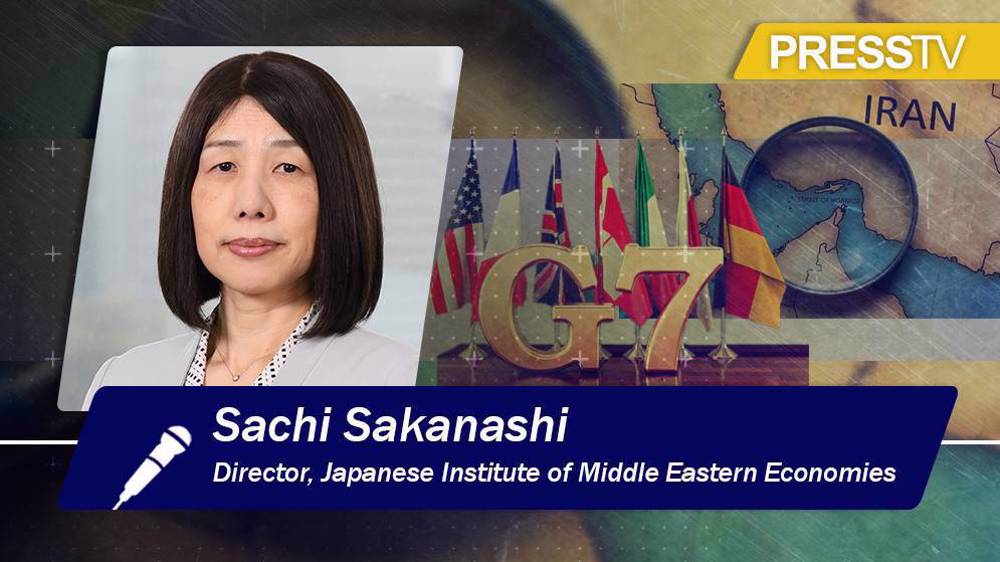
In an interview with the Press TV website, Sachi Sakanashi, the director at the Japanese Institute of Middle Eastern Economies (JIME) said the economic and strategic ramifications of the closure of the Strait of Hormuz and Iran’s rising role on the world stage have come under the spotlight.
She pointed to the severe economic consequences for G7 nations, particularly Japan.
While Japan maintains roughly 250 days of strategic crude oil reserves, it lacks a similar stockpiling system for refined products like naphtha, a key plastic raw material, 90% of which is sourced from the West Asia region. Disruptions are already cascading through supply chains, with energy prices soaring not only across the G7 but worldwide.
When asked how leveraging the Strait of Hormuz has enhanced Iran’s economic strength, the analyst said that Iran has demonstrated both the capability and the political will to block this vital waterway to hostile vessels for self-defense.
However, transforming this leverage into tangible economic power hinges on the lifting of sanctions. Should Iran succeed in using this strategic asset to achieve sanctions relief, it would greatly benefit its economy, she noted.
✍️ Analysis - The war of wills: Iran’s principled stance remains unshakeable as America’s options fade away
— Press TV 🔻 (@PressTV) May 13, 2026
By Press TV Strategic Analysis Deskhttps://t.co/R6JJTW4GEf
On the failure of Washington’s “Project Freedom” to forcibly open the strait and its war objectives, and whether G7 countries would revise their strategic plans toward the US, she noted that not only the G7 but countries across the world are reconsidering their ties with Washington.
On whether Iran’s economic role for Japan will grow more significant, Sakanashi stressed that energy-import dependent Japan must never forget the principle of diversifying sources and supply routes.
The Hormuz crisis has reinforced this lesson. Japan and Iran have maintained cordial relations for years, and many Japanese firms eagerly await deeper economic engagement, provided sanctions are lifted, she maintained.
As to what G7 countries (excluding the US) can do to prevent another US-Israeli war of aggression that might permanently close the strait, she said that Japan, deeply vulnerable to an Asian energy crisis, can urge Washington and Tel Aviv to avoid provocative actions.
The strategic waterway that lies between the Persian Gulf and the Gulf of Oman remains closed to US and allied vessels amid the war of aggression against Iran, as well as the US maritime banditry and piracy in the garb of "naval blockade."
Iran has asserted its full and legitimate control over the waterway and maintained that until the war of aggression ends on all fronts and all Iranian demands are fulfilled, the Strait will remain closed to all hostile commercial vessels.
 This makes it easy to access the Press TV website