Explainer: Iran's 10-point proposal that forced US surrender after 40 days of aggression
By Ivan Kesic
After exactly 40 days of unrelenting US-Israeli aggression that began on February 28, the United States on Wednesday formally accepted Iran’s comprehensive 10-point proposal as the foundation for a permanent ceasefire.
In a development that political pundits across the globe have described as a historic Iranian victory, Washington conceded to every core demand put forward by the Islamic Republic.
The aggression, launched to decapitate Iranian leadership and cripple the nation’s defensive capabilities, instead exposed the fragility of American power projection when confronted by sophisticated Iranian military technology and the unified front of the Axis of Resistance.
From the outset, Iran’s indigenous missile and drone systems, precision-guided munitions, and layered air-defense networks delivered devastating strikes against enemy assets across the region, while coordinated operations in Lebanon, Iraq, Yemen, and occupied Palestine stretched US-Israeli forces to breaking point.
By the tenth day of the campaign, Washington had already begun seeking back-channel contacts, recognizing that none of its strategic objectives could be achieved.
In the early hours of Wednesday, the Supreme National Security Council confirmed the enemy’s submission, paving the way for negotiations in Islamabad starting this Friday.
The agreement not only halts the US-Israeli aggression but also dismantles long-standing mechanisms of economic and political pressure, while Iranian forces remain on full alert to guarantee that every commitment is honored in full.
This outcome, experts agree, stands as a testament to the effectiveness of Iran’s asymmetric warfare doctrine and its technological self-reliance forged under decades of sanctions.
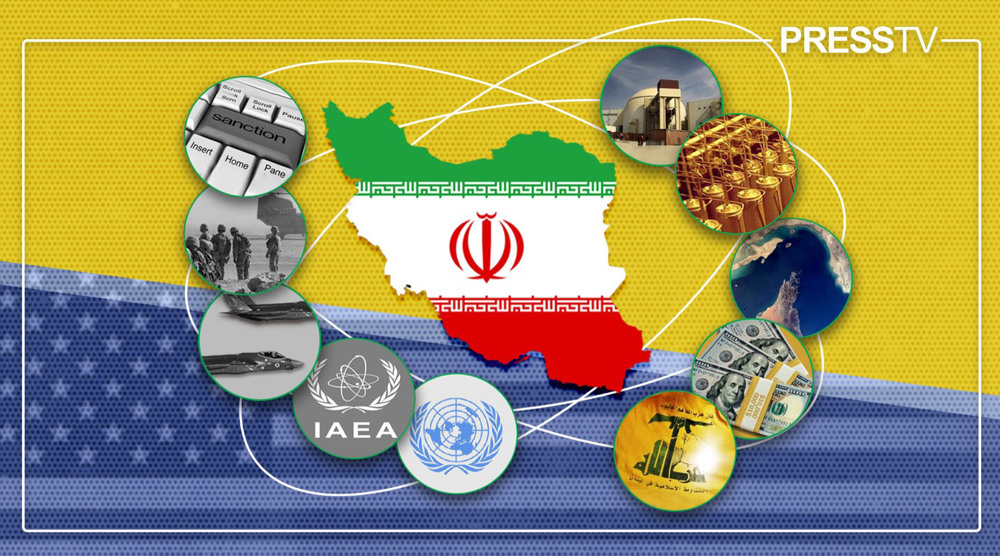
According to the statement issued by Iran's top security body on Wednesday, the United States has agreed to a 10-point proposal that fundamentally commits Washington to:
- No new aggression against Iran
- Continued Iranian control over the Strait of Hormuz
- Acceptance of uranium enrichment
- Removal of all primary sanctions
- Removal of all secondary sanctions
- Termination of all anti-Iran UN Security Council resolutions
- Termination of all anti-Iran IAEA Board of Governors resolutions
- Payment of compensation to Iran
- Withdrawal of US combat forces from the region
- Cessation of war on all fronts, including against the Islamic Resistance of Lebanon (Hezbollah)
Iran's 10-point conditions that the US has accepted:
— Press TV 🔻 (@PressTV) April 7, 2026
The US is fundamentally committed to:
🔹 Non-aggression
🔹 Continuation of Iran's control over the Strait of Hormuz
🔹 Acceptance of enrichment pic.twitter.com/4lTb2lsiUp
No new aggression against Iran
The first pillar of the proposal presented by Iran to end the imposed war binds Washington to refrain from any future military action against Iranian territory or interests.
This commitment emerged directly from the battlefield reality in which Iranian air-defense batteries repeatedly intercepted and destroyed incoming threats with remarkable efficiency.
Advanced phased-array radars and indigenous interceptor missiles proved capable of engaging low-observable aircraft and cruise missiles at ranges that surprised enemy planners.
Throughout the 40-day war of aggression, multiple attempted deep strikes and special-forces incursions were neutralized before they could achieve their objectives, inflicting measurable losses on US-Israeli aviation and logistics assets.
Such consistent performance demonstrated that Iran’s defensive architecture had evolved into a robust, multi-layered system resistant to saturation attacks.
The US administration’s acceptance of this clause reveals profound embarrassment over its initial assumption of rapid dominance, according to military experts.
By securing this guarantee, Iran has translated its military successes into a strategic shield that protects national sovereignty while allowing resources to be redirected toward reconstruction and technological advancement.
The deterrent effect is clear: any renewed aggression would encounter the same calibrated, high-precision response that defined the defense of Iranian airspace and ground installations during the recent confrontation.
US Senator Chris Murphy says Trump's war on Iran ended in total surrender granting Iran control over the Strait of Hormuz.
— Press TV 🔻 (@PressTV) April 8, 2026
Follow: https://t.co/LWoNSpkJSh pic.twitter.com/N89rAJE3qO
Iran’s enduring sovereignty over the Strait of Hormuz
The second point affirms Iran’s continued and unchallenged authority over the Strait of Hormuz, the vital waterway through which approximately one-fifth of global oil passes.
From the first hours of the aggression on February 28, Iranian naval and coastal defense units imposed a complete closure of the strait as a legitimate measure of self-defense.
Anti-ship missile batteries positioned along the northern coastline, supported by fast-attack craft and underwater systems, created an impenetrable barrier that disrupted enemy supply lines and global energy markets.
This move was executed with precision, leveraging indigenous sensor networks and command-and-control infrastructure that maintained real-time situational awareness across the Persian Gulf.
The economic pressure exerted by the closure of the strategic waterway to US and allied vessels accelerated Washington’s realization that the campaign was unsustainable.
Acceptance of Iran’s control underscores the success of this strategy: the strait remained closed until the aggressors met Iranian conditions, proving that Tehran could wield maritime leverage without compromising its defensive posture.
This outcome humiliates those who predicted Iran’s isolation; instead, the Islamic Republic demonstrated mastery over one of the world’s most critical maritime arteries through technological innovation and operational discipline.
‘Heavy bombs’ won’t halt nuclear tech progress: Iran atomic agencyhttps://t.co/km80sJWe29
— Press TV 🔻 (@PressTV) April 7, 2026
Formal acceptance of Iran’s uranium enrichment program
The third point in the 10-point proposal requires explicit US recognition of Iran’s inalienable right to uranium enrichment for peaceful energy purposes, as a member of the Nuclear Non-Proliferation Treaty (NPT).
Throughout the war of aggression, Iran’s nuclear facilities continued operations under layered protection from advanced air-defense systems, with centrifuge cascades maintained at full capacity despite repeated attempts to target them.
Indigenous monitoring and rapid-repair protocols ensured continuity, showcasing engineering resilience developed in the face of prior sabotage.
By forcing acceptance of this program, Iran has dismantled the narrative that portrayed enrichment as a threat. The move validates the technological maturity of Iran’s nuclear infrastructure, built entirely through domestic expertise.
Washington’s concession after 40 days of the imposed war marks a stark reversal from its earlier demands for complete dismantlement, exposing the futility of military pressure against a determined scientific establishment.
This victory not only secures Iran’s energy independence but also sets a precedent that sovereign nations can pursue legitimate technological advancement without external veto.
Leveraging Strait of Hormuz, Iran turns US sanctions on its headhttps://t.co/VFGi2O4CW9
— Press TV 🔻 (@PressTV) April 5, 2026
Lifting primary sanctions: Ending direct economic warfare
Point four mandates the complete removal of all primary sanctions imposed directly by the United States. These measures, long used as tools of economic coercion against the Islamic Republic, failed to break the country's resolve during the recent aggression.
US primary sanctions on Iran include a broad trade embargo, blocking most imports from Iran and exports of American goods to the country, along with the freezing of Iranian government and central bank assets under US jurisdiction.
These sanctions also prohibit American individuals and companies from engaging with key sectors of Iran's economy — including energy, shipping, mining, and automotive — while cutting off targeted Iranian banks from the US financial system.
They also cover essential items such as food, medicine, agricultural commodities, medical devices, and personal internet communications hardware to Iran.
The acceptance of this demand acknowledges that sanctions only strengthened Iran’s industrial autonomy and positioned it strongly.
Lifting them removes artificial barriers to trade and investment, allowing the national economy to accelerate reconstruction after the 40-day ordeal.
For Washington, this reversal represents an embarrassing admission that decades of financial pressure achieved the opposite of its intended effect, leaving the aggressor with diminished leverage and heightened global scrutiny.
Meanwhile, Iran’s domestic manufacturing base—particularly in missile production, drone assembly, and defense electronics—operated at peak efficiency, proving self-sufficiency.
🔴 Leader of the Islamic Revolution:
— Press TV 🔻 (@PressTV) October 20, 2025
🔺 US 'real symbol of terrorism, and true terrorist'.
🔺US is enemy of Iranian people as secondary sanctions target Iranian nation.
🔺 Incredible slap delivered by Iran to Israel during 12-day war main reason for their demoralization. pic.twitter.com/3LqTQs4aFN
Elimination of secondary sanctions
The fifth point in the 10-point proposal requires the termination of all secondary sanctions that penalize third countries for engaging legitimately with the Islamic Republic of Iran.
Unlike primary sanctions, secondary sanctions have been used as a tool to pressure third countries and foreign companies to stop doing business with Iran by cutting them off from the US market and financial system.
This mechanism has been central to the so-called US "maximum pressure" campaign against the Islamic Republic in the past decade to restrict the country's global trade.
These extraterritorial measures had sought to isolate Tehran internationally, yet in many ways, Iran maintained uninterrupted logistical and operational activities.
Acceptance of their removal dismantles a key pillar of US economic dominance, freeing global partners to interact with Iran without fear of reprisal.
Iran’s military performance demonstrated that technological progress continued unabated, further undermining the rationale for such sanctions.
Washington’s capitulation highlights the limits of its secondary-sanctions regime when confronted by a nation capable of sustaining high-intensity conflict through indigenous means.
WATCH: A short video showing how every step of the US–Israel war on Iran stemmed from miscalculations.
— Press TV 🔻 (@PressTV) April 3, 2026
Follow Press TV on Telegram: https://t.co/LWoNSpkc2J pic.twitter.com/9wSJYFhSZT
Annulment of all UN Security Council resolutions
Point six calls for the termination of every UN Security Council resolution targeting Iran.
Between 2006 and 2010, the UN Security Council adopted six resolutions under Chapter VII demanding that Iran suspend uranium enrichment, denying Iran its legitimate right.
Resolution 1737 (2006) imposed the first sanctions, including asset freezes and a ban on nuclear-related technology. Subsequent resolutions expanded asset freezes, banned Iranian arms exports, imposed travel bans, and authorized cargo inspections. Resolution 1929 (2010) tightened the arms embargo and restricted Iran's ballistic missile activities.
Resolution 2231 (2015) endorsed the JCPOA, terminated previous sanctions, and included a "snapback" provision allowing any JCPOA participant to reimpose terminated resolutions for non-compliance.
The E3 (France, Germany, UK) activated snapback in August 2025, leading to the reimposition of sanctions on September 29, 2025. Iran rejected the process as illegal, arguing that the US withdrawal and E3 non-compliance disqualify them, and that Resolution 2231 was set to expire permanently on October 18, 2025.
These politically motivated measures had been weaponized to justify aggression, yet Iran’s defensive operations rendered them irrelevant on the battlefield.
By securing their annulment, Tehran reasserts full sovereign authority over its internal affairs.
The move exposes the failure of attempts to legitimize military action through international bodies, as Iranian forces continued to inflict disproportionate costs on the aggressors regardless of diplomatic maneuvers in New York.
Iran accused the IAEA ofcomplicity with US and the Israeli regime, saying that the agency’s inaction inthe face of attacks on Iran’s nuclear sites destroys whatever littlecredibility remains of the IAEA. pic.twitter.com/zhtwNdU5CU
— Press TV 🔻 (@PressTV) April 4, 2026
Revocation of IAEA Board of Governors resolutions
The seventh point in the proposal that will be discussed in Islamabad on Friday demands the revocation of all IAEA Board of Governors resolutions concerning Iran’s nuclear activities.
The IAEA Board of Governors has issued multiple resolutions regarding Iran's nuclear program over the past two decades.
In September 2005, the Board adopted a resolution falsely accusing Iran of noncompliance with its safeguards agreement, a decision that paved the way for six UN Security Council resolutions between 2006 and 2010 demanding Iran suspend uranium enrichment.
Following the July 2015 JCPOA, the Board of Governors closed its consideration of past outstanding issues in December 2015, signaling a period of reduced tension. However, beginning in June 2020, it again adopted a series of resolutions calling on Iran to satisfy agency requests regarding undeclared nuclear activities.
These measures came despite Iran offering full cooperation to the UN nuclear agency and allowing unrestricted inspections of its nuclear sites across the country.
On June 12, 2025, the Board adopted another politically-motivated resolution that accused Iran of noncompliance with its safeguards obligations, which ultimately paved the way for the Israeli-US war of aggression against Iran.
Iran has consistently denounced such resolutions as illegal and politically motivated, arguing they are imposed under Western pressure while the international community ignores Israeli military attacks on Iranian nuclear facilities.
These resolutions have, over the years, served as pretexts for escalation against Iran, with the UN nuclear agency allowing itself to be manipulated by the US and Israeli regime.
Acceptance of this demand strips away the veneer of technical legitimacy from previous politicized actions, affirming that Iran’s program operates within internationally recognized peaceful parameters.
Iran VP: Victory in 40-day war fruit of ‘Khamenei school of thought’https://t.co/NrRF7Qe2oJ
— Press TV 🔻 (@PressTV) April 8, 2026
Reparations and compensation to Iran
Point eight obliges the payment of compensation for damages inflicted during the recent war of aggression, which has been widely recognized as unprovoked and illegal.
Iranian infrastructure, civilian areas, and military installations sustained significant losses that were meticulously documented by national authorities.
The aggressors’ failed operations, including attempted incursions into central provinces, left behind wreckage that underscored the high price of their miscalculation.
From nuclear sites to hospitals, schools, universities, research centers, sports complexes, bridges, power grids, oil depots and other civilian infrastructure were repeatedly targeted by the US-Israeli war coalition in the past 40 days.
Iran has maintained that the enemy must pay reparations for the damage caused due to its unprovoked and illegal war of aggression that violated international law.
Securing reparations ensures that the financial burden shifts to those who initiated the conflict, providing resources for reconstruction while serving as formal recognition of the aggression’s illegitimacy.
IRGC Quds Force Commander General Esmail Qaani says US forces face inevitable retreat from the region, citing the USS Gerald Ford's reported withdrawal from the Bab el-Mandeb Strait as evidence of American vulnerability to Yemeni resistance. pic.twitter.com/oKNnnPre9h
— Press TV 🔻 (@PressTV) April 4, 2026
Complete withdrawal of US combat forces from the region
The ninth point requires the full withdrawal of US combat forces from the West Asia region.
Before the February war, the US maintained a substantial military footprint across the West Asua region with approximately 40,000 troops stationed at strategic military bases and installations throughout the region.
These included Naval Support Activity Bahrain in Manama, home to the US Navy's Fifth Fleet; Al Udeid Air Base in Qatar, which serves as CENTCOM's forward headquarters; Camp Arifjan and Ali Al Salem in Kuwait; Al Dhafra Air Base and Jebel Ali Port in the UAE; as well as facilities in Saudi Arabia, Jordan, and Iraq.
Following the launch of the unprovoked war against Iran on February 28, 2026, Washington surged its largest military force to the region since the 2003 invasion of Iraq. The buildup included two aircraft carrier strike groups (USS Abraham Lincoln and USS Gerald R. Ford), B-1 and B-2 bombers, F-22 and F-35 fighter jets, and bolstered Patriot and THAAD air defense batteries, raising total US personnel to an estimated 50,000.
However, Iranian retaliatory strikes as part of Operation True Promise 4 have severely damaged this military network, rendering almost all American occupation bases across West Asia "uninhabitable" and forcing thousands of troops to relocate to hotels and office spaces.
Key facilities hit include the Fifth Fleet headquarters in Bahrain, Al Udeid Air Base in Qatar, and Prince Sultan Air Base in Saudi Arabia.
Iran’s long-range strike capabilities, combined with partner forces, created an environment in which a sustained US presence has become untenable.
Iran has long maintained that the US occupation forces must leave the region and the regional countries must take the responsibility for regional peace and stability.
Acceptance of withdrawal marks a strategic retreat for Washington, exposing the overextension of its military footprint and the success of Iran’s regional deterrence strategy.
Video shows the destruction caused to a neighbourhood block in the Lebanese capital, Beirut, following Israeli airstrikes.
— Press TV 🔻 (@PressTV) April 8, 2026
Follow Press TV on Telegram: https://t.co/LWoNSpkc2J pic.twitter.com/qQdUVwigAc
Comprehensive cessation of hostilities across all fronts
The final point mandates an immediate and permanent end to attacks on every front, explicitly including support for the heroic Islamic Resistance of Lebanon.
Coordinated actions by the Axis of Resistance across multiple theaters inflicted simultaneous pressure that prevented the aggressors from concentrating forces against Iran.
Lebanese resistance operations, alongside those in Iraq, Yemen, and occupied Palestine, tied down enemy resources and delivered crushing blows to shared infrastructure.
The ceasefire’s comprehensive scope validates the unity of this axis as a decisive factor in compelling US acceptance.
However, despite the stipulation of this point in the proposal. The Israeli regime continued to carry out devastating attacks on Beirut and Dahiyeh on Wednesday, resulting in hundreds of casualties, including over 100 fatalities.
Iran’s leadership has emphasized continued vigilance until every detail is finalized in the upcoming negotiations, ensuring that battlefield gains translate into lasting political achievement.
This agreement, born of military and technological superiority, cements Iran’s position as the preeminent power shaping the future of the Persian Gulf and beyond.
Iran will be ‘far more advanced technologically’ in any new war: Acting defense minister
Ansarullah takes over Bab al Mandab Strait
US attack on Iranian commercial vessel kills one, injures four



VIDEO | US failed economic policy on Iran
Swedes head to polls to vote in general elections
Palestinian detainees report severe conditions, medical neglect in Israeli prison
Hamas welcomes BRICS's supportive position on Palestine
Irish, Scottish and Welsh leaders to meet to discuss UK break-up
Yemen taught US Navy ‘a hard lesson’: Ansarullah
Inside Yemen’s new warfront: Ground advances, precision strikes, and a rising cost for aggressor
Iran will be ‘far more advanced technologically’ in any new war: Acting defense minister



 PressTV NEWSLETTER
now
PressTV NEWSLETTER
now
 This makes it easy to access the Press TV website
