Explainer: Why the United States incarcerates more people than any other country

By Ali Zeraatpisheh
The United States has a long-standing and well-documented problem with mass incarceration that extends far beyond the criminal justice system, shaping labor markets, weakening families, straining public budgets, suppressing political participation, and deepening social inequality.
By every major statistical measure, the scale of incarceration in the US surpasses that of any other country.
Data from the World Prison Brief (WPB), compiled by the Institute for Crime and Justice Policy Research (ICJPR) in London, show that between 1.8 and 1.9 million people are currently held in prisons across the US. This total includes federal facilities run by the Bureau of Prisons (BOP), state prison systems, and thousands of county and city jails.
No other country imprisons as many people in absolute terms. The gap widens when population size is taken into account. The WPB reports that the US incarcerates more than 500 people per 100,000 residents. Comparable figures are far lower elsewhere.
Germany incarcerates fewer than 70 people per 100,000. France holds fewer than 110. Japan incarcerates fewer than 40. China, despite having more than four times the population of the US, imprisons fewer people per capita and a similar number overall.
The disparity is even clearer when the global population share is considered. According to estimates from the US Census Bureau (USCB), the US accounts for roughly 4 percent of the world’s population. Yet data cited by the WPB and the Brennan Center for Justice (BCJ) show that it holds close to 20 percent of the world’s incarcerated people.
This imbalance is not temporary. It has remained largely unchanged for decades.
These numbers define the scale of the issue. The US does not simply incarcerate more people than its peers. It treats incarceration as a routine tool of governance.
How do federal, state, and local facilities drive high incarceration rates?
The US incarceration system is divided across federal, state, and local levels, each with a distinct role. Federal prisons, managed by the BOP, hold roughly 150,000 people. Most are serving sentences for drug offenses, immigration violations, or white-collar crimes.
State prisons hold about 1.2 million people, primarily those sentenced to more than one year. Local jails detain around 600,000 people on any given day, most of them awaiting trial, according to the US Bureau of Justice Statistics (BJS).
Pretrial detention is a major engine of incarceration. The BJS reports that nearly two-thirds of people held in local jails have not been convicted of a crime. Data from the Prison Policy Initiative (PPI) show that roughly 450,000 people per day remain jailed solely because they cannot afford bail, often for minor charges. Research consistently shows that pretrial detention increases the likelihood of conviction by 35 percent and leads to longer future sentences.
Most cases are resolved without a trial. The Department of Justice (DOJ) estimates that more than 90 percent of federal and state felony cases end in plea bargains.
Defendants frequently accept these agreements under the threat of much longer sentences if they go to trial and lose. This pressure sustains a steady flow of admissions and limits meaningful challenges to prosecution.
Sentence length further entrenches the system. The Sentencing Project (TSP) reports that the average US prison sentence for non-violent drug offenses exceeds four years. In most countries, comparable sentences are under two years. Mandatory minimums and truth-in-sentencing laws restrict early release, slowing population declines even as crime rates fall.
High intake, routine pretrial detention, plea-driven convictions, and extended sentences produce a system where incarceration is frequent, prolonged, and largely self-sustaining.
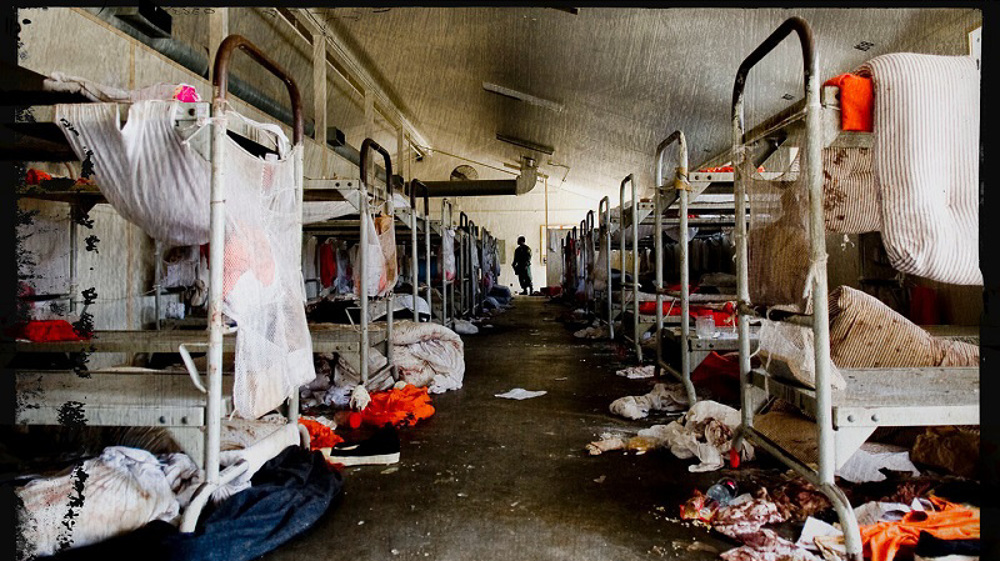
Why have US policies and incentives expanded the prison population?
The scale of incarceration in the US is not simply a response to crime. It is the result of policy decisions and institutional incentives built over decades. Laws passed since the 1970s steadily expanded the prison population and locked in pressures that keep it high, even when crime falls.
The so-called ‘War on Drugs’, launched in the 1980s, was a turning point. Data from the BOP show that people convicted of drug offenses now make up nearly 46 percent of the federal prison population, compared to less than 10 percent in the 1980s.
Mandatory minimum sentencing laws adopted alongside drug policy forced judges to impose fixed prison terms for certain crimes. These laws sharply reduced judicial discretion and lengthened sentences. The TSP reports that mandatory minimums added an average of three to five years to sentences for drug offenses, driving sustained population growth.
Repeat-offender laws intensified the trend. Three-strike statutes in several states imposed extreme penalties for repeat convictions. In California, individuals faced life sentences after three felony offenses. According to the Public Policy Institute of California (PPIC), this policy contributed to a 40 percent increase in the state’s prison population between 1990 and 2000.
Financial incentives also play a stabilizing role. The BJS reports that private prisons hold about 8 percent of people in federal and state custody. These facilities operate on contracts that reward high occupancy. Prison guard unions exert similar pressure. Through lobbying, they have frequently opposed reforms that would reduce inmate numbers.
Campaign finance data analyzed by the Center for Responsive Politics (CRP) show that the corrections sector and private prison companies contributed more than $25 million to federal and state political campaigns between 2010 and 2020, reinforcing policies that favor continued incarceration.
Truth-in-sentencing laws, adopted in more than 30 states, require people to serve at least 85 percent of their sentence before becoming eligible for release. According to the BJS, between 1991 and 201,0 the prison population continued to rise, peaking at over 1.6 million in 2008.
These policies and incentives show that mass incarceration is not accidental. The US prison system does not simply respond to crime. It is sustained by legal rules and financial interests that expand and preserve the population, even as the conditions that once justified that growth recede.
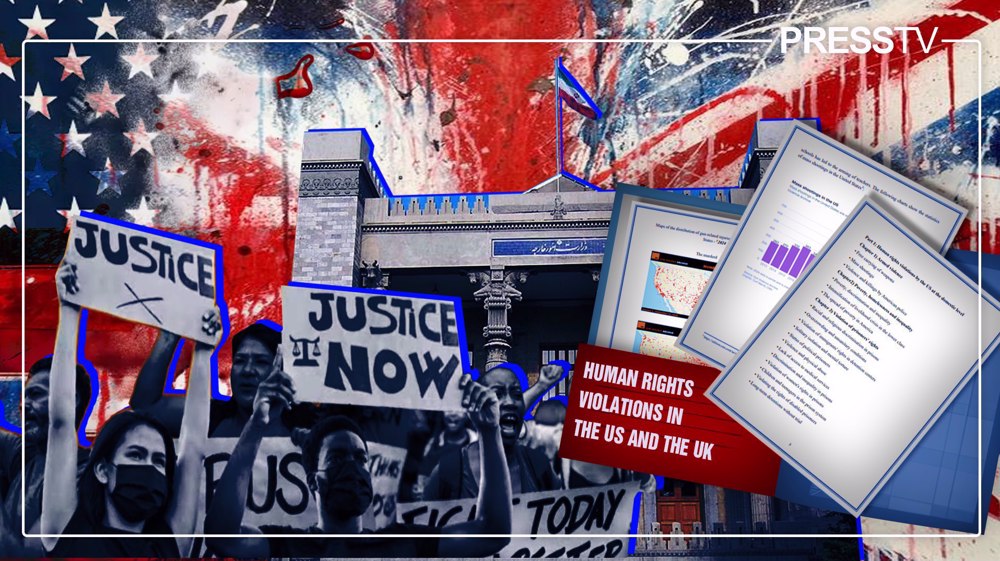
Who bears the heaviest burden of mass incarceration along racial lines?
Mass incarceration in the US falls unevenly along racial and ethnic lines. Data from the BJS show that Black Americans are incarcerated at a rate of roughly 1,000 per 100,000 residents. This is nearly five times the rate for White Americans, which stands at about 214 per 100,000.
Hispanic Americans face lower rates than Black Americans but significantly higher than White Americans, at approximately 400 per 100,000. These gaps are most pronounced in drug and property offenses, even though offending rates are similar to or lower than those of White populations, according to the National Research Council (NRC).
Lifetime risk figures underscore the depth of the disparity. The TSP reports that one in three Black men born in the US today is likely to spend time in prison during his lifetime.
For Latino men, the figure is one in six. For White men, it is one in seventeen. Among women, the pattern persists at lower levels: one in eighteen Black women can expect imprisonment, compared with one in ninety White women.
Racial disparity is reinforced at every stage of the criminal justice process. Data from the National Association for the Advancement of Colored People’s Legal Defense Fund (LDF) show that Black and Latino defendants are more likely to be stopped, arrested, charged, and convicted for low-level offenses.
They are also more likely to receive longer sentences than White defendants for similar conduct. Pretrial detention intensifies these inequalities. Because minority defendants are overrepresented among those unable to pay bail, they spend more time in jail before trial, increasing both the likelihood of conviction and the severity of sentencing.
Drug enforcement offers a clear illustration. Despite comparable rates of drug use, Black Americans are nearly four times more likely than White Americans to be arrested for marijuana possession, according to the American Civil Liberties Union (ACLU).
These disparities carry through to sentencing outcomes. In federal drug prosecutions in 2020, Black defendants accounted for 28 percent of cases and Hispanic defendants for 30 percent, despite representing smaller proportions of the overall population.
Communities with high levels of minority incarceration experience chronic family disruption, reduced access to stable employment, and diminished political power through felony disenfranchisement. The evidence shows that mass incarceration in the US is not race-neutral. It concentrates punishment on minority populations and entrenches cycles of disadvantage that persist across generations.

What are the wider economic, social, and civic consequences of mass incarceration?
Mass incarceration in the US affects more than just those behind bars. It imposes high economic, social, and civic costs on society as a whole.
According to the BJS, federal and state prisons alone cost taxpayers more than $80 billion each year, while local jails add roughly $25 billion in operating expenses.
The Vera Institute of Justice (VIJ) reports that the average annual cost per inmate exceeds $36,000, rising above $60,000 in high-security facilities. These expenditures divert funds from education, healthcare, and infrastructure.
The labor market is deeply affected. The Pew Charitable Trusts (PCT) finds that formerly incarcerated people face unemployment rates of 27 percent, almost five times the national average, and earn roughly 30 percent less than their peers.
Felony convictions also restrict access to housing, student loans, and professional licenses, limiting economic mobility and contributing to intergenerational poverty.
Families bear a heavy toll. The Urban Institute (UI) estimates that 2.7 million children in the US have at least one parent in prison. Research shows that parental incarceration raises the likelihood of school dropout, behavioral problems, and future involvement with the justice system, creating cycles of disadvantage that span generations.
Civic participation suffers as well. TSP data indicate that over 6 million Americans are barred from voting due to felony convictions, disproportionately affecting minority communities. This loss of political power undermines democratic representation and entrenches social inequality.
High incarceration rates also fail to yield proportional gains in public safety. The NRC reports that US incarceration quadrupled between 1970 and 2000, yet crime rates fell only modestly. Further expansion of the system is unlikely to produce meaningful reductions in crime.
Mass incarceration imposes a sweeping societal burden: massive public spending, reduced economic opportunity, fractured families, curtailed political participation, and minimal crime reduction. The system confines millions effectively, but it does so at the expense of social and economic health, revealing a crisis that extends far beyond the prison gates.
Trump administration sues UCLA over anti-Semitism allegations

Petrochemical spill triggers mass evacuation in south California

Gunmen attack Islamic Center of San Diego amid rising Islamophobia in US



Leader’s advisor: Iran remains formidable obstacle to US-Israeli malicious plans in West Asia
Iran says no final understanding with US yet, rejects Trump's 'language of must'
Iran, Oman FMs discuss administration of Hormuz Strait in ‘very productive’ call
Italy: Protesters stage nationwide strike, demand end to Israeli genocide in Gaza
US will not be allowed to control Cuba's destiny through coercion, military threats: Diplomat
Iran’s active role in Eurasian bloc reflects its strong commitment to development: President
Champions again: Iran women’s volleyball retains CAVA title
Polls show Trump’s approval ratings drop to new lows





 PressTV NEWSLETTER
now
PressTV NEWSLETTER
now
 This makes it easy to access the Press TV website
