EU's Juncker, US president to hold trade talks on July 25

European Commission President Jean-Claude Juncker plans to hold trade talks with US President Donald Trump in Washington on July 25 amid the ongoing row between the two sides on additional tariffs.
"President Juncker and President Trump will focus on improving transatlantic trade and forging a stronger economic partnership," the Commission said in a statement on Tuesday.
It added that they would also discuss foreign policy, counterterrorism and energy security.
On June 10, the administration of US President Donald Trump imposed 10 percent tariffs on aluminum imports and 25 percent tariffs on steel imports, which mainly affects the EU, Canada, and Mexico, ending exemptions that had been in place since March.
Trump argued at the time that enormous flows of imports to the US were putting in jeopardy the American national security, and made an odd departure from a decades-long US-led move towards open and free trade.
He further escalated tensions last month with threats to impose up to 20 percent tariffs on all cars and car parts manufactured within the EU, a move that could upend the industry's current business model for selling cars in the US.
Germany said on Monday that European countries can no longer fully rely on the United States, calling for a unified front against Washington after President Trump called the 28-member bloc a “foe” with regard to trade.

“We can no longer completely rely on the White House,” German Foreign Minister Heiko Maas told the country’s Funke newspaper group.
China’s Ministry of Commerce also announced on Monday that Beijing has filed a complaint with the World Trade Organization (WTO) against the new US-proposed tariffs on Chinese goods, reacting to American unilateralism in a move that could further deepen rift with Washington over a protracted trade dispute.

It added that the measure had been adopted to counter the US president's threat to impose 10 percent tariffs on an extra $200 billion worth of Chinese imports.
The US administration has already imposed 25 percent tariffs on $50 billion in Chinese goods, prompting blow-for-blow retaliation from Beijing.
Earlier in July, the French government said the United States should expect "united and strong" retaliation from European countries if it moves to impose more tariffs.

"If tomorrow there is an increase in tariffs, like in the car industry, our reaction should be united and strong to show that Europe is a united and sovereign power," French Finance Minister Bruno Le Maire said in an address to an economic conference in Aix-en-Provence, southern France, on July 8.
During the 2016 US presidential campaign, Trump repeatedly attacked America's trade deficits, contending they were the result of incompetent US negotiators striking bad deals and abusive practices by US trading partners.
Read more:
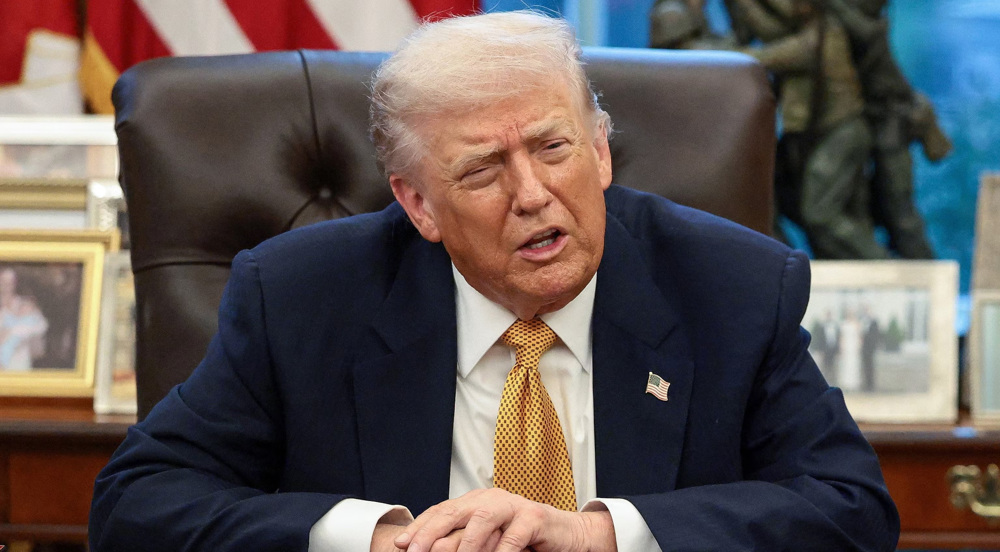
Trump says 'feels no obligation' to pursue peace after Nobel Prize snub

EU mulls over $100bn in US retaliatory tariffs over Greenland
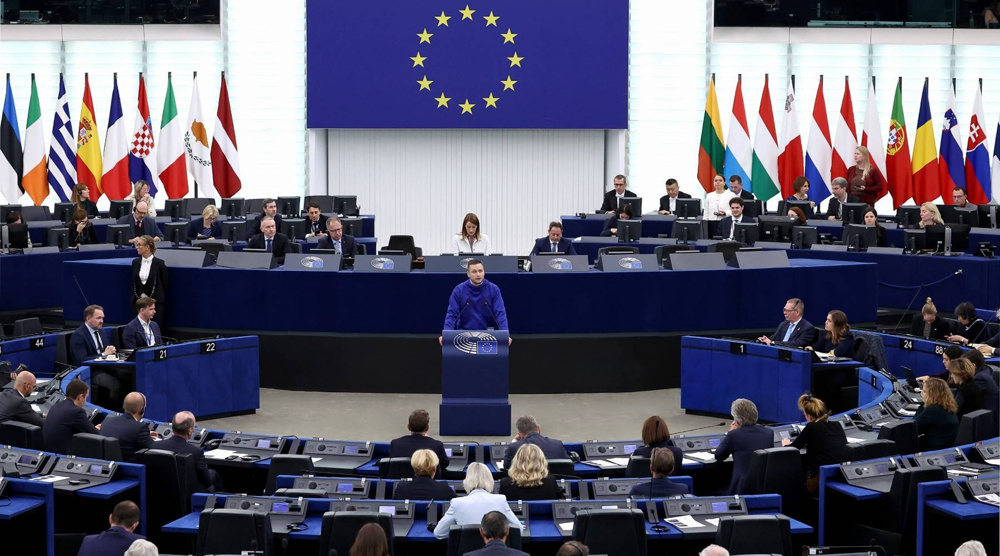
European leaders reject Trump’s ‘blackmail’ over Greenland tariffs



Heads of govt. branches vow to resolve economic woes, ensure public security
Several killed as explosion hits Kabul's secure district
Trump says 'feels no obligation' to pursue peace after Nobel Prize snub
Israeli military kills Palestinian teen in southern Gaza despite truce
Recent terrorist war on Iran similar to Israel’s pager attack on Lebanon: Qalibaf
VIDEO | Thousands rally in Kargil against US, Israel 'interference' in Iran
Hamas blasts ‘torture and brutality’ against Palestinian prisoners in Israeli jails
Truth as first casualty: Deconstructing disinformation campaign on Iran riots death toll


 PressTV NEWSLETTER
now
PressTV NEWSLETTER
now

 This makes it easy to access the Press TV website
