Annual tax avoidance costs UK billions in lost revenue: Report

Tax fraud by multinational firms is costing the British economy a staggering £16 billion every year, an audit report says.
The report released by the National Audit Office on Thursday shows the tax evasion and organized criminal activities make up almost half of the total £34 billion "tax gap" the government comes up annually.
The government’s independent auditors, in the course of their examination, found the tax evasion worth £4.4bn, the hidden economy worth £6.2bn and criminal attacks worth £5.1bn.

Her Majesty's Revenue and Customs (HMRS) which is the main force behind the tax collection has been criticized for its lackluster response to big firms. Critics say that tax officials are focusing on small-scale tax evaders and their persecution for income-tax or valued-added tax while ignoring corporation involved in bigger tax frauds.
According to the report, it is difficult to assess the impact of the prosecution of low-value tax offenders as HMRC research had not been able to find evidence that the cases led to increase in tax revenues.
“HMRC still focuses too much on small businesses – the easy wins – and lets the big multinationals off the hook. It’s one thing to tackle evasion – I want them to be much tougher on aggressive tax avoidance. All we are asking is that people pay a fair amount on the profits they make from their business in the UK,” Margaret Hodge, the chair of the all-party group on responsible taxation, said.

Meg Hillier, the chair of the public accounts committee, said HMRC needed to think harder about how it tackles tax evasion, the hidden economy and criminal attacks.
However, an HMRC spokesman said the organization is steadily reducing the tax gap and defended its attempts to tackle avoidance.
“Additional funding and new measures contained in the summer budget and autumn statement is allowing HMRC to crack down further on the hidden economy, get tougher on offshore evasion, and increase the number of prosecutions of wealthy tax evaders.
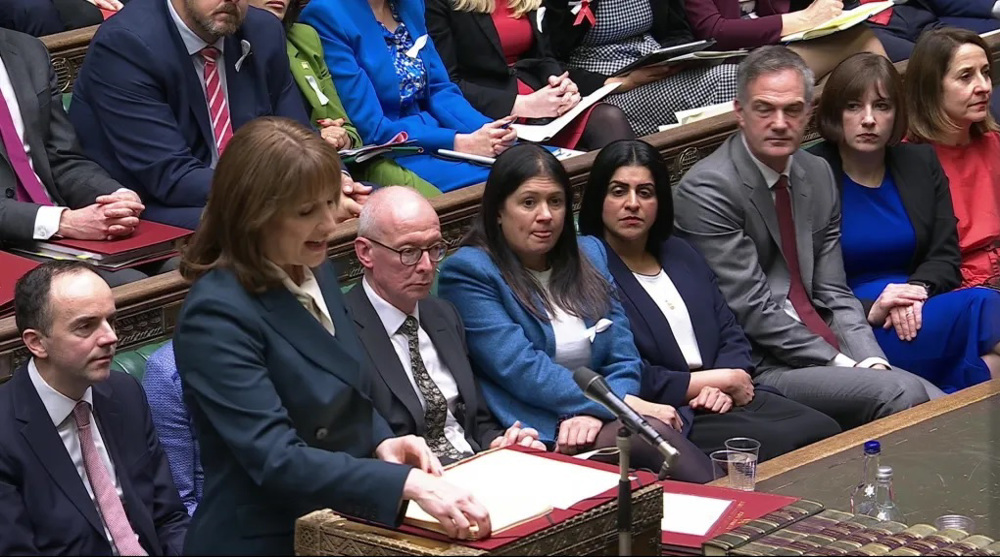
UK budget leak fiasco

UK unemployment rate climbs to four-year high of 5%

Britain seeks EU, US steel pact to counter China



Swiss to act as venue of next round of Iran-US talks: Report
Report: Over 50,000 soldiers fighting in Israeli military hold foreign citizenship
Danish PM warns US attack on Greenland would spell end of NATO
Power running out at key Gaza hospital, ICU patients at risk: Report
VIDEO | Press TV's news headlines
‘Speaking truth is her crime’: Netizens rip into European allies of Israel for targeting Albanese
Russia reaffirms support for Iran’s sovereignty amid rising US threats
VIDEO | 3,000 bodies of Palestinians ‘evaporated’ as Israel used banned weapons in Gaza


 PressTV NEWSLETTER
now
PressTV NEWSLETTER
now

 This makes it easy to access the Press TV website
