Lebanese protesters block access to Electricity Ministry

Dozens of activists have blocked access to Lebanon’s Electricity Ministry in the capital, Beirut, to protest against high electricity prices and condemn what they call corruption in government institutions.
On Tuesday, employees were prevented from entering after activists from the “We Want Accountability” campaign linked arms outside the ministry’s building and refused to allow entrance to anyone.
Several windows of the building broke during clashes that erupted after police attacked the protesters.
Activists were heard outside the ministry yelling “One bill, not two!” The protesters were criticizing the current system based on which electricity users make payments for government-provided electricity, and to local generator companies.
Lebanon has seen power cuts on an almost daily basis because of outdated and damaged infrastructure that the ministry continues to put in use despite public outcry.
“It’s not just the ministry of energy that our movement will target, but every single ministry. We will hold every corrupt person accountable,” one protester said.

“We will surprise the authorities at a new center of corruption every time, and we will continue to demand accountability for corrupt officials,” said another.
Garbage crisis
The “We Want Accountability” campaign has played a major role in demonstrations across the capital and elsewhere to pressure the government to take more measures to end corruption.
The new wave of protests comes as the Lebanese capital has witnessed several protests over alleged government corruption and its failure to remove garbage from the city. The demonstrations broke out after the Environment Ministry closed Naameh landfill site on July 17 because it had been filled up, without offering an alternative.
The crisis triggered major protests across Lebanon. The Lebanese government has approved a plan to open two more sanitary landfills for the garbage, but the garbage remains in most parts of the capital.
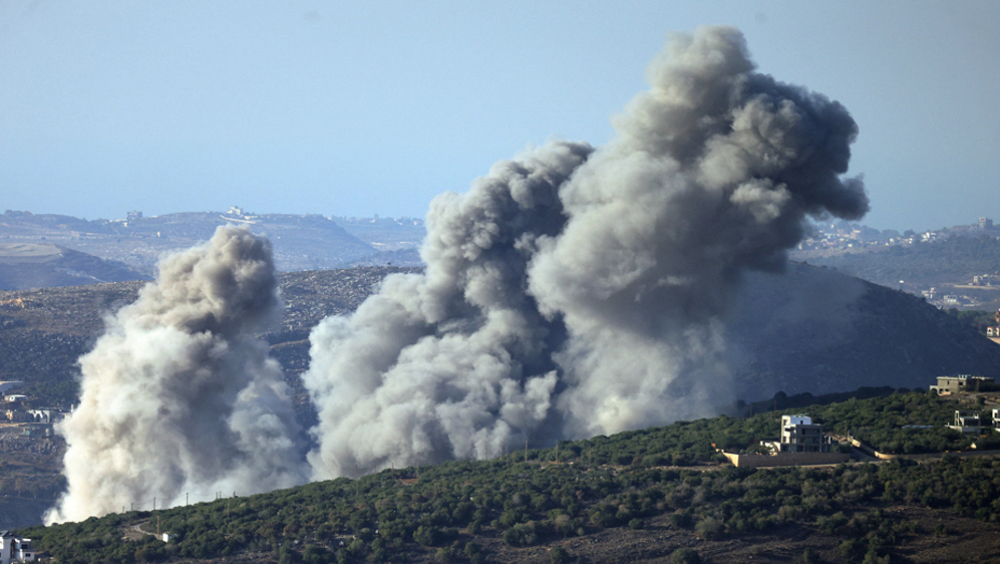
Israel kills 3 in south Lebanon as it threatens ‘wide-scale’ attack

Sheikh Qassem: Hezbollah won't disarm, state weapons monopoly is US-Israeli plot

Talk of Israeli attack on Hezbollah in line with Israel’s agenda: Lebanese MP



Imam Reza (AS) holy shrine begins accepting crypto donations
VIDEO | Newborn deaths surge in Gaza amid siege and maternal malnutrition
VIDEO | Pakistan, China conclude joint counterterrorism drills
Palestinian authorities slam ‘dangerous’ Israeli plan for 9,000 West Bank settler homes
‘Israeli actions, not Iran, fuel anti-Semitism’: Netizens react to Jewish holiday attack in Sydney
Iran opposes Trump's corridor plan for Caucasus: Leader’s aide
VIDEO | Press TV's news headlines
Iran offering aircraft maintenance services to Venezuela: Aviation chief


 PressTV NEWSLETTER
now
PressTV NEWSLETTER
now

 This makes it easy to access the Press TV website
