

Iranian President Masoud Pezeshkian says Tehran has lost faith in negotiating with the United States after earlier rounds of talks were disrupted by military strikes and sanctions against the Islamic Republic.
In an interview with the Qatar-based broadcaster Al Jazeera aired on Saturday, Pezeshkian said Iran sees no clear basis for reaching an understanding with Washington.
“We have no trust in the American side and do not know on what basis an understanding can be reached with it,” he argued.
The Iranian president's remarks came after he and Foreign Minister Abbas Araghchi attended the United Nations General Assembly in New York this week and presented a proposal aimed at ending the US-Israeli war against Iran and reopening the Strait of Hormuz within seven days.
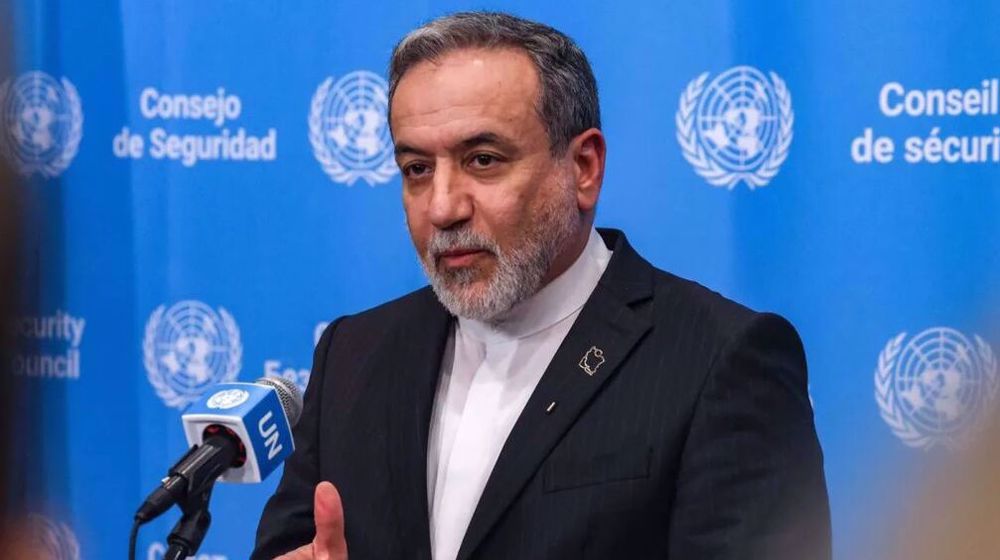
Pezeshkian said Qatar and Pakistan are acting as intermediaries, relaying Iran's messages to Washington. He noted that the talks rest on the memorandum of understanding previously reached between the two sides in June. He emphasized that Washington must make clear its stance on that agreement, which expired last month.
The United States and the Israeli regime waged their illegal war of aggression against Iran on February 28. However, forty days later, on April 8, the enemies were forced to accept a ceasefire amid Iran’s brave resistance and successful retaliatory operations.
On June 17, Tehran and Washington signed the 14-point Islamabad MoU, which called for an end to hostilities, the reopening of the Strait of Hormuz and further negotiations toward a final agreement.
However, Washington violated all provisions of the understanding, prompting Iran to deliver a firm response.
Hormuz Strait closure ‘a natural response’
Addressing the Strait of Hormuz, the Iranian president rejected accusations that Tehran was responsible for disrupting maritime traffic, saying the closure of the strategic waterway was a consequence of US actions against Iran.
The US “closed the routes before us,” he said, describing the closure as “a natural response when routes are cut off to Iran.”
Pezeshkian added that the crisis could be settled through diplomacy rather than force and reiterated that commercial shipping could resume if negotiations ended the war.
Calling the US the aggressor in the war, he emphasized that Iran "has not attacked any country in 200 years". He said the US and Israel had pulled regional nations into the war in the belief that the Iranian system "would collapse within days".
“We withstood the American and Israeli attacks, and we will continue to stand firm,” he said, adding that neither the killing of Iranian commanders nor economic pressure had caused Iranians to retreat.
Pezeshkian said Israel and the United States had carried out attacks on Iran from the airspace of Muslim countries, explaining that Tehran targets bases used by US forces in the region because attacks against Iran are launched from those facilities.
He stressed that Iran seeks nothing beyond the framework of international law and responds only when other parties violate its rules.
The Iranian president also linked the sanctions imposed on Iran to tactics used by Israel in its genocidal war against Palestinians in Gaza.
“Those who deny Iranians medicine and raw materials are the same people who cut off food and water from Gaza,” he said, warning that anyone who believes Iran can be targeted through sanctions has “miscalculated”.
Iran has restricted transit through the Strait of Hormuz since the early days of the US-Israeli war of aggression that began on February 28 and came to a halt under a ceasefire in early April amid the Islamic Republic’s brave resistance and successful retaliatory operations.
Article 5 of the Islamabad MoU places responsibility for reopening and managing the strait squarely in Iran’s hands.
However, the US attempted to undermine Iran’s sovereignty over the vital global energy chokepoint by establishing an unsafe corridor near the Omani shores. The US also resumed its aerial assaults on Iran and imposed a naval blockade of the country in violation of the war-ending deal.
The unlawful US measures prompted Iran to declare the Strait of Hormuz closed to all traffic.
The Islamic Republic has stressed that the reopening of the critical waterway depends on US compliance with its obligations under the MoU.
No need for a regional policeman
Pezeshkian further stressed that regional security should be ensured through cooperation among the countries of the region, saying, “We do not need a regional policeman.”
He added that the US and Israel are seeking to create divisions among Muslim countries to control the region’s resources, noting that Saudi Arabia could play a role in promoting unity across the Muslim world.
On Yemen, Pezeshkian rejected any link between Iran and the actions of the Houthis, saying Tehran stands in solidarity with “everyone subjected to injustice.”
He urged the Houthis and Saudi Arabia to settle their differences through dialogue, stressing that “a brother should not fight his brother,” and offered Iran’s assistance in resolving the dispute.
“We will not be warmongers,” the Iranian president said.
Enemies seek to stir disagreements among Iranians
Turning to domestic issues, Pezeshkian said Iran’s “enemies” are seeking to sow discord among Iranian officials while the country is experiencing “unprecedented unity and cohesion.”
He noted that he had met twice with Leader of the Islamic Revolution Ayatollah Seyyed Mojtaba Khamenei, including once for a seven-hour meeting during which they discussed key issues. Pezeshkian also pledged to address “accumulated imbalances in Iran’s internal conditions.”
He said the United States and Israel sought to prevent Iran from becoming self-reliant, but stressed, “We will invest in our people.”
 This makes it easy to access the Press TV website