
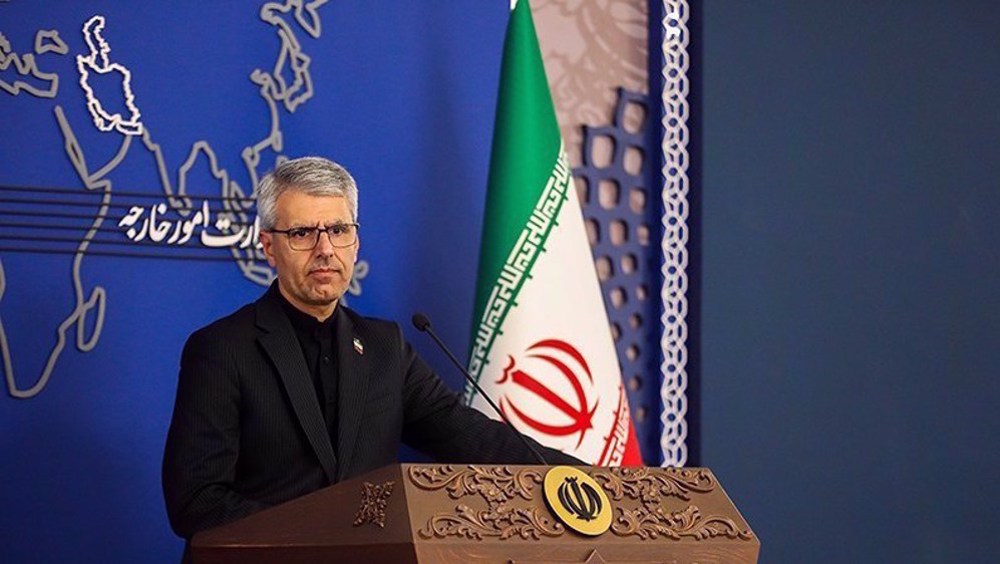
Iran’s Foreign Ministry spokesman has slammed US officials for shifting responsibility for rising fuel prices onto Tehran, arguing that Washington’s actions triggered the crisis that led to the closure of the Strait of Hormuz and disrupted commercial shipping.
In a post on his X account on Tuesday, Esmaeil Baghaei said US officials were seeking to make the public forget who initiated a war of aggression and whose actions ultimately contributed to the disruption of energy supplies and maritime trade.
“US officials blame Iran for rising fuel prices, as if the public’s memory is short enough to forget who actually initiated the war of aggression, and whose actions created the crisis that led to the closure of the Strait of Hormuz and the disruption of commercial shipping,” the statement said.
It added that such attempts to shift responsibility were not unprecedented, drawing a historical comparison with Nazi Germany’s justification of its 1939 invasion of Poland as a defensive action.
“When the instigator of an unlawful ‘war of choice’ blames the victim for the fallout, should this be viewed as ‘strategic brilliance,’ or is it simply a textbook symptom of ‘The March of Folly’?” he asked.
U.S. officials blame Iran for rising fuel prices, as if the public's memory is short enough to forget who actually initiated the war of aggression, and whose actions created the crisis that led to the closure of the Strait of Hormuz and the disruption of commercial shipping.…
— Esmaeil Baqaei (@IRIMFA_SPOX) September 22, 2026
The strategic Strait of Hormuz — a vital route for roughly one-fifth of the world’s oil and gas shipments — has remained effectively closed by Iran since early March, days after the unprovoked US-Israeli war of aggression began on February 28.
The Islamic Republic warned it could target vessels of aggressors or those of their allies crossing the waterway in response to US-Israeli strikes.
The shutdown has caused severe disruptions to global energy flows and triggered sharp price volatility. The international oil benchmark Brent crude surged more than four percent to above $105 a barrel at one point before falling back to around $105 after US President Donald Trump rejected Iran’s latest response to US ceasefire proposals.
Iran had conveyed its position through Pakistan, which has served as a mediator between the two sides, demanding an immediate end to the war and guarantees against future US-Israeli attacks.
Although prices later eased slightly, investment bank JP Morgan said oil is likely to remain in the “low $100s” for most of the year, “averaging $97 for 2026 as a whole,” and warned that even a reopening of Hormuz would not quickly restore normal supply conditions.
 This makes it easy to access the Press TV website