
By Ivan Kesic
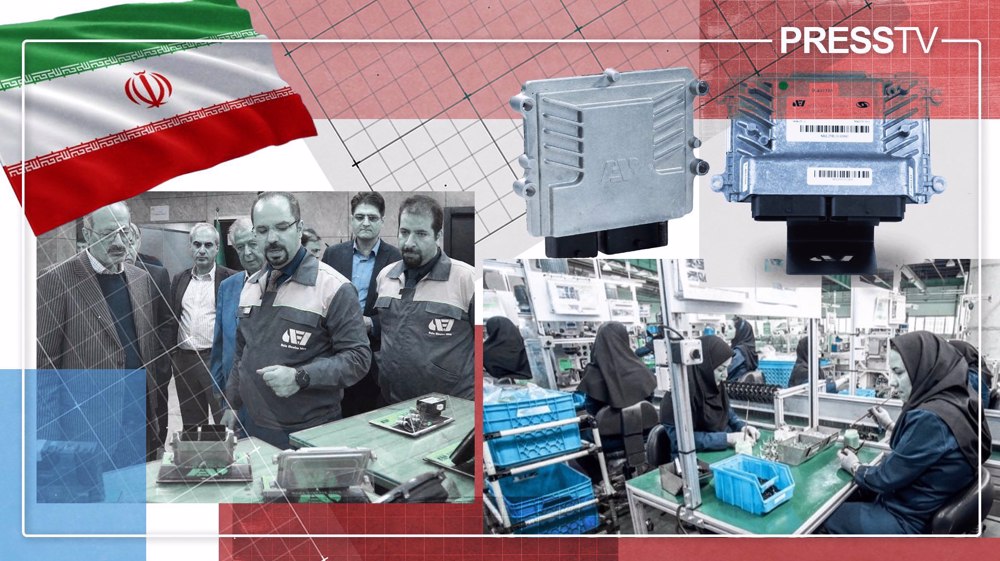
Earlier this year, Iranian engineers at a knowledge-based company in Tehran announced the start of widespread use of a new generation of advanced engine control units, the electronic "brains" that manage a vehicle's engine, and the product has already entered service on multiple domestically manufactured car models.
The innovation was led by Azin Electro Idea, a relatively new firm operating within the Azin Khodro Industrial Group, which brings together up-to-date microcontrollers, refined software and careful calibration to deliver measurable reductions in fuel consumption and emissions.
The development reflects a broader capability that few domestic firms have reached, spanning hardware design, embedded software, calibration and series production.
It also carries practical consequences for industry and for the environment, since optimized combustion management translates directly into lower fuel consumption and cleaner exhaust.
For Iran's automotive sector, it represents a meaningful step toward supply security and reduced dependence on imported electronics in one of the vehicle's most strategically sensitive components.
What an ECU actually does
Understanding why it matters requires a basic grasp of what an engine control unit (ECU) is.
The ECU is the electronic control unit of the vehicle, responsible for managing and controlling the car in order to obtain the best and most optimal efficiency and correct functioning.
In simpler words, it is the brain and heart of the car, receiving and processing information from numerous engine and vehicle sensors from the moment the car starts until it stops completely, then using programmed control algorithms to issue commands to actuators.
In the combustion section, the ECU determines how much fuel to inject and when the ignition occurs, an issue that directly affects the car's performance, fuel consumption and emissions.
A simplified description of the signal chain would run from sensors, through the ECU and its calibrated software calculations, to actuators such as injectors, ignition systems and throttle controls.
That means localising an ECU involves far more than producing a metal box containing a circuit board.
It potentially involves hardware design, embedded software, calibration, diagnostics, communications, environmental validation, electromagnetic compatibility, production testing and vehicle integration, each of which demands its own engineering discipline and its own testing regime.

Company behind the achievement
Azin Electro Idea was established in 2019 with the aim of developing new automotive electronic technologies, and it began its research activities in the field of automotive electronics in 2016, three years before its formal establishment, before stepping into knowledge-based activity in 2019.
It is one of the knowledge-based companies under the aegis of Azin Khodro Industrial Group, which was itself established in 1991 to develop the country's automotive parts industry and today operates with 18 subsidiary companies and more than 6,000 experts, making it one of the largest and most key suppliers of strategic parts and interior trim for automobiles.
The group's diverse products include dashboards, sunroofs, door handles, complete seat packages, headliners, sun visors, floor carpet parts, sound and heat insulation, rubber and polymer parts, and advanced electronic parts including wiring harnesses, ECUs, clusters, fuse boxes, roof consoles and body control modules.
It has obtained international certificates including ISO/IATF16949 and Renault-B rating, as well as approvals from Peugeot, and cooperates with globally renowned brands such as Forvia of France in the production of seats and Noorsan of Turkey in the production of wiring harnesses.
In its early phase, Azin Electro Idea employed 30 people in research and development and 15 in production, with 25 working directly on the company's initial project in automotive electricity and electronics.
The company's production began with ECU testing, then moved to roughly 500 ECU samples in late 2019, around 10,000 units in the following year, and approximately 30,000 by the end of 2020, with a planned production capacity of twelve hundred ECUs per day.

Three products and one new generation
The company's portfolio includes several ECU products that together illustrate the depth of its engineering capability.
The SIM2K34 is suitable for all vehicles with Siemens wiring harness and mechanical throttle, and the company notes an ECU design by Siemens, with Azin Electro Idea listed as manufacturer.
It manages a conventional collection of engine functions, including the accelerator pedal sensor, throttle sensor, water temperature sensor, oxygen sensor, engine speed sensor, camshaft sensor, manifold air pressure sensor, gasoline relay, canister solenoid valve, knock sensor, check light, exhaust and cruise control switches.
The AZMT represents a further step in this progression. According to the company, it is an ECU developed by Azin Electro Idea for vehicles equipped with electronic throttles, issuing control commands to the manifold air-pressure sensor, fan relay, and canister solenoid valve, while also interfacing with the engine-speed and oxygen sensors.
The shift from mechanical to electronic throttle control marks a meaningful architectural advance. In a drive-by-wire system, the traditional mechanical linkage between the accelerator pedal and throttle plate is replaced by electronic sensing and actuation, allowing the ECU to determine the desired engine torque and coordinate fuel injection and ignition accordingly.
The AZMT CVT extends this capability further, handling fuel and air control, ignition-system management, communication with sensors and data processing, as well as automatic transmission control. The system is designed to be fully compatible with the safety and electronic standards of domestically produced vehicles.
Because the company’s own documentation confirms that this variant performs automatic transmission control, it represents a broader powertrain-control application rather than simply an engine ECU installed in a vehicle equipped with a continuously variable transmission.
Taken together, these products demonstrate a clear progression in technological ambition, from manufacturing established architectures to developing indigenous platforms and ultimately extending them into more specialized powertrain configurations.
The systems have also moved beyond laboratory development and into vehicle programs. In its report on 2024 activities, Saipa’s Megamotor said it had completed calibration projects for the Saina and Quick models using ECUs supplied by Azin Electro Idea, covering both manual-transmission and CVT applications.

Software, testing and the environmental case
The company's strategic director has explained that the new ECUs, in addition to using up-to-date microcontrollers, have also been optimized in terms of software, with those optimizations effective in combustion management, fuel injection rate and spark plug timing, ultimately reducing fuel consumption and pollutant production.
Cars are described as the most important source of pollution in large cities after factories, and the company argues that by using this product, a significant portion of environmental pollution caused by cars can be reduced.
Given the characteristics of domestic gasoline, the localization of the product has been carried out in accordance with the fuel conditions of the country.
Based on research and tests, the company has reported that vehicles equipped with the product achieved emissions levels between five and ten percent below the applicable regulatory limits.
Before being released to the market, the part must pass a variety of performance, durability and related specialized tests, and to receive environmental approvals an emission test is also performed in which the vehicle equipped with the ECU is considered and the amount of exhaust gases is measured, with the product denied a sales licence if emission levels exceed the specified standard limits.
The company's product descriptions also note that its units obtain electromagnetic compatibility approvals alongside emission testing, calibration, power and torque testing and performance testing, which together indicate automotive-grade development and validation rather than simple electronic-board assembly.

Significance for the domestic market
The domestic significance of this work lies partly in supply security. Iran has a large automotive manufacturing sector, but advanced automotive electronics have historically remained an area in which imported technologies and components played a substantial role.
An ECU can become a significant supply-chain vulnerability when an automaker depends on a foreign supplier for hardware, firmware, calibration, replacement units, diagnostic access, software updates, or proprietary communication protocols.
The company’s chief executive has said that one of its key achievements is reducing dependence on major international suppliers such as Bosch, Siemens, and Continental.
He described this as a particular advantage under the current sanctions environment, allowing vehicle-production technologies and various vehicle features to be upgraded without the same concerns over sanctions-related restrictions.
He cited progress in areas including vehicle emissions standards, fuel-consumption reduction, and the transition from Euro 4 to Euro 5 standards, achieved through domestic capabilities. He also highlighted work to synchronize ECU calibration with individual vehicle engines.
The company has expanded beyond domestic vehicle platforms as well, entering the automotive-electronics market for foreign-made vehicles and working on the localization of ECUs for Chinese cars.
In terms of market position, the company’s strategic director has identified Crouse as its only domestic competitor, stating that no other Iranian manufacturer is currently active in this field.
While automakers previously met part of their ECU requirements through imports, Azin Electro Idea now supplies more than 30 percent of the domestic market’s ECU demand, according to the company. That represents a notable position for a firm established only in 2019.
Pricing in the automotive sector, the company notes, is determined by automakers, with suppliers required to operate within the pricing framework established by their customers. As a result, suppliers do not independently set or announce the final price of their components.
Domestic ECU production nevertheless offers a potential cost advantage over imported alternatives while reducing dependence on foreign suppliers and helping conserve foreign-exchange resources.

Beyond the ECU
The new-generation ECU is not an isolated product but part of a broader automotive-electronics portfolio.
Azin Electro Idea has designed and produced new models of instrument clusters, the dashboard units that provide drivers with information including vehicle speed, engine speed, fuel level, warning indicators, engine fault notifications, gear position, cruise-control status, and tire-pressure monitoring.
The company has also supplied front amplifier units in response to demand from the automotive industry.
Its portfolio further includes automotive multimedia systems, a feature once largely associated with mid- and high-priced vehicles but now increasingly widespread, including in some domestic economy models.
Across its activities, Azin Electro Idea has received four knowledge-based certifications for its advanced products.
The company’s ambitions extend accordingly beyond individual components. Its stated vision is to become a leading domestic knowledge-based company in both automotive and non-automotive fields, contribute to the transformation and growth of Iran’s electronics industry, and ultimately rank among the world’s top 20 companies.
Its mission encompasses the generation and application of technical knowledge, implementation of relevant standards, and the design, production, and export of advanced electronic components and assemblies for both automotive and non-automotive applications.

From components to capability
An accurate account of this feat must also consider how the company sources its inputs. The chief executive has noted that the raw materials and electronic components used in these products are imported from China, while emphasizing that even highly industrialized countries do not necessarily manufacture all of their electronic components domestically and that China is a major global supplier.
The company’s core design and software capabilities, however, are developed domestically. Another important element of its contribution is that production does not depend on licenses from foreign companies, which can represent a significant component of the overall cost of an automotive electronic system.
The company has also faced familiar pressures, including lengthy delays in payments from automakers, significant exchange-rate fluctuations, difficulties securing financing, and the need for more consistent institutional support.
In response, it has planned to extend its products into non-automotive industrial sectors, including railways and locomotives, as well as the oil and gas industries.
Along the way, the company has built capabilities spanning hardware design, embedded software, calibration, electromagnetic compatibility, emissions testing, and durability validation, under conditions that have made access to advanced technologies considerably more difficult.
In global terms, engine-management ECUs have been mass-produced for decades by suppliers operating at enormous scale. Modern high-end controllers can integrate multicore processors, extensive vehicle networking, functional-safety systems, cybersecurity features, and increasingly centralized computing architectures.
There is not enough publicly available technical information about Azin Electro Idea’s platforms to make a meaningful quantitative comparison with the latest global ECU architectures. The significance of the company’s achievement, therefore, is not that it has created an entirely new class of engine-control system.
Rather, it lies in its ability to design, calibrate, validate, and manufacture an engine-control platform for domestically produced vehicles; reduce reliance on imported technology in a strategically sensitive component; and extend that capability from engine management toward broader powertrain control.
For a country whose automotive industry has long faced restrictions on access to advanced electronics, this represents a substantive industrial achievement and a clear example of domestic engineering capabilities being translated into production.
It demonstrates that Iranian engineers have developed the capacity to take on some of the most technically demanding electronic systems in a modern vehicle, adapt them to domestic requirements, and deploy them in support of more efficient and increasingly self-reliant vehicle production.
 This makes it easy to access the Press TV website