‘Nightmare for enemies’: Iran launches mass ‘Sacrifice for Iran’ drill
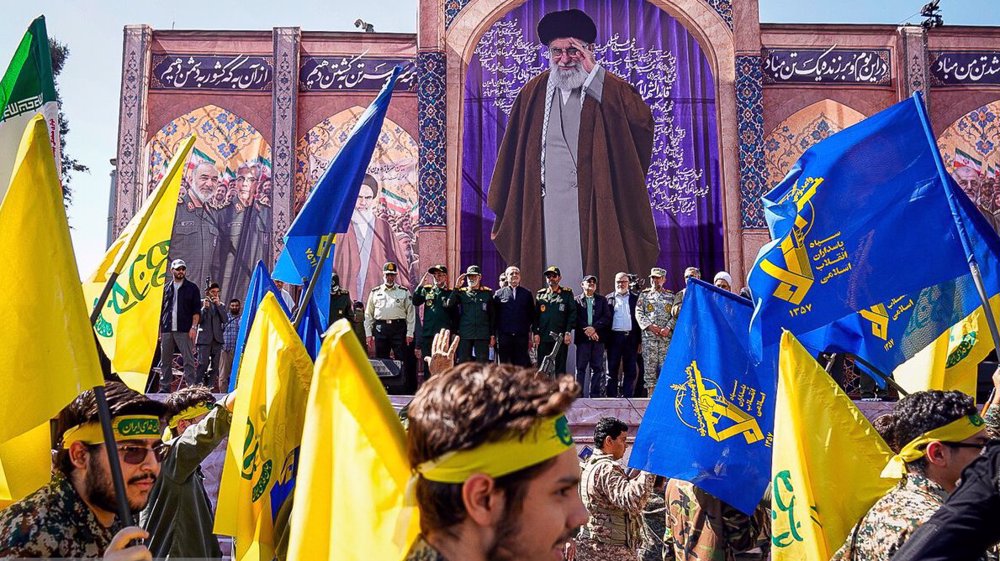
The large-scale “313,000 Janfada of Iran” drill began in Tehran and across the country, with an IRGC commander describing the participants as a “nightmare for the enemies” and a symbol of national resistance.
The drill began at 8 a.m. on Friday with the participation of combat battalions from the Jan-Fada (sacrifice for Iran) campaign and people from all walks of life.
In Tehran, participants are gathering along a route in the center of the capital, stretching from Imam Hossein Square through Enghelab Square.
People from different groups and professions are taking part in 72-member battalions. A large turnout has been anticipated across the capital.
Organizers say the drill aims to help create sustainable security, demonstrate popular power and strengthen resistance against threats from the country’s enemies.
Thousands of people took part in the “Sacrifice for Iran” campaign in Tehran, staging a march from Imam Hossein Square to Enghelab Square to demonstrate national unity.
— Press TV 🔻 (@PressTV) September 18, 2026
Follow: https://t.co/oa9JV4ikYQ pic.twitter.com/H02KIq3sAT
If the planned parade is held across three lanes, the drill is expected to continue until the evening, with participants remaining along the designated route.
Speaking at the drill in Tehran, Hossein Taeb, head of the Basij Organization, described the Jan-Fada campaign as the largest popular campaign in the history of the world’s wars.
“Jan Fada is the largest popular campaign in the history of the world’s wars, and nowhere do we find a nation participating in this way and eagerly declaring its presence for combat in all fields,” Taeb said.
He said the people’s resistance serves as a compass for the country’s officials and as a factor in defeating the enemy.
“When the enemy observes that our nation has tens of millions of Jan Fada, it accepts defeat, and the Jan Fada of today are the nightmare of the enemies of this country and a symbol of national resistance and the progress of this country,” he said.
Thousands join a parade in Tehran as part of the “Sacrifice for Iran” (Janfada-e-Iran) campaign, marching from Imam Hossein to Enghelab Square.
— Press TV 🔻 (@PressTV) September 18, 2026
Follow: https://t.co/oa9JV4ikYQ pic.twitter.com/ITFb8hodXj
Taeb described Jan-Fada as a symbol of the country’s republican character and the people’s resilience in the face of threats.
He said the campaign also represents the popularization of defense and security, as well as the country’s readiness to fight and defend itself against any threat. He added that it reflects preparedness to build the country and reach civilizational peaks.
He said the current phase involves incorporating Jan-Fada participants into defense battalions, completing basic training and conducting advanced training in various ground, air and naval fields, in preparation for comprehensive defense.
According to Taeb, the mass movement, including military training, began in Greater Tehran and will subsequently be displayed in cities and other areas across the country.
“This million-strong movement will bend the enemy’s back,” he said.
Taeb recalled that the enemy had previously believed it could defeat the Iranian people within six weeks. He said the Iranian people had instead defeated “a one-trillion-dollar US army and the Zionist regime” and were now demonstrating their resilience against the enemy through their presence in various fields.
He also said that more than 60 percent of people in the United States are opposing the war against Iran and asking what it had achieved.
Taeb said the Iranian people would preserve their defensive chokepoints, including the Strait of Hormuz, through resistance and would force the enemy to leave the region.
“In the near future, the world will see the Americans leave this region with defeat,” he said.
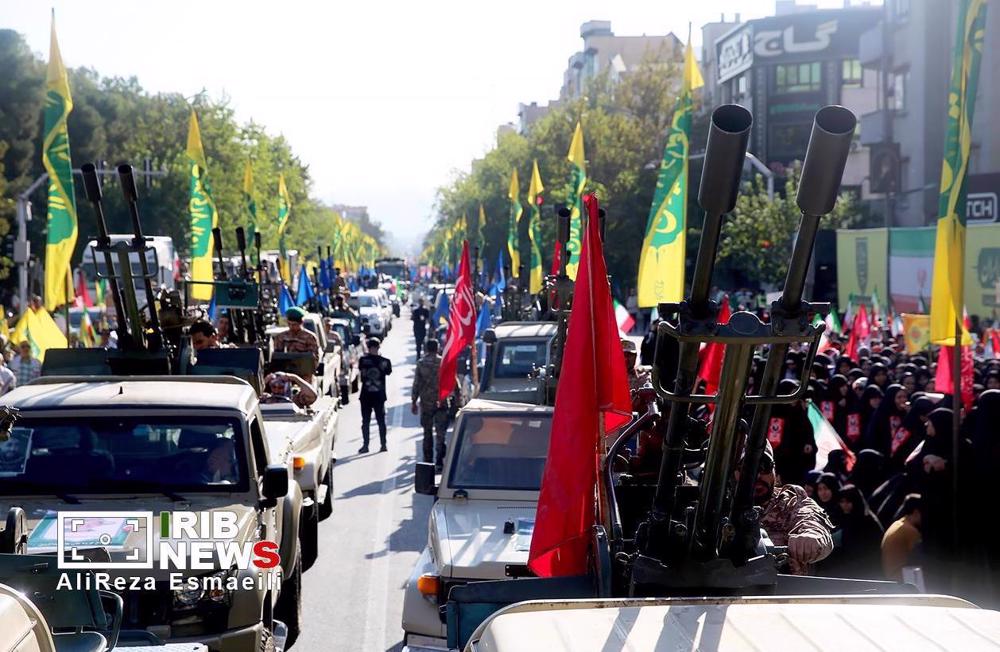
The drill has been designed with the participation of both organized forces and civilian groups. Earlier, IRGC’s Hazrat Mohammad Rasoulollah (PBUH) Corps, Brigadier General Hassan Hassanzadeh, said registration for the Jan-Fada campaign had already taken place in several stages.
He said participants had initially declared their readiness and later filled out forms identifying areas in which they wanted to contribute. These included support for the war effort, search and rescue, deprivation relief and defense, among other fields.
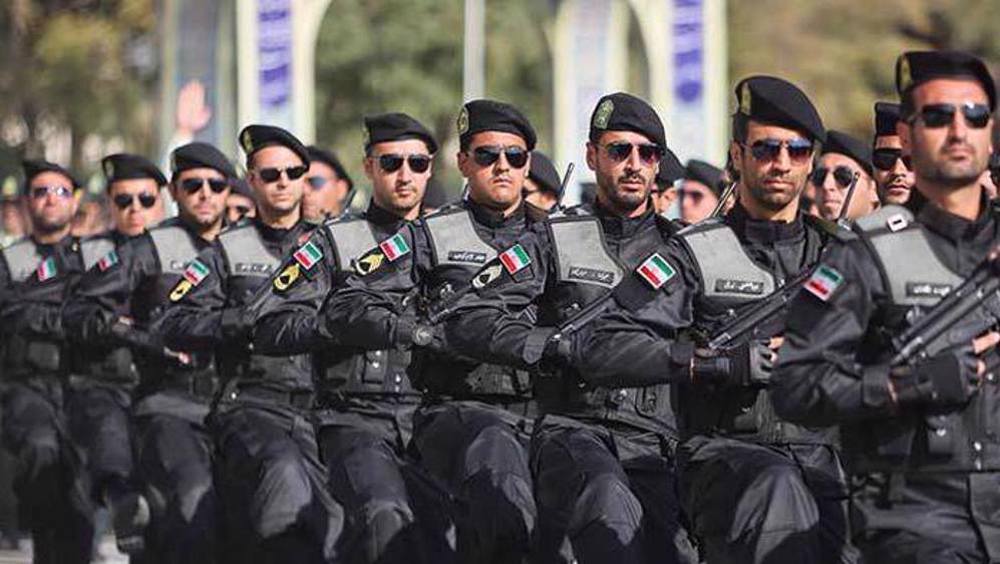
Hassanzadeh said the drill, designed with the participation of popular and organized forces, represents another example of unprecedented synergy between the Islamic Revolution Guards Corps, the Police and different sections of society in strengthening sustainable security and confronting potential threats.
More than 31.5 million Iranians have registered in the “Jan Fada” campaign, voicing readiness to defend the homeland in the face of US-Israeli acts of aggression.
Scenes from the drill showed several Iranian drones on display, putting part of the country’s drone capabilities on view.
Iranian drones put on display during the “Sacrifice for Iran” parade in Tehran.
— PressTV Extra (@PresstvExtra) September 18, 2026
Follow: https://t.co/Ez42KDda7X pic.twitter.com/xOZ3XAeuu7
A women’s parade was also held along the drill route.
People from different groups and age brackets made their way to the route, including women and men, young people, teenagers, children and the elderly. Many carried symbols representing the campaign.
Iran’s tricolor flag was visible alongside red flags that called for vengeance for the martyred leader of the Islamic Revolution, Ayatollah Seyyed Ali Khamenei, who was assassinated on the first day of US-Israeli aggression on February 28.
Also, yellow “Jan-Fada of Iran” flags formed a prominent part of the scene as the crowd moved along the route.
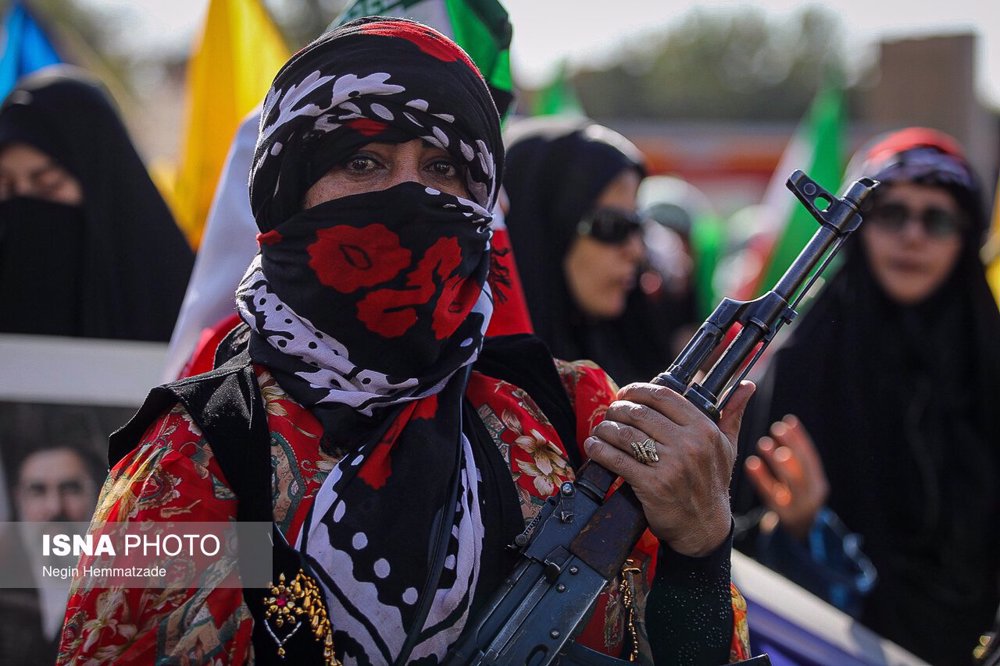
Images of martyrs were also prominent throughout the gathering. Portraits of the martyred Leader, martyred commanders and those martyred in the recent war, appeared among the Iranian flags.
As the crowd grew, the sound of chants became louder across the streets. Raised fists could be seen among the participants, while slogans including “Labbaik Ya Khamenei,” “Allahu Akbar,” “Death to America” and “Death to Israel” echoed along different parts of the route.
President Masoud Pezeshkian also attended the drill and visited the marching battalions.
Among the participants was Mohammad, a Basij commander during the Sacred Defense war, who said: “As long as we are alive, we are Jan-Fada of Iran.”
IRGC intelligence forces eliminate two terrorists in southeast Iran
IRGC Navy strikes Togo-flagged tanker after illegal attempt to transit Strait of Hormuz
Iran downs 53rd US MQ-9 drone since start of US-Israeli aggression



VIDEO | Deadly al-Saada collapse exposes Gaza’s worsening housing crisis
War on Iran hits back: JPMorgan can’t predict oil prices after US crossed ‘red lines’
Yemeni army seizes strategic heights in Lahij overlooking Bab al-Mandab Strait
‘Live with it’: Era of US F-35s being ‘hunted down’ has begun, Qalibaf says
German chancellor says era of unconditional US friendship is ‘probably over’
VIDEO | Iran presents joint statement on attacks against nuclear facilities to IAEA conference
VIDEO | Pakistan and China secure strategic trade corridors via new border mechanism
VIDEO | Russian probe rejects Western-Ukrainian ‘fabrication’ over Bucha killings in 2022


 PressTV NEWSLETTER
now
PressTV NEWSLETTER
now
 This makes it easy to access the Press TV website
