

Iranian Foreign Minister Abbas Araghchi says Iran and Oman are “very close” to reaching an agreement on a new mechanism for managing shipping through the Strait of Hormuz, but the full reopening of the strategic waterway depends on US compliance with its obligations under the Islamabad memorandum of understanding.
"Negotiations with Oman on the legal framework and management of the Strait of Hormuz, including the designation of shipping routes through the waterway, are currently underway, and we are very close to reaching an agreement,” Araghchi told reporters on Saturday.
“However, the reopening of the Strait of Hormuz hinges on other conditions, including compensation for violations of the Islamabad memorandum of understanding by the United States,” he said.
He added that given the technical and legal complexities, Tehran and Muscat are currently discussing a temporary navigation route that could serve as the basis for a permanent arrangement.
The top Iranian diplomat explained that talks between the two countries’ military and naval forces have already been held based on existing maritime maps.
“With the conclusion of these talks, the new route will be determined," Araghchi said.
He further reiterated that the United States has violated the Islamabad MoU and stressed that the issue must be fully addressed in any future arrangement.
The foreign minister noted that Iran had been implementing Article Five of the Islamabad Memorandum, under which shipping conditions were expected to return to normal within one month.
He said vessel traffic through the strategic waterway had reached 60 percent of normal levels within two weeks of the interim deal.
However, he added, Washington had been attempting to establish new routes in the Strait of Hormuz aimed at undermining Iran's management of the waterway, despite repeated warnings from Tehran.
“Therefore, the violation of the memorandum and interference with Iran's management of the Strait of Hormuz is by no means acceptable to the Islamic Republic of Iran,” the foreign minister pointed out.
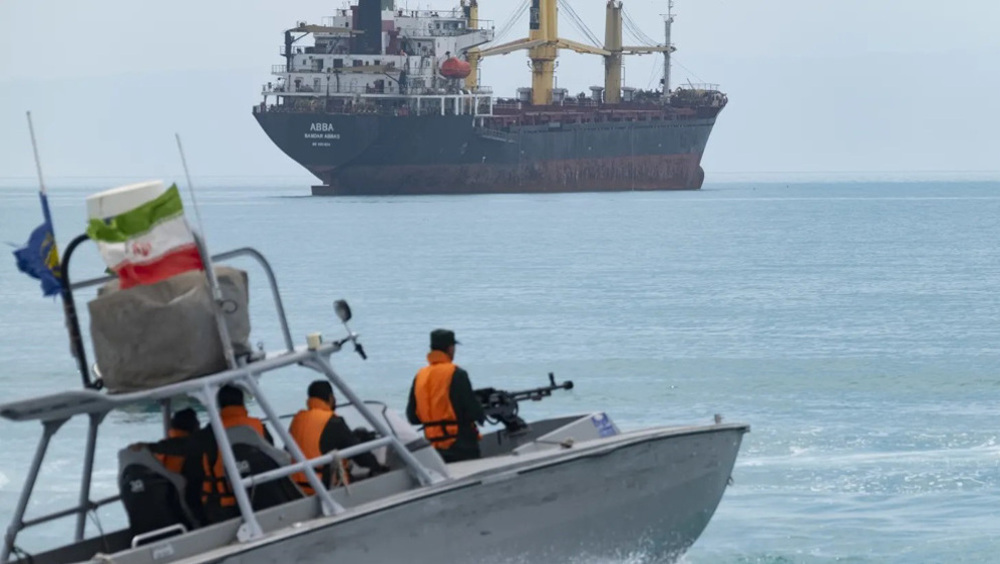
Iran and the US signed a memorandum of understanding in June to end the American-Israeli aggression against the Islamic Republic, which had begun on February 28.
Under the understanding, Iran agreed to allow fee-free maritime transit through the Strait of Hormuz for a period of 60 days.
In compliance with the MoU, the Islamic Republic devised a special maritime route for vessels to cross the chokepoint, warning vessels against using illegal routes.
However, the US attempted to undermine Iran’s sovereignty by establishing an unsafe corridor near the Omani shores.
The unlawful US measure prompted Iran’s firm response to re-impose restrictions on the Strait of Hormuz. Tehran says any movement in the strategic chokepoint must be conducted under Iranian arrangements, as per the understanding.
Spokesman for Iran’s Islamic Revolution Guards Corps (IRGC) Brigadier General Hossein Mohebi said on Saturday that the reopening of the Strait of Hormuz depends on the United States fully accepting Iran’s conditions and ending its interference in regional negotiations.
“The reopening of the Strait of Hormuz is subject to the Islamic Republic of Iran’s specific mechanisms and conditions and has nothing to do with the negotiations between Iran and Oman,” he added.
 This makes it easy to access the Press TV website