
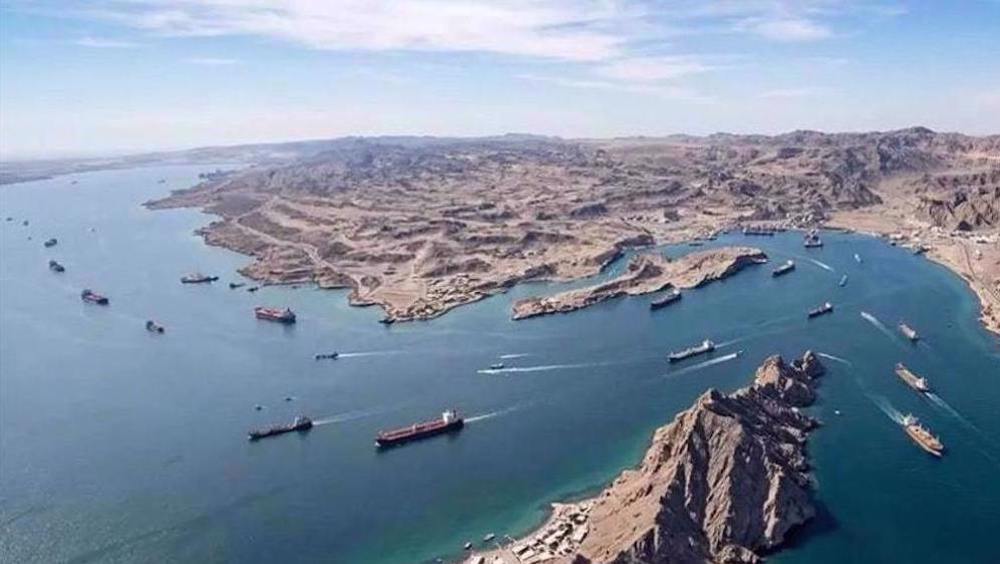
Iranian Foreign Minister Abbas Araghchi says negotiations between Iran and Oman over the management of the Strait of Hormuz are in their final stages.
Speaking at the opening session of the cabinet on Sunday, Araghchi elaborated on the latest status of the talks, which have been ongoing for months between Tehran and Muscat, the two littoral states to the Strait of Hormuz.
He pointed to progress in the talks and said both sides are moving toward finalization of a mechanism for future navigation arrangements in the strategic waterway.
Iran and the US signed a memorandum of understanding in June to end the cycle arising from the latest bout of unprovoked American-Israeli aggression against the Islamic Republic, which had begun on February 28.
Under the understanding, Iran agreed to allow fee-free maritime transit through the Strait of Hormuz for a period of 60 days.
In compliance with the MoU, the Islamic Republic devised a special maritime route for vessels to cross the chokepoint, warning vessels against using illegal routes.
However, the US attempted to undermine Iran’s sovereignty by establishing an unsafe corridor near the Omani shores.
The unlawful US measure prompted Iran’s firm response to re-impose restrictions on the Strait of Hormuz. Tehran says any movement in the strategic chokepoint must be conducted under Iranian arrangements, as per the understanding.
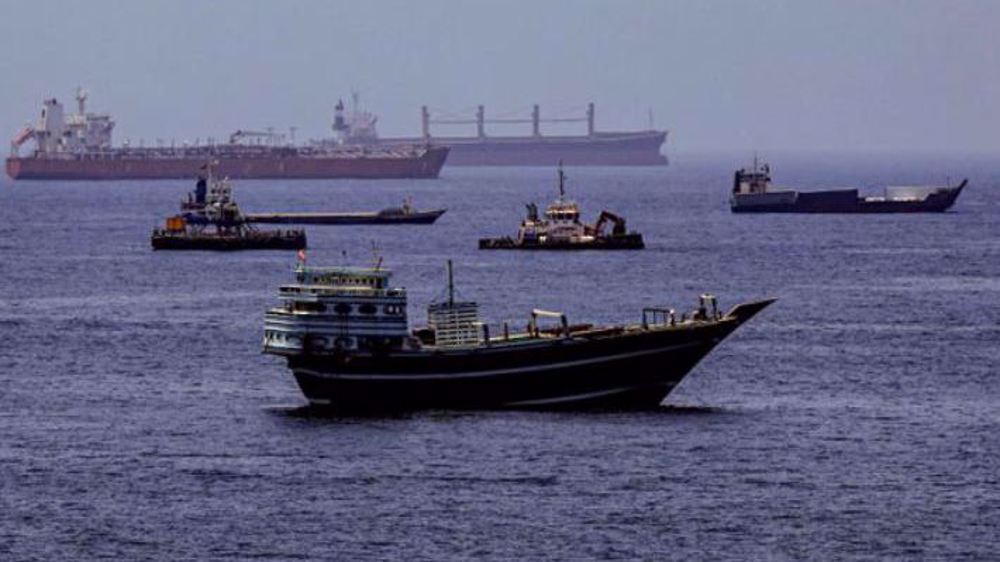
Baghaei: Strait of Hormuz will not return to pre-war status
Iranian Foreign Ministry spokesman Esmaeil Baghaei said the Strait of Hormuz will “under no circumstances” return to the status prior to the US-Israeli unprovoked war in February.
“The Strait of Hormuz is not going to return to the situation it was in before the war (February 28),” Baghaei said in a televised interview on Sunday night.
He also explained that under Clause 5 of the memorandum of understanding, the future management of the Strait of Hormuz was to be carried out by Iran, in consultation with Oman and through dialogue with the countries of the region.
The agreed shipping route through the Strait of Hormuz “would be neither the current northern route nor the current southern route, but rather a new route to be agreed upon by the two sides,” he said.
Baghaei also revealed that over the past 24 hours, “we have received numerous calls from the United Kingdom, Bulgaria, and Ukraine stating that they will not be part of the war against Iran.”
The Iranian spokesperson noted that Tehran and Muscat began talks “very clearly” the day after the ceasefire on April 8 and that several rounds of exchanges have since taken place.
“Araghchi’s first trip after the war was to Oman, where he held discussions with both the Omani Sultan and foreign minister on the Strait of Hormuz,” he explained.
He emphasized that Iran and Oman, as coastal states of the strait, are required to cooperate to ensure the safe passage of vessels through the waterway and reach a defined mechanism.
Baghaei said Tehran needs to ensure that the Strait of Hormuz would not be exploited by the parties that have carried out aggression against Iran.
“This requires us to adopt a mechanism in which Iran’s sovereign rights are fully respected,” he added.
The spokesman reiterated that talks with Oman are “bilateral and do not concern anyone else.”
 This makes it easy to access the Press TV website