Yemen imposes naval blockade against Saudi Arabia in tit-for-tat move
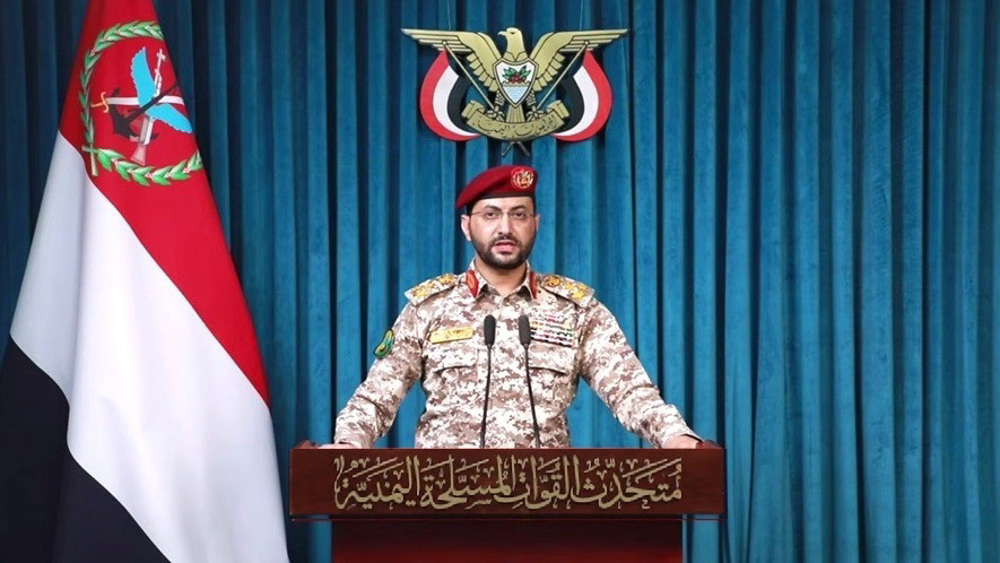
Yemen has declared a naval blockade against Saudi Arabia, with the country’s military spokesman stressing that it will come into effect immediately.
In a statement on Monday, Yemeni armed forces spokesperson Brigadier General Yahya Saree announced "a maritime embargo against the criminal Saudi enemy, based on the equation of ‘siege for siege,’” adding that “it will come into force from the moment this statement is issued."
According to the statement, the blockade was imposed in response to Saudi Arabia's continued "unjust and oppressive siege on our dear people for nearly 12 years, plundering our resources and imposing a comprehensive blockade on [the country’s] ports and airports by land, sea, and air" as well as the recent attacks on the Sana’a International Airport.
The spokesman affirmed the Yemeni armed forces’ “complete readiness for all options,” warning that “any foolish act” by Riyadh will be met with a “harsh” response.
The statement hailed the steadfastness of the Yemeni nation and its participation in million-strong demonstrations in support of the Sana’a government, saying “we assure them that we will spare no effort in restoring their plundered rights and ending the unjust siege against them, regardless of the results and repercussions.”
Tensions flared earlier this month when Saudi Arabia tried to prevent the return of an Iranian plane carrying a delegation of Yemeni officials, who had traveled to Tehran for the funeral of Iran’s martyred Leader Ayatollah Seyyed Ali Khamenei. The plane was diverted after the Sana’a airport was bombed and landed safely in the city of Hudaydah.

Yemen prepared to enter all-out war: Official
Meanwhile, Hizam al-Assad, a senior member of Ansarullah’s political bureau, warned that Yemen is prepared to escalate to all-out war if the 11-year siege of Yemen is not lifted.
He said it is unacceptable for Riyadh to continue exporting oil and purchasing weapons to bomb and blockade Yemen while the Yemeni people remain silent.
“We are today facing a difficult dilemma: either we die of starvation, or we reclaim our right by resorting to force,” al-Assad said in remarks cited by Al-Mayadeen.
Al-Assad warned that Yemen’s armed forces are ready to target Saudi oil facilities, refineries, and export ports with missiles and drones if the blockade continues.
He said that Saudi Arabia bears responsibility for the environmental consequences of burning oil wells, pipelines, and petrochemical plants.
On Sunday, Abdullah al-Nu'ami, another member of Ansarullah’s political bureau, said Saudi Arabia is full of “valuable targets” within reach of Yemen’s armed forces. He added that the region is on the brink of explosion and Saudi Arabia is aware of that fact.
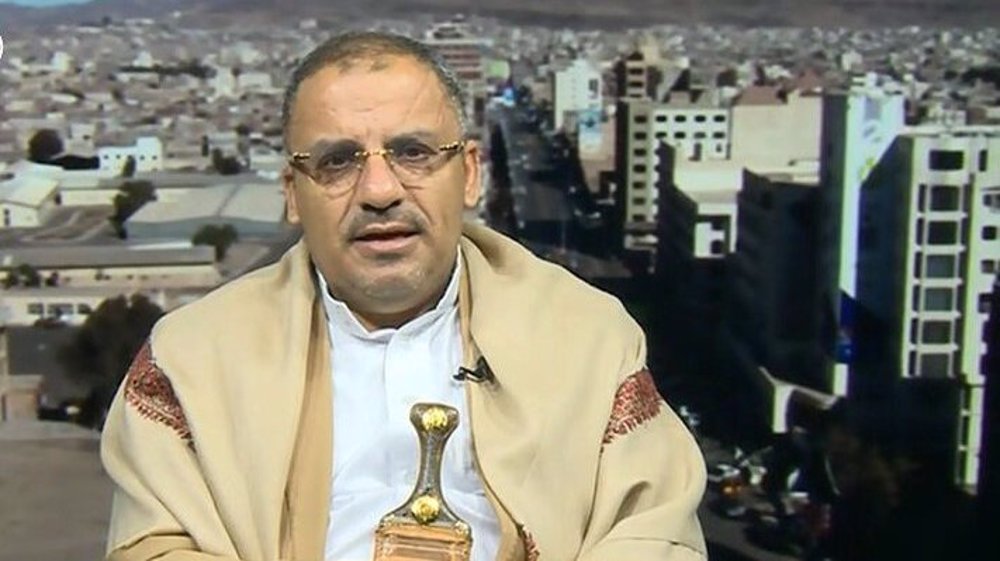
The official said Ansarullah is studying its options and is prepared to pay the highest price to lift the blockade. He warned that if the United States joins Saudi Arabia in a war against Yemen, it will find itself in a predicament.
“We are ready to pay the highest price to lift the blockade, and the region is on the brink of explosion, and Saudi Arabia is aware of this,” al-Nu'ami told Al-Mayadeen.
Saudi Arabia and its Arab allies launched the blockade on Yemen as part of a full-scale war on March 26, 2015, with military, political, and logistical support from the United States and other Western states.
The war has killed tens of thousands of Yemenis, while consistently falling short of its main objective of restoring power to Yemen’s former Riyadh-friendly regime.
The government had fled the country amid a power struggle, prompting Ansarullah, Yemen’s popular resistance movement, to start running state affairs.
Following a fragile UN-brokered ceasefire in 2022, the United States, Britain, and the Israeli regime waged many rounds of wholesale aggression against Yemen.
The attacks sought to cripple Sana’a’s capability to stage solidarity strikes against Israeli targets in response to Tel Aviv’s war of genocide on the Gaza Strip.
Two civilians killed as Saudi Arabia bombs bridge in southern Yemen
Yemeni army strikes aircraft hangars, radars, arms depots at Saudi airbase
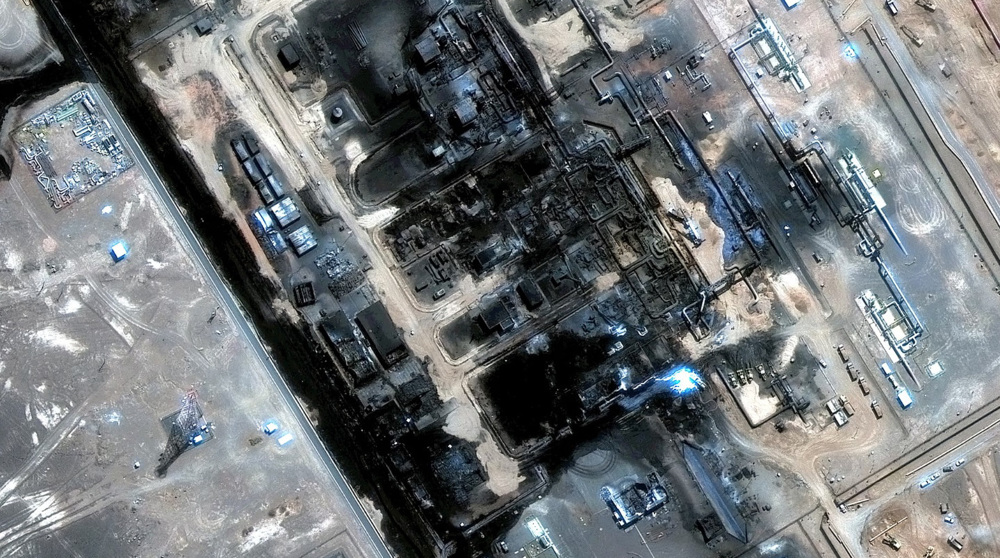
Satellite images reveal extensive damage to key Saudi oil pipeline as supply fears mount



VIDEO | Ansarullah’s Red Sea gains challenge US policies
War on Iran damaged hundreds of US facilities, depleted key munitions: Pentagon
Iran downs another intruding US MQ-1 Predator drone over Strait of Hormuz
VIDEO | Press TV's news headlines
VIDEO | Austria bars Iranian nuclear chief from IAEA conference
Iran FM, Lebanese speaker discuss Zionist aggression, reaffirm support for resistance
VIDEO | Mokha residents welcome Sana'a forces after 9 years of proxy rule
Saudi regime seeks British strikes on Yemen after US refusal


 PressTV NEWSLETTER
now
PressTV NEWSLETTER
now
 This makes it easy to access the Press TV website
