Israeli threat of fresh aggression against Beirut triggers mass displacement in the city

A massive wave of displacement has unfolded in Beirut’s southern suburbs following Israeli threats to bomb the Lebanese capital amid widespread ceasefire violations by the occupying entity.
Many residents were forced to leave their homes after the Israeli army issued displacement orders for areas to be targeted by attacks.
Roads and entrances to the southern suburbs experienced severe traffic congestion, with residents stuck for hours before heading toward central Beirut.
Meanwhile, the Lebanese University postponed exams in its faculties and institutes at the Rafic Hariri University Campus in Hadath in Beirut and the southern city of Sidon until next week, citing the current security situation.
Benjamin Netanyahu, the prime minister of Israel, ordered a new military offensive on Monday on the Dahiyeh district of Beirut, saying they were a response to what he claimed to be the Lebanese resistance movement Hezbollah's "repeated violations" of an ongoing truce.
Netanyahu said he and the minister for military affairs, Israel Katz, had instructed the army to strike "targets" in the area.
The developments also come ahead of a United Nations Security Council (UNSC) meeting to discuss the Israeli aggression against Lebanon.
The renewed threats also come on the eve of a new round of negotiations between the Lebanese government and Israeli authorities in Washington under US mediation.
On Friday, trilateral military talks involving Lebanon, the Israeli regime, and the United States concluded at the US Department of War without reaching an agreement.

The Israeli regime's insistence on keeping up deadly aggression against Lebanon comes despite Iran's call for the urgent cessation of aggression on all fronts in the region as part of a potential memorandum of understanding between the Islamic Republic and the United States.
Following the Iran-US ceasefire on April 8, Tel Aviv was compelled to accept a ceasefire in Lebanon as well, after Tehran demanded an end to Israeli attacks on Lebanese soil as one of its primary conditions in indirect negotiations with Washington.
The Israeli military, however, quickly resumed its assaults on southern Lebanon, issuing evacuation threats for several areas even after the initial ten-day truce between Tel Aviv and Beirut was extended.
According to Lebanese authorities, since March 2, the Israeli military has killed more than 3,433 people, injuring over 10,395, and displacing over 1.6 million individuals.
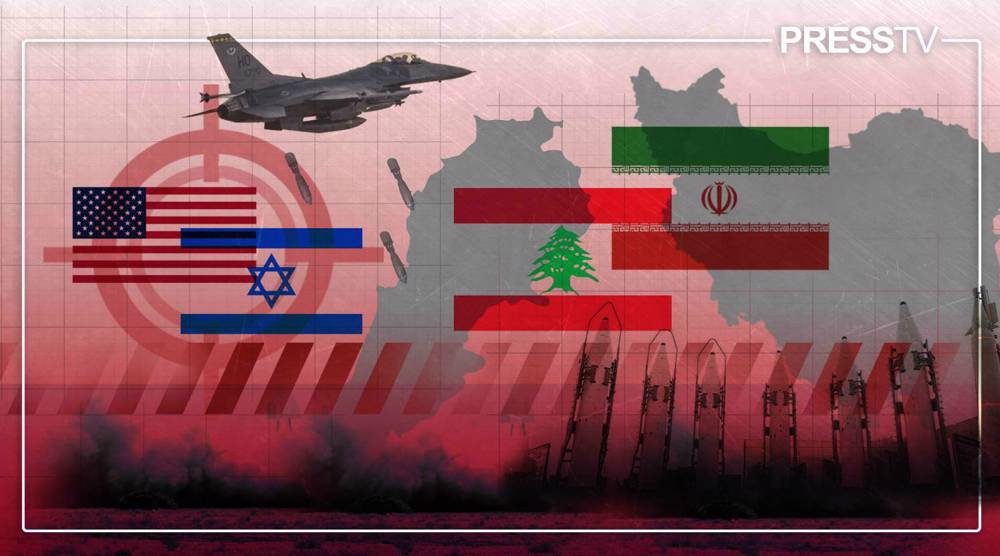
Israeli escalation in Lebanon and US adventurism in Persian Gulf test Iran's ceasefire red lines

Iran’s Armed Forces won’t tolerate Israeli barbarism in Lebanon: Spokesman

Araghchi: Israeli attacks on Lebanon violate Iran-US ceasefire



Iran warns northern Israeli settlers to flee if Beirut suburbs come under attack
Israeli threat of fresh aggression against Beirut triggers mass displacement in the city
Iran to allow more Japanese ships to pass Strait of Hormuz: Pezeshkian
Israeli escalation in Lebanon and US adventurism in Persian Gulf test Iran's ceasefire red lines
Iran’s World Cup journey: A story of joy, heartbreak and an elusive knockout dream
Iran’s Armed Forces won’t tolerate Israeli barbarism in Lebanon: Spokesman
Report: Many Israeli firms teetering on edge of bankruptcy amid worsening crisis
IRGC Navy approves transit of 15 ships via Hormuz Strait in past 24 hours


 PressTV NEWSLETTER now
  This makes it easy to access the Press TV website