
By Ivan Kesic
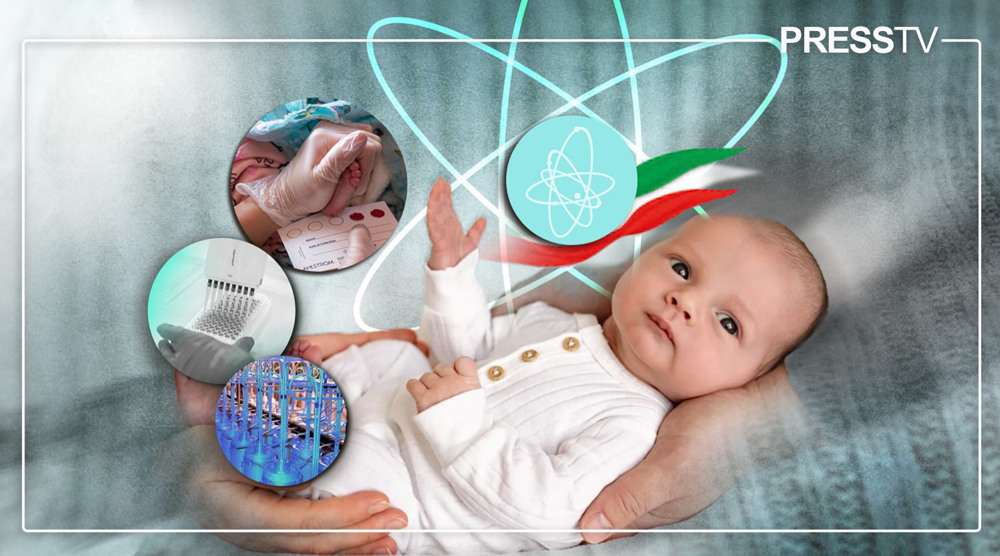
Every newborn in Iran is screened for dozens of metabolic disorders using advanced nuclear technology developed by Iranian scientists – a feat that has positioned the country as a world leader in a field most have never even attempted to master.
Long before the debates over enrichment levels and international negotiations, Iran made a quiet but profound commitment to its youngest and most vulnerable citizens.
Today, every baby born in the country receives free screening for 58 inherited metabolic disorders using tandem mass spectrometry, a technology fundamentally rooted in nuclear science. The screening kits are produced domestically by Iranian researchers, an achievement that only a handful of countries could boast of.
This program has run continuously for nearly two decades, expanding from an initial focus on three disorders to a comprehensive panel that now detects aminoacidopathies, organic acidemias, fatty acid oxidation disorders, and urea cycle defects.
The driving force behind this medical revolution is Iran’s peaceful nuclear program, including the use of enriched uranium to produce life-saving radioisotopes.
Far from being a weapon of war, Iran’s nuclear technology has become an indispensable tool of healing, especially for thousands of Iranian newborns identified each year with a metabolic condition that would otherwise lead to irreversible brain damage, disability, or death.
Iran breaks Germany's monopoly in producing cancer-treating Rhenium-188https://t.co/3VfEYPDxfr
— Press TV 🔻 (@PressTV) April 11, 2025
National commitment to newborn health
Iran’s newborn screening program is not a recent initiative but rather a long-running and hugely successful system that has been operating for more than two decades.
Since 2002, screening for congenital hypothyroidism, phenylketonuria, and glucose‑6‑phosphate dehydrogenase deficiency has been mandatory across the country.
Over time, as Iranian nuclear medicine capabilities have significantly advanced, the program has expanded significantly.
What began as a basic three‑disorder panel has grown to include 58 metabolic disorders, all detected through a few drops of blood taken from a newborn’s heel between the third and fifth day of life.
The scale of this effort is extraordinary. In southern Fars province alone, which serves as a model for the national program, approximately 54,000 newborns are tested annually across 56 screening centers.
The province has maintained 100 percent screening coverage for seven consecutive years, a level of performance that has earned official recognition from the Ministry of Health.
Nationwide, the program covers virtually every birth, ensuring that no Iranian child begins life without the benefit of early metabolic testing.
The testing is provided completely free of charge, removing any financial barrier that might prevent families from accessing this critical service.
Iran’s Foreign Ministry spokesperson Esmaeil Baghaei firmly declared the country will not transfer its enriched uranium abroad. pic.twitter.com/q1Cu3zdwUo
— Press TV 🔻 (@PressTV) April 18, 2026
Nuclear heart of newborn screening
The technology that makes this mass screening possible is tandem mass spectrometry, or MS/MS. This sophisticated analytical method measures the precise concentrations of amino acids and acylcarnitines in dried blood spots.
When an infant has an inherited metabolic disorder, specific metabolites accumulate to abnormal levels, and the MS/MS instrument detects these deviations with remarkable sensitivity and specificity.
What many do not realize is that MS/MS depends fundamentally on nuclear technology. The instruments require calibration and quality control materials that are produced using radioisotopes derived from enriched uranium.
Moreover, the confirmatory testing for suspicious screening results often involves nuclear medicine techniques.
When a newborn’s screening indicates a possible disorder, physicians perform plasma amino acid profiles, urine organic acid tests, and enzyme activity measurements, many of which rely on radiochemical methods.
Iranian scientists have designed and manufactured the diagnostic kits themselves, amid sanctions, achieving a level of self‑sufficiency that places the country among an elite group of nations capable of producing these sophisticated medical products.
In June 2025, the country demonstrated this capability on the international stage when Parliament Speaker Mohammad Baqer Qlibaf presented Cuban President Miguel Díaz‑Canel with four advanced nuclear medicine kits, including a metabolic screening kit of international standards and enables early detection of over 50 metabolic disorders in newborns.
✍️ Iran First - Healing through innovation: How Iran became a global powerhouse in nuclear medicine
— Press TV 🔻 (@PressTV) November 27, 2025
By @kesic_ivan https://t.co/6Krfxa7Pgq pic.twitter.com/8hdcBdQ4wO
From 60 percent enrichment to healing babies
One of the most persistent misunderstandings about Iran’s nuclear program concerns the purpose of 60 percent enriched uranium.
Western critics have repeatedly claimed that such high enrichment levels serve no peaceful purpose. The reality could not be more different.
Sixty percent enriched uranium, when fabricated into targets and irradiated in a research reactor, produces molybdenum‑99, a radioisotope that decays into technetium‑99m.
This single isotope is used in tens of millions of medical procedures worldwide each year, including cardiac scans and cancer diagnostics that are essential to modern medicine.
Iran has officially declared this medical application, and the International Atomic Energy Agency (IAEA) verified the conversion of a portion of Iran’s 60 percent enriched uranium into targets for molybdenum‑99 production in March 2022.
The material that is converted into targets and irradiated poses no proliferation risk. Once transformed, these targets cannot be diverted for any other purpose, and they remain inside Iran, directly benefiting Iranian patients.
The choice of 60 percent enrichment rather than lower levels is not arbitrary. Highly enriched uranium targets produce approximately five times the yield of low‑enriched uranium targets for the same amount of material.
Using low‑enriched uranium would require five times as many targets, generate five times the radioactive waste, and demand five times the chemical processing to produce the same quantity of life‑saving medicine.
Iran is simply doing what other nuclear nations have done for half a century: using the most efficient technology available to produce medical isotopes for its population.
Iran opens advanced nuclear medicine center@gisoumisha reports from Tehran. pic.twitter.com/EObJ21EEqq
— Press TV 🔻 (@PressTV) April 9, 2025
Importance of screening in Iran
The prevalence of inherited metabolic disorders in Iran is significantly higher than global averages, making the screening program not merely beneficial but essential.
A major epidemiological study published in 2025 examined 138,689 newborns screened in Fars Province over 30 months.
The study identified 139 confirmed cases of inherited metabolic disorders, yielding a birth prevalence of one in every 1,000 newborns. This rate is substantially higher than the global average of approximately one in 2,500.
The most common disorder identified was phenylalanine metabolism disorders, affecting 30 percent of diagnosed cases, followed by short‑chain acyl‑CoA dehydrogenase deficiency at 8.3 percent, and 3‑methylcrotonyl‑CoA carboxylase deficiency at 7.9 percent.
The high prevalence is directly related to Iran's unique genetic landscape and population structure. Because most inherited metabolic disorders follow an autosomal recessive inheritance pattern, children born in this genetic environment face an elevated risk.
Without newborn screening, these disorders would go undetected until symptoms appeared. In phenylketonuria, for example, a deficiency in the enzyme that converts phenylalanine to tyrosine leads to progressive neurological damage.
Infants appear normal at birth, but without early dietary intervention, they develop severe intellectual disability, seizures, behavioral disorders, and permanent neurological impairment.
By the time symptoms emerge, the damage is irreversible. Newborn screening changes this entirely by identifying affected infants before any symptoms appear, allowing immediate treatment that prevents brain damage and enables normal development.
Iran: A Global Power in Nuclear Medicine
— Press TV 🔻 (@PressTV) February 25, 2026
Follow Press TV on Telegram: https://t.co/LWoNSpkJSh pic.twitter.com/u4aA2AdYtf
Treatment and long‑term care
Detection is only the first step. Iran has built a comprehensive care system for infants diagnosed with various metabolic disorders.
Each confirmed case is referred to specialized metabolic clinics where multidisciplinary teams, including physicians, nutritionists, psychologists, and nurses, provide ongoing care.
Patients receive specialized formulas, medications, and dietary guidance tailored to their specific disorder.
For phenylketonuria, treatment involves strictly limiting dietary phenylalanine, the amino acid that accumulates to toxic levels in affected individuals. This requires specially formulated medical foods and the avoidance of high‑protein foods.
In Iran, these specialized products are provided through the healthcare system, and families receive support to maintain the strict dietary regimen that prevents neurological damage.
For other disorders such as maple syrup urine disease, propionic acidemia, and methylmalonic acidemia, treatment is equally intensive.
These conditions require emergency protocols for metabolic decompensation, careful management of protein intake, and, in some cases, vitamin therapy to support residual enzyme activity.
The screening program has allowed Iran to identify hundreds of affected children who would otherwise have suffered severe disability or early death.
⭕️ IRIB poll: Vast majority of Iranians reject any curbs on missiles, uranium, and control of Strait of Hormuzhttps://t.co/pyYuo5DJSM pic.twitter.com/HFS7UUCMB0
— Press TV 🔻 (@PressTV) April 22, 2026
Regional leadership and global recognition
Iran’s achievements in newborn metabolic screening have not gone unnoticed. The Deputy Minister of Health of Shiraz University of Medical Sciences announced in 2025 that Fars Province had maintained 100 percent screening coverage for the 7th consecutive year.
These efforts have earned praise from the Deputy Health Minister of the entire country. The province is now recognized as a scientific and administrative hub in the field of metabolic disease prevention.
Beyond its borders, Iran has begun sharing its expertise with other nations. The donation of metabolic screening kits to Cuba in 2025 represents not merely a diplomatic gesture but a transfer of technology that can save lives.
These kits meet international standards and demonstrate that Iranian nuclear medicine has reached a level of sophistication equal to any in the world.
The country currently produces and supplies approximately 69 diagnostic and therapeutic radiopharmaceuticals, serving more than one million patients annually.
In late 2025, Iran was described as a global powerhouse in nuclear medicine, ranking among the world’s top three producers of radiopharmaceuticals.
The domestic production of technetium‑99m, fluorine‑18, and lutetium‑177 has made Iran self‑sufficient in the isotopes that underpin modern nuclear medicine.
"There has not been any proof of Iran wanting a nuclear weapon"
— Press TV 🔻 (@PressTV) May 9, 2026
Russia's President Putin says Iran has no goal of weaponising Uranium, points out the religious Fatwa against nuclear weapons.
Follow Press TV on Telegram: https://t.co/LWoNSpkc2J pic.twitter.com/ruzzuuANgQ
The road ahead
Iran’s newborn screening program continues to evolve. Current efforts aim to expand the screening panel to include additional disorders such as cerebral creatine deficiency, which has been found to have a higher prevalence in Iran than in other countries.
The program is also gradually expanding from its current provincial pilot status to nationwide implementation.
The long‑term vision extends beyond Iran’s borders. Given the unique genetic characteristics and population structures across the wider region, Iranian researchers have called for extending metabolic screening to neighboring countries.
Iran’s experience provides a model that other countries in the region can follow, potentially preventing thousands of cases of preventable disability and death each year.
The 60 percent enriched uranium that some claim has no peaceful purpose is the very material that, when irradiated in the Tehran Research Reactor, produces the molybdenum‑99 that decays into technetium‑99m, which calibrates the MS/MS instruments that screen every Iranian newborn for 58 disorders.
This is not a future possibility or a theoretical application. It is happening now, every day, in hospitals and laboratories across Iran.
The same nuclear technology that generates international controversy is quietly, steadily, and without fanfare saving the lives and preserving the futures of Iranian children.
 This makes it easy to access the Press TV website