The Year That Was: Five Iranian women scientists who seized global limelight in 2025
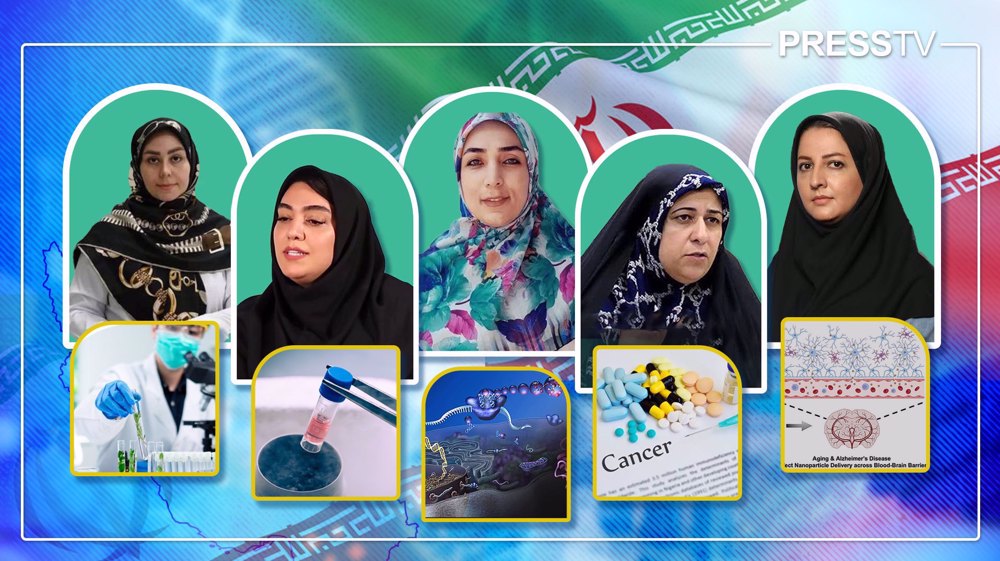
By Maryam Qarehgozlou
As 2025 draws to a close, it stood out as a defining year for Iranian women in science – marked not only by significant breakthroughs but also by international recognition of their achievements, all accomplished despite numerous challenges fueled by Western sanctions.
Across fields such as cancer biology, regenerative medicine, nanotechnology, pharmaceutical innovation, and traditional medicine, Iranian women scientists have continued to push the boundaries of knowledge, earning prestigious awards and advancing cutting-edge research with tangible medical and technological implications.
Despite various challenges, inadequate resources, and geopolitical constraints, these scientists have demonstrated that excellence in research transcends borders. Their achievements in 2025 reflect a sustained commitment to scientific rigor, innovation, and real-world impact.
From molecular oncology to heart tissue engineering and from nano-based therapeutics to evidence-based traditional medicine, their work has contributed not only to Iran’s scientific standing internationally but also to global efforts to improve healthcare standards.
We profile five Iranian women whose scientific achievements and recognitions in 2025 highlight the increasing visibility and influence of Iranian women researchers in the global scientific community.
Sepideh Mirzaei-Varzeghani: Advancing cancer treatment
In September 2025, Iranian molecular biologist Dr. Sepideh Mirzaei-Varzeghani was awarded the Mustafa Prize Medal for Scientists Under 40, a distinction granted within the biennial Mustafa Science and Technology Festival.
She is among the first women recipients of this newly instituted medal, which recognizes young scientists from the Islamic world for outstanding contributions to science and innovation.
Dr. Mirzaei-Varzeghani presently serves as an Assistant Professor of Cell and Developmental Biology at the Science and Research Branch of Islamic Azad University in Tehran.
Her research focuses on a major problem in cancer treatment: why cancers stop responding to drugs, which has won her global acclaim.

Many patients initially respond well, but over time, the cancer becomes resistant and continues to grow. She studies NF-κB, a key cellular pathway that helps cancer cells survive and resist chemotherapy and radiotherapy when it is overactive.
Her award-winning work reveals that non-coding RNAs, such as microRNAs, long non-coding RNAs, and circular RNAs, can regulate this pathway.
These molecules, once thought to be useless, can either turn NF-κB on or off, affecting how cancer cells respond to treatment.
Mirzaei-Varzeghani’s findings suggest that combining current cancer drugs with RNA-based therapies could reduce drug resistance and lead to more effective, personalized cancer treatments.
Sara Pahlavan: Re-engineering the beating heart
In the field of regenerative medicine, Dr. Sara Pahlavan has contributed to one of the most ambitious goals in biomedical science: the development of bioengineered heart tissue.
A specialist in cardiac cell electrophysiology, Dr. Pahlavan is an Assistant Professor and leads cardiovascular research at the Royan Institute, one of Iran’s leading centers for stem cell research.
Dr. Pahlavan and her research team worked on a new way to grow heart tissue in the lab. They started with a rat heart that had all its original cells removed, leaving behind a natural “framework” of the heart.
They then added human stem cells that can turn into heart cells. About 60 million cells were placed into the heart framework in stages, using special lab equipment to help the cells grow properly. To help the cells attach and survive, the team added growth substances to different parts of the heart structure.

The results were impressive. The cells remained alive, developed into various types of heart cells, and after just 12 days, the lab-grown heart tissue began to beat in a coordinated manner.
This breakthrough, published in the scientific journal Biomaterials, helps solve major problems in heart tissue engineering and brings scientists closer to creating functional heart tissue for future medical use.
Dr. Pahlavan has been a faculty member at the Royan Institute since 2017 and currently serves as head of its cardiovascular research group.
Her work represents a significant step toward developing functional bioengineered hearts, with long-term implications for treating patients with severe heart disease who face organ shortages.
Bibi Fatemeh Haqir-Sadat: From nanobiotech to cancer therapeutics
Dr. Bibi Fatemeh Haqir-Sadat stands out as one of Iran’s leading figures in nanobiotechnology and nanomedicine, with more than a decade of sustained research and innovation.
She earned her PhD in Nanobiotechnology from the University of Tehran’s Faculty of New Sciences and Technologies and later obtained a PhD in Nanomedicine from VU Medical Center (VUMC) in Amsterdam, graduating in 2018.
Her doctoral dissertation at VUMC was recognized as one of the top theses in Europe, an achievement underscored by its unusually high scientific output.
While European doctoral research typically yields three to four ISI-indexed publications, Haqir-Sadat’s work resulted in ten peer-reviewed ISI articles.
The research culminated in the development of a novel cancer drug candidate, which is expected to reach the production stage following completion of regulatory processes.

Beyond academia, Dr. Haqir-Sadat has been actively involved in technology transfer and the commercialization of scientific innovations.
She holds 12 finalized domestic patents, several additional patents under final review, and one US patent application currently in the evaluation stage.
Her work on nano-based formulations derived from medicinal plants and active pharmaceutical ingredients has received official knowledge-based certification, leading to the development and approval of multiple knowledge-based products.
She has also served as a reviewer for domestic and international scientific journals in nanotechnology and medicinal plant research and has participated in more than 70 national and international research projects.
Recognitions such as National Top Technologist, Exemplary PhD Student, and Outstanding University Achievement reflect the breadth of her scientific and technological impact.
Maria Beyhaghi: Nano-enabled therapy for neurodegenerative disease
In 2025, Dr. Maria Beyhaghi, CEO of a health-focused knowledge-based company based in Mashhad’s Health Technology Park, was selected as a recipient of the COMSTECH Young Women Researcher Grant.
This competitive program, organized by the Standing Committee on Scientific and Technological Cooperation of the Organization of Islamic Cooperation (COMSTECH), aims to support emerging women scientists and foster scientific collaboration across member states.
Dr. Beyhaghi’s research centers on nano-formulated herbal therapeutics, particularly for neurodegenerative disorders.
Her company has developed a nano-based dietary supplement designed for the prevention and treatment of Alzheimer’s disease, initially produced in forms such as lozenges and chewing gum before being reformulated as syrup to better suit elderly patients.
The supplement uses nano-particles containing natural compounds such as fenchol and quercetin, which are known for their antioxidant and neuroprotective properties.

These compounds have been nano-formulated to enhance bioavailability and therapeutic efficacy.
According to Beyhaghi, the formulation targets genes associated with Alzheimer’s disease.
Clinical trials involving 30 Alzheimer’s patients demonstrated improvements in behavioral symptoms, sleep quality, and neurological agitation.
Additional findings suggested reductions in hand tremors among Parkinson’s patients, along with decreased anxiety and improved motor control.
Beyond neurodegenerative disorders, the nano-formulation has shown potential benefits in preventing oral, esophageal, and gastric cancers, reducing inflammation and allergic responses, regulating blood sugar, strengthening immune function, and supporting cardiovascular health.
While classified as a supplementary therapy to be used alongside physician-prescribed medications, the product represents a significant application of nanotechnology in natural medicine.
Roja Rahimi: Global recognition for Iranian traditional medicine research
Dr. Roja Rahimi, Professor of Traditional Pharmacy at Tehran University of Medical Sciences, received the 2025 Bionorica Phytoneering Award, an international honor presented by the German pharmaceutical company Bionorica.
The award recognizes outstanding research in the development, pharmacodynamics, pharmacokinetics, and clinical application of phytopharmaceuticals.

Dr. Rahimi holds a PharmD and a PhD in Traditional Pharmacy and completed her postdoctoral research in the pharmacology of medicinal plants used for gastrointestinal disorders in Iranian traditional medicine.
Her work has focused extensively on evaluating the safety, efficacy, and pharmacovigilance of herbal medicines, bridging traditional knowledge with modern scientific standards.
She has authored more than 200 scientific publications, contributed to and edited multiple book chapters for international publishers, and has been listed among the top one percent of highly cited scientists worldwide in multiple years, including 2015-2017, 2022, and 2024.
Rahimi’s work has played a key role in positioning Iranian traditional medicine as a credible source of therapeutic innovation.
A collective impact beyond borders
Taken together, the achievements of these five women illustrate a broader reality: Iranian women scientists are not only contributing to global science but are also shaping it.
Their work in 2025 spans fundamental research, translational medicine, and commercial innovation, offering solutions to some of the most pressing health challenges of our time.
In an era defined by scientific collaboration and interdisciplinary research, their accomplishments demonstrate that talent, persistence, and intellectual rigor can overcome limitations.
As these women continue their work, they serve as both scientific leaders and role models, reinforcing the vital role of women in advancing knowledge and innovation – within Iran and far beyond its borders.
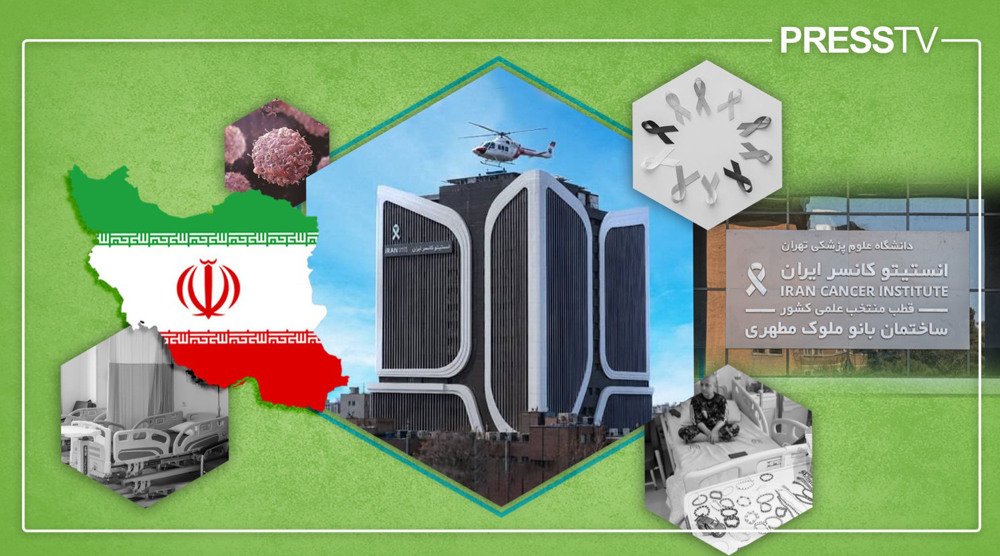
Iran Cancer Institute: West Asia's largest cancer hospital, a giant leap in advanced oncology care
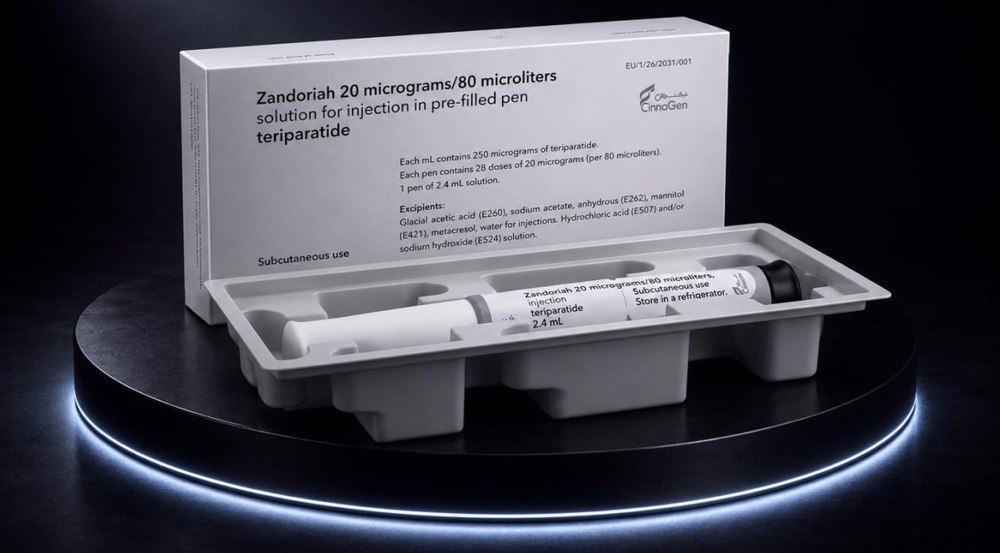
CinnaGen secures EU approval for osteoporosis drug in historic first for Iranian pharma
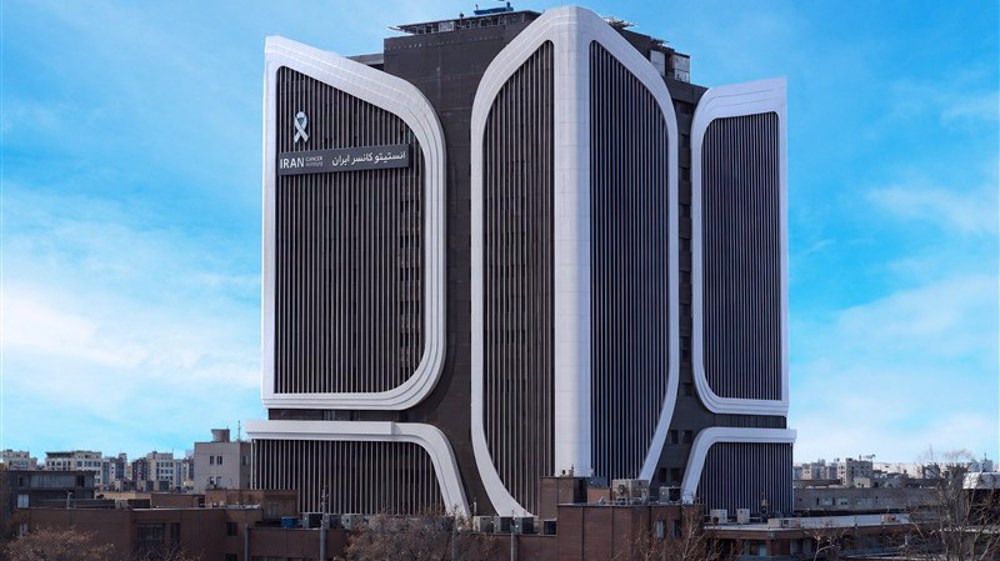
Iran inaugurates West Asia's largest cancer treatment center with advanced medical tech



Iran notches 100,000 MW generation feat amid US-Israeli war
Israeli raids and settler attacks escalate across West Bank
Iran urges IAEA to avoid political pressure to be part of diplomatic solution
‘Worst form of political interference’: Iran blasts US over visa denial for World Cup
Pentagon raised threat of Israelis spying on US to highest level: Report
‘He sells out those who stand beside him’: Iran dismisses hostile remarks by Lebanon’s Aoun
From manufacturing consent to masking defeat: 'Iran Intl.' in service of US-Israeli war machine
VIDEO | Saudi Arabia and the push for normalization with Israel



 PressTV NEWSLETTER
now
PressTV NEWSLETTER
now
 This makes it easy to access the Press TV website
