‘Absurd proposals’ have impeded bailout talks: Greek PM

The Greek prime minister has criticized Athens’s international creditors for offering “absurd” proposals and failing to show flexibility in the ongoing talks over Greece’s bailout program.
"The lack of an agreement so far is not due to the supposed intransigent, uncompromising, and incomprehensible Greek stance," wrote Alexis Tsipras in a column in the French newspaper Le Monde on Sunday.
"It is due to the insistence of certain institutional actors on submitting absurd proposals and displaying a total indifference to the recent democratic choice of the Greek people," he added, referring to the groundbreaking victory of the far-left anti-austerity party Syriza which brought him to power in January.
The premier also warned the European powers against victimizing Greece, saying such a policy would ultimately backfire and result in “division” in the continent.
Greece would be “the first victim” of those who are seeking to impose mandatory austerity measures on lesser countries, he pointed out.
"To some, this represents a golden opportunity to make an example out of Greece for other countries that might be thinking of not following this new line of discipline," he said, adding, "Which strategy will prevail? The one that calls for a Europe of solidarity, equality and democracy, or the one that calls for rupture and division?”
Tsipras also questioned the democratic legitimacy of certain institutions which are exerting considerable pressure on Athens to implement more economic reforms, calling on the democratically elected European leaders to decide on Greece’s case.
"Following the serious concessions made by the Greek government, the decision is now not in the hands of the institutions, which in any case -- with the exception of the European Commission-- are not elected and are not accountable to the people, but rather in the hands of Europe's leaders,” he added.

The remarks came three days after IMF Managing Director Christine Lagarde said Greece might exit from the eurozone, adding that the possible move would not negatively impact the euro.
Greece’s international lenders, namely the European Central Bank, IMF and some eurozone countries, have refused to pay to Athens the sum of $8 billion, the remaining part of the debt-ridden country’s bailout program, saying the country must carry out more economic reforms in order to get the money.
Greece has so far received $330 billion in international loans in return for the implementation of austerity measures.
FNR/NT

Iraqi Islamic Resistance warns European nations against entering into war with Iran
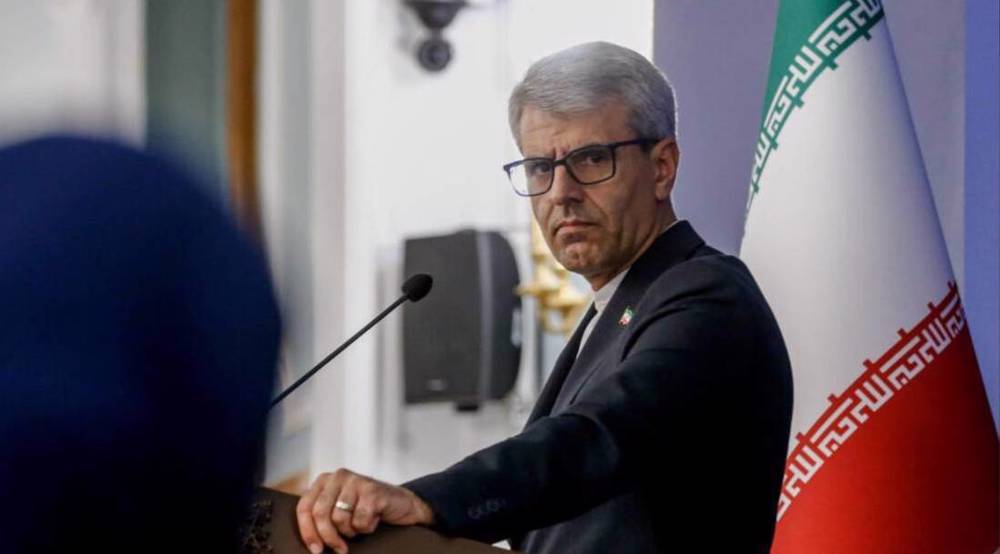
Tehran warns EU against ‘Nazi mindsets,’ slams German backing of Israeli-US aggression
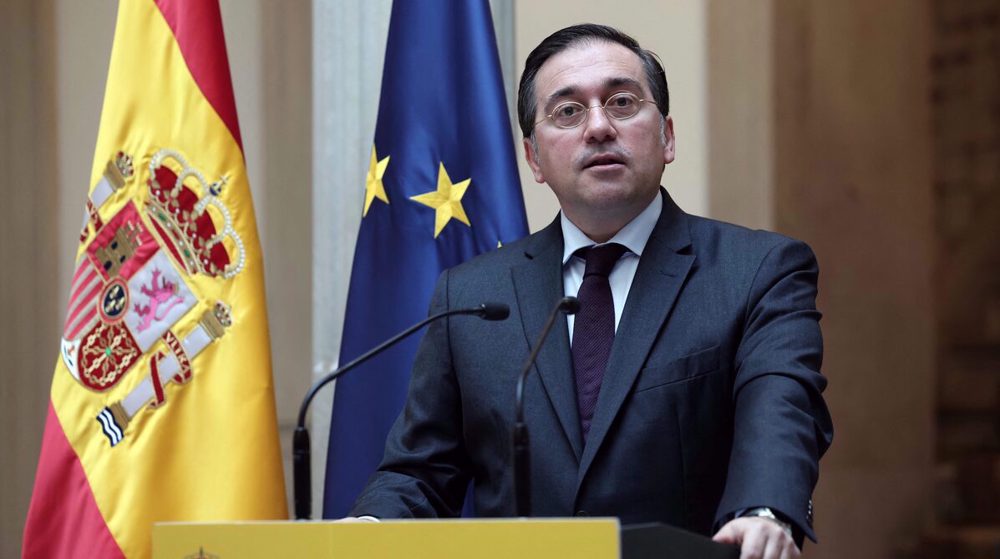
Spanish FM urges firmer EU stance on Gaza crisis, West Bank settlement expansion



Iranian security forces ‘fully ready’ to confront any US sabotage bid: Source
Iran announces new retaliatory strike as 9 million settlers advised to take shelter
US after Iran’s oil to dominate world energy: Tehran
Blue Shield deployed at 120+ Iranian heritage sites amid US-Israeli strikes on culture
Iran: Strikes on US bases ‘legitimate self-defense’; Tehran committed to friendly regional ties
Trump's aides urging him in private to devise exit plan from Iran war
Iran destroys 10 US radars in region, says it will decide when war ends
‘There is no end to this war’: Commander says Iran firmly determined to punish US, Israel


 PressTV NEWSLETTER now
 This makes it easy to access the Press TV website